Key takeaways
- Leather Type: Finished or protected leather can handle most commercial cleaners, but aniline or semi-aniline leather absorbs liquids fast and needs milder, pH-balanced formulas. Check your sofa’s tag or manufacturer documentation before buying.
- Cleaner vs. Conditioner vs. Both: A cleaner lifts dirt and body oils; a conditioner restores moisture and flexibility. Many all-in-one products handle both jobs, but heavily neglected leather often benefits from separate, dedicated steps.
- UV and Fading Protection: Sofas near windows take constant sun damage. Products with UV inhibitors — like those from Weiman — slow cracking and discoloration over time, which matters more for long-term care than a single deep clean.
- Toxicity and Off-Gassing: A sofa cleaner lives in your living room. Non-toxic, solvent-free formulas — such as Leather Honey and Leather CPR — mean you’re not breathing chemical fumes while the product dries, which is especially important in homes with kids or pets.
- Kit vs. Standalone Bottle: If your leather hasn’t been maintained in years, a complete kit with cleaner, conditioner, and applicator cloths saves a second purchase. For regular upkeep, a single high-quality conditioner applied every few months is often enough.
Walk into any hardware store or scroll through Amazon and you’ll find a wall of leather-care bottles all claiming the same thing — and most of them will leave your sofa sticky, discolored, or exactly as dry as it was before. The problem isn’t a lack of options; it’s a lack of honest, specific guidance about which formulas actually work on finished leather furniture versus which ones are better suited for automotive vinyl or shoes. Pick wrong and you risk staining the very piece you’re trying to save.
This guide cuts through the noise. We looked at real-world performance on living-room leather — absorption speed, residue, color restoration, and long-term protection — and narrowed the field to cleaners and conditioners that deliver measurable results. Below you’ll find our top picks, followed by a straightforward buying framework so you can match the right product to your sofa’s leather type and your household’s needs.
Our top picks




As an Amazon Associate we earn from qualifying purchases at no extra cost to you. Ratings are shown as listed on Amazon.
🛒 Best Price Today on Amazon
Prime members get fast, free shipping on everything above, plus member-only deals. New members get a 30-day free trial — cancel anytime.
How to Choose a Thing To Clean Leather Sofa (2026)
- Leather Type: Finished or protected leather can handle most commercial cleaners, but aniline or semi-aniline leather absorbs liquids fast and needs milder, pH-balanced formulas. Check your sofa’s tag or manufacturer documentation before buying.
- Cleaner vs. Conditioner vs. Both: A cleaner lifts dirt and body oils; a conditioner restores moisture and flexibility. Many all-in-one products handle both jobs, but heavily neglected leather often benefits from separate, dedicated steps.
- UV and Fading Protection: Sofas near windows take constant sun damage. Products with UV inhibitors — like those from Weiman — slow cracking and discoloration over time, which matters more for long-term care than a single deep clean.
- Toxicity and Off-Gassing: A sofa cleaner lives in your living room. Non-toxic, solvent-free formulas — such as Leather Honey and Leather CPR — mean you’re not breathing chemical fumes while the product dries, which is especially important in homes with kids or pets.
- Kit vs. Standalone Bottle: If your leather hasn’t been maintained in years, a complete kit with cleaner, conditioner, and applicator cloths saves a second purchase. For regular upkeep, a single high-quality conditioner applied every few months is often enough.
The Best Thing To Clean Leather Sofa (2026)s Reviewed
Weiman Leather Cleaner & Conditioner
Weiman’s dual-action formula is the workhorse of this category. It cleans surface grime and leaves a thin protective layer with UV inhibitors that genuinely slows sun damage — a rare combination at this price point. The 12 oz bottle is enough for a standard three-seater sofa with product left over.
Leather Honey Complete Leather Care Kit
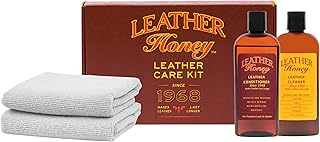
Trusted since 1968 and still made in the USA, Leather Honey bundles its cleaner, conditioner, and application cloths into one purchase that handles everything from a well-worn couch to a car interior. The cleaner is non-toxic and gentle enough for regular use, while the conditioner penetrates deeply rather than sitting on top. It’s the most self-contained option for someone tackling leather maintenance for the first time.
Leather Cleaner and Conditioner 4-Piece Kit
This four-piece set stands out for sheer versatility. The included brush attachment helps work product into textured or perforated leather that a cloth alone would miss, and the separate cleaner and conditioner give you control over the intensity of each step. It’s a solid pick for households managing multiple leather items — sofas, car seats, and handbags alike.
Leather CPR Cleaner and Conditioner
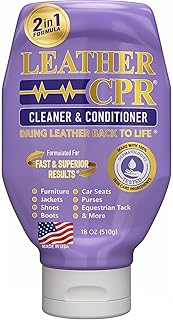
Leather CPR takes the simplest possible approach: one product that cleans and conditions simultaneously. At 18 oz it covers large surfaces efficiently, and the formula restores visible softness and color on leather that’s gone stiff or faded. It won’t replace deep conditioning on severely neglected furniture, but for routine monthly care it’s hard to beat the convenience.
Leather Honey Leather Conditioner
Once you’ve cleaned your sofa, this standalone conditioner from Leather Honey locks in the results. A small amount goes a long way — the bottle lasts through multiple full-sofa treatments — and it’s safe for every leather color, including white. If your sofa just needs moisture and protection rather than a deep clean, this is the product to reach for.
Frequently Asked Questions
How often should I clean my leather sofa?
For a sofa that gets daily use, wipe it down weekly with a dry microfiber cloth to remove dust and body oils, and apply a cleaner-conditioner every three to four months. Sofas with lighter-colored or unfinished leather benefit from more frequent conditioning to prevent drying.
Can I use vinegar or olive oil as a leather cleaner?
Internet remedies like vinegar solutions or olive oil can temporarily improve appearance, but vinegar dries out leather over time and olive oil leaves a residue that attracts dirt and can darken the finish. A purpose-built product is a safer long-term investment.
Will a cleaner change the color of my sofa?
A quality leather cleaner should not alter the dye of properly finished leather. If your sofa has a distressed or antique finish, test any new product on a hidden area first — the inside of a cushion flap works well — to confirm there’s no discoloration.
Do conditioners really prevent cracking?
Yes, but only with consistent application. Leather cracks when it dries out and loses flexibility. A good conditioner replenishes the oils that keep the hide supple, and products with UV protection add a second layer of defense against the sun damage that accelerates aging.
Final Thoughts
For a straightforward all-in-one solution, Weiman Leather Cleaner & Conditioner hits the best balance of cleaning power and UV protection. If you prefer a complete system that requires zero guesswork, the Leather Honey Complete Leather Care Kit covers every step. And for pure maintenance of leather that’s already clean, Leather Honey’s standalone conditioner keeps your sofa soft and protected month after month.