The best cordless leaf blower for a driveway clean-up can be much lighter than the one you want for a yard full of fall leaves. The EGO LB7654 is a strong choice for heavier work, while Makita, DeWalt, and Ryobi offer useful options for homeowners who already own batteries. Start with the cleanup you do most often.
Best cordless leaf blower picks at a glance
The seven picks cover everything from clearing grass clippings after mowing to moving several passes of fall leaves across a lawn. Pay attention to what comes in the box. A tool-only listing can be a good deal for someone with compatible batteries and an expensive starting point for someone without them.
| Model | Advertised maximum airflow and airspeed | Battery configuration discussed | Best fit |
|---|---|---|---|
| EGO Power+ LB7654 | 765 CFM, 200 MPH with tapered nozzle | One 56V 5.0Ah battery and charger | Heavier seasonal cleanup |
| Ryobi 40V HP Whisper RY404100 | 730 CFM, 190 MPH | Two 40V 4.0Ah batteries and charger | Longer jobs with a ready spare |
| Toro Flex-Force 51822 | 605 CFM, 157 MPH on turbo | One 60V Max 4.0Ah battery and charger | Mixed yard and driveway work on Toro 60V |
| Milwaukee M18 Fuel 3017-20 | 500 CFM, 120 MPH | Tool only | Routine cleanups for M18 owners |
| Makita 18V LXT XBU03SM1 | 459 CFM, 116 MPH | One 18V 4.0Ah battery and charger | Hardscape and light yard work on LXT |
| DeWalt 20V Max XR DCBL722P1 | 450 CFM, 125 MPH with concentrator | One 20V Max 5.0Ah battery and charger | Driveways, edges, and focused clearing |
| Ryobi 18V ONE+ HP Whisper PBLLB01K | 510 CFM, 130 MPH | One 18V 6.0Ah battery and charger | More capable cleanup within Ryobi ONE+ |
How to read the numbers in this roundup
CFM describes air volume, while MPH describes airspeed. Air volume helps when you want to move a wide front of loose leaves. A concentrated stream can help free debris from a seam or edge. Nozzle choice, distance to the surface, and speed setting affect how either specification translates into a real cleanup.
The table uses published maxima. Those figures can reflect different configurations, and you should avoid assuming the highest CFM and MPH occur together or that either is sustained for an entire charge. A rated maximum with a tapered nozzle tells you how the brand specifies airspeed for that configuration. It says little about how wide a path the nozzle will clear at the lowest trigger setting.
This roundup is based on manufacturer and retailer documentation, with editorial recommendations by job and battery platform. It does not assign independently measured ranks for runtime, sound at the user’s ear, or how quickly each model moves wet leaves. Where the manufacturer gives mode-specific runtime, that figure is more informative than a single general claim.
Start your comparison with the hardest job you expect the blower to do regularly. A few new leaves against a garage door and a moist pile built up against a fence are two different loads. If the second task happens only twice a year and you already own a rake, you may get more day-to-day value from the lighter tool that makes the first task easy.
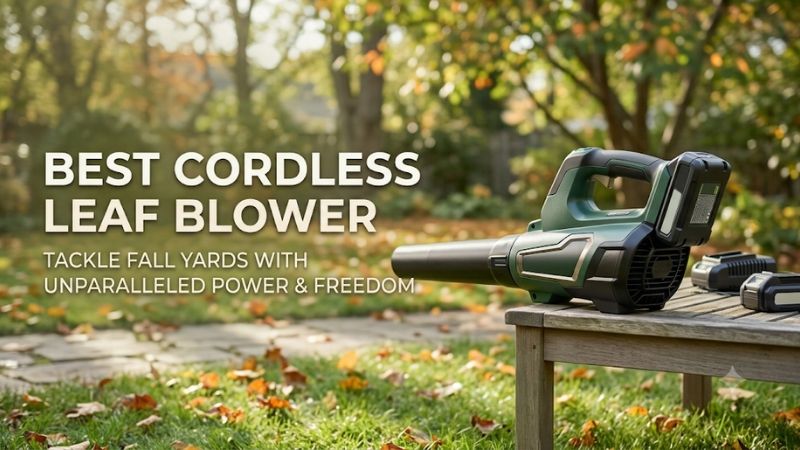
The best cordless leaf blowers for seven common jobs
Choose the model that fits the debris, the way you move through the property, and the batteries you can keep charged. The best overall pick has stronger published top-end performance, but the smaller-platform options may cost less to put to work and can be more convenient for short, frequent jobs.
EGO Power+ LB7654 for heavier seasonal cleanup
The EGO LB7654 combines a brushless blower, a 5.0Ah battery, and a 320-watt charger. EGO advertises up to 765 CFM in turbo and up to 200 MPH with the tapered nozzle. It makes sense for homeowners who repeatedly encounter deep leaf cover or need extra airflow to move a pile across a larger section of yard.
The runtime breakdown is especially useful. With the recommended 5.0Ah battery, EGO lists up to about 15 minutes in turbo and up to 150 minutes on low, with an advertised average figure of up to 90 minutes. Real results depend on settings, conditions, and the battery. For a yard you usually clear in short passes, the turbo number illustrates why a powerful tool can cover the job without making boost your normal setting.
Use the broader airflow approach for loose material across open lawn or pavement and reserve a focused stream for debris in pockets when appropriate. For example, you might clear the surface of a driveway at a moderate setting, then use a short higher-speed pass where leaves have accumulated at the edge. Chasing the final leaf across the whole driveway at full output can spend more charge than bringing the debris to a reachable collection point.
Choose the LB7654 when the heavier tasks are frequent enough to justify the kit and the larger installed battery. The LB7650 is the bare-tool version. Check the suffix if you already own EGO packs or see a bundle with two batteries. If your normal task involves a porch and a short driveway, pick for low-speed control and working weight before paying for this much peak output.
Ryobi 40V HP Whisper RY404100 for a kit with a spare pack
The Ryobi RY404100 is advertised at up to 730 CFM and 190 MPH. The referenced U.S. kit comes with two 4.0Ah 40V batteries and a charger. A spare ready to swap can matter more than a higher peak output when your cleanup includes separate zones with limited time between them.
Imagine a driveway, side path, and a rear lawn with leaves along the fence. A planned change between zones lets you keep working while one battery is out of service. The second battery extends the overall job by giving you another pack to install. An extended runtime claim that combines two packs at low speed should be read on those terms, especially if you expect to use high speed for much of the property.
Evaluate the Whisper branding in the context of the actual garage and yard. Sound figures from different brands can use different distances, modes, and test conditions. If sound matters to your decision, compare like measurements where available and check the equipment instructions on personal protection. A powerful unit run at a lower usable setting may be a good fit for your property’s routine.
Choose this package if you are entering Ryobi’s 40V outdoor platform or already have tools that can put the included batteries to work. It is also a strong choice when yard sessions often last longer than one battery. Confirm the U.S. listing and exact contents. Ryobi’s 18V ONE+ batteries are a separate platform, so an existing shelf of 18V packs does not lower the cost of running this unit.
Toro Flex-Force 51822 for a mixed yard on Toro 60V
The Toro 51822 pairs a brushless blower with a 4.0Ah 60V Max Flex-Force battery and charger. Toro quotes up to 605 CFM and 157 MPH on turbo. This package makes particular sense for people who already use the Toro battery system and want one handheld tool for clippings, ordinary leaves, and driveway cleanup.
The variable-speed trigger, cruise control, and turbo button give you different ways to manage output. For a long open driveway, a steady moderate setting can move clippings without pushing them back into the lawn. At a gate or fence post, turn the stream toward an open collection area before increasing speed. The result depends on controlling where the material goes as much as producing more air.
Toro lists the included battery at 216 watt-hours and publishes an up-to runtime figure for the kit. Use that figure as an indication of the upper end under the maker’s conditions. Plan around the amount of work you expect to do on high speed, which can shorten the session significantly. If you already have another compatible pack charged, its availability can make the purchase more attractive than the blower’s maximum figures alone.
Choose the 51822 when you want a capable Toro kit and expect to use the included battery elsewhere. A homeowner buying only for brief patio work might make better use of a smaller battery and blower combination. If leaf volume is heavy most weeks, compare the need for a spare pack against a two-battery package such as the Ryobi.
Milwaukee M18 Fuel 3017-20 for quick cleanup on M18
The Milwaukee M18 Fuel 3017-20 is a tool-only blower advertised at 500 CFM and 120 MPH. It is designed for quick routine clearing and has a variable trigger and an ambidextrous speed lock. Its value rises considerably for a buyer who already has a suitable M18 battery and charger.
Milwaukee says the blower is optimized for M18 High Output batteries. Start by checking the packs you actually own and the ones you expect to have available after other tools have used them. The brand’s compatibility claim is useful, but the relevant question is how a particular pack handles a high-draw yard tool. A battery that finishes drilling or driving tasks at your usual pace may provide a shorter blower session than you expect.
The practical use case is the cleanup after mowing or trimming, especially where you want to clear hard surfaces and return the tool to storage. The speed lock helps when you can use the same output along a long strip. The trigger is more useful at landscaped borders or in places where the air stream would otherwise send clippings back across the work.
Choose the 3017-20 if the bare-tool package turns existing batteries into a useful cleanup setup. If you are starting from scratch, price the blower, charger, and recommended battery configuration together. A complete kit elsewhere can be a better value when you need to acquire the whole system just to use the blower.
Makita XBU03SM1 for lighter work on 18V LXT
The Makita XBU03SM1 includes the XBU03 brushless blower, a 4.0Ah 18V LXT battery, and a charger. The manufacturer lists up to 459 CFM and 116 MPH, and specifies about 6.5 pounds with battery for the documented setup. It is a useful match for hardscape and light yard work within Makita LXT.
The variable trigger and cruise lever are helpful when the job includes both an open path and areas with mulch or loose soil. A steady pass can move dry debris along a driveway. Near a bed, lower the output and direct the air along the edge so organic material stays where you intended. Upper-end airflow matters on open ground, while controlled output matters every time the surface changes.
The included charger and battery make the package usable out of the box. A current LXT owner can also compare the XBU03Z tool-only model. Include the actual pack you will carry when judging balance. A battery that fits the tool might still be too small for the longest cleanup or heavier than you prefer on a tool you carry one-handed.
Choose the XBU03SM1 when you use LXT or want a kit for routine residential work with occasional loose leaves on the lawn. Heavy, wet leaf mats and wide seasonal coverage are better tests for a larger system or a different cleanup method. The Makita serves a buyer who values useful control and battery compatibility more than the highest published output.
DeWalt DCBL722P1 for driveways and focused edge work
The DeWalt DCBL722P1 is a brushless 20V Max kit with a 5.0Ah battery and charger. DeWalt advertises up to 450 CFM and up to 125 MPH with the supplied concentrator nozzle. It is a good candidate when clearing broad hard surfaces and directing air into defined seams are both routine parts of cleanup.
The nozzle is relevant when debris is trapped along a boundary. On a broad driveway, a sweeping path with the standard tube can move grass clippings toward a collection spot. At a narrow seam where leaves catch, the concentrator directs the stream more closely. Watch the direction of the material and use the lowest effective speed around loose gravel, planting beds, or bystanders.
The buying decision comes down to the battery package. DeWalt owners who already have a suitable 20V Max pack and charger can compare the DCBL722B bare tool with this kit. Buyers who do not own those items should compare complete kits. A cheaper blower with an unsuitable small pack can be more expensive once the proper working setup is included.
Choose the DeWalt for hardscape, edges, and other routine home work in an existing 20V Max household. If you need to shift a broad mat of wet leaves every week, give a higher-volume model or a rake a role in your cleanup. For a driveway you regularly clear after mowing, the DeWalt’s variable control and included nozzle are useful reasons to choose it.
Ryobi PBLLB01K for a capable 18V ONE+ kit
The Ryobi PBLLB01K includes a brushless 18V ONE+ HP Whisper blower, a 6.0Ah battery, and a charger. Ryobi lists up to 510 CFM and 130 MPH. It fits an owner who wants more clearing capability within the 18V system without bringing home a separate set of outdoor batteries.
The gap between this model and a basic 18V sweeper appears in the kinds of debris each is designed to move. A smaller sweeper is useful on a porch or short walk. With the HP model, you have more published air volume for longer runs of loose leaves and clippings across open space. The larger included pack also affects how the blower feels in use. Consider the full working setup, especially if the goal is a quick tool for several small tasks.
One practical comparison is the Ryobi PCLLB01K kit. Its 350-CFM design and 4.0Ah pack may be enough when the work is mostly hard surfaces. The HP option makes sense when pushing a broader leaf front is a regular requirement, or when you value the included high-capacity battery for other eligible tools. A buyer who needs only occasional patio work can spend less.
Choose this model if you want to stay within Ryobi ONE+ and expect the step up in airflow to save effort often enough. For sustained clearing across a larger lawn, compare it with a complete 40V package and the spare battery you would need. Choose by total cost, weight in hand, and repeated work.
How to make the final purchase decision
Three questions can break a tie. How much of your yard needs more than low or moderate speed? What is the total weight with the battery you intend to use? Can the tool cover the normal session without exhausting the only pack you own? Answer them against a specific cleanup, using the same scenario for each finalist.
Buy for the surface where the blower will work hardest
Dry clippings on smooth pavement take less effort to move than leaves pressed into damp grass. The deciding surface may be a short strip at the edge of the yard where debris collects. Observe where work slows down and whether it calls for more airflow, a better nozzle approach, or a second hand tool.
If you primarily clear pavement, choose the tool you are comfortable using at the correct speed for the space. A high-volume model that you rarely enjoy carrying can serve fewer of your needs than a lighter blower that gets used after every mowing. If the yard regularly produces several large piles, prioritize the capability and battery plan for those conditions.
Consider where the cleanup ends. A blower moves leaves, and you still need a collection point, a suitable mulch plan, or another destination. A lower-output blower working a shorter route may finish sooner than a stronger blower that spends half its charge moving leaves farther than necessary.
Compare working weight and how you will hold the tool
Use battery-installed weight when you can find it and check which pack the manufacturer used. The same blower may feel different when you change pack size. A heavier pack adds weight and may change the balance. Try the position you will actually use, with the tube aimed near the ground where ordinary work happens.
Look at tube length and the grip’s position relative to the battery. A comfortable tool makes it easier to direct air precisely during repetitive passes. If you expect widely different users to share it, compare the complete setup for both. A speed lock can reduce trigger effort on open stretches, while a responsive trigger is useful where operating space changes quickly.
Know when a second battery matters more than another speed setting
A spare is worth budgeting for when you consistently need more runtime in the same session and cannot wait for recharging. It also makes the blower easier to use when you share batteries across a mower, trimmer, and drill. Compare the full cost of the spare with a kit that already includes one.
A second battery brings less benefit when you normally clear the porch or drive in a few brief passes. In that case, a smaller kit may do the job with less weight and less money. Choose a package around the work you actually want to finish, including the higher-speed portions that use energy fastest.
Conclusion
Choose the EGO LB7654 for heavier seasonal clearing or the Ryobi RY404100 if a second battery is central to your routine. For frequent hard-surface cleanup, start with the Makita, DeWalt, Milwaukee, or Ryobi system you already own. Compare the battery-installed weight and the performance you need at everyday speeds.
More from Amazon
Programs that pair well with the guide above. Offers and eligibility are set by Amazon and may change.
Collect the home and kitchen items you want in one registry that guests can shop from.
Create a wedding registrySet up recurring deliveries of everyday items on eligible products. Terms and savings are set by Amazon.
Explore Subscribe & SaveFree shipping on eligible items, Prime Video and more. Eligible new members can start with a free trial.
Start a Prime free trialAudiobooks and podcasts to listen to on the go. Eligible new members can start with a free trial.
Try Audible freeAs an Amazon Associate we earn from qualifying purchases.