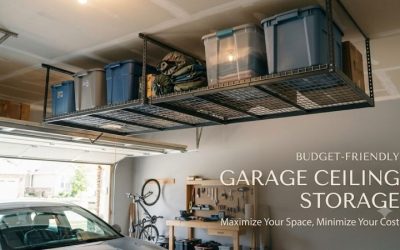
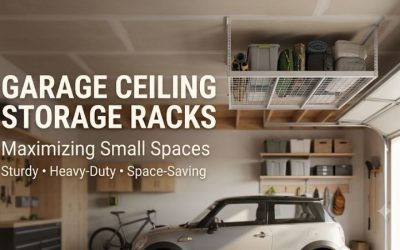
A garage ceiling storage rack vs alternatives comparison comes down to which space you can spare and how often you need the gear. Fixed platforms are useful for light seasonal bins. Wall shelves and cabinets make daily items easier to reach, while a suitable lift can change how you move an awkward piece of equipment.
Garage ceiling storage rack vs alternatives at a glance
A storage system occupies space even when you are using something else in the garage. Compare the part of the room it occupies, the movements needed to access it, and any installation requirements. The best arrangement for seasonal bedding can differ from the one that keeps a mechanic’s socket set organized next to the work.
| Storage type | Good fit for | Space needed while in use | Main purchase check |
|---|---|---|---|
| Fixed ceiling platform | Lightweight seasonal totes and soft gear | Overhead bay and access area below | Suitable framing, clearance, and loading edge |
| Wall shelving | Bins or cases retrieved during the year | Shelf depth plus open standing area | Compatible wall, mounting, and reach |
| Freestanding shelving | Heavy or bulky inventory stored at lower levels | Permanent floor space and retrieval area | Shelf ratings and required setup or anchoring |
| Closed garage cabinets | Small tools and supplies that need defined storage | Cabinet body and door or drawer travel | Interior opening and installed footprint |
| Purpose-built overhead lift | Gear whose handling improves when lowered | Ceiling position and entire moving-load area | Approved cargo, mounting, and operating path |
| Rolling storage | Tools that move between work areas | Parking footprint, travel path, open drawer space | Floor, route, and load handling |
| Wall tracks and hooks | Individual long tools, bikes, or other suitable equipment | Wall area and the stored item’s projection | Compatible holder and safe access |
Compare the same retrieval task with each option
Pick an item your household actually uses and follow it through a complete trip. Start where it is stored, carry it to where it is needed, and put it back. Notice whether the route requires relocating the car, opening multiple doors, or changing the garage to gain access. Then repeat the exercise with gear that comes out only seasonally.
Consider a medium camping tote used twice a year. A fixed platform might work if you can arrange safe access on those days. The same route can feel cumbersome for a toolbox that comes out every Saturday morning. That toolbox might belong on a wall shelf or in a rolling cabinet, depending on where you use it. Split the inventory where the routines naturally differ.
Use the garage as it is normally parked and furnished when drawing the options. An empty bay can make shelving and a ceiling rack both seem easy to use. A parked vehicle may reveal that one design leaves a far better loading position. A shelf beside the wall may also need more clearance in front than you originally planned because large cases have to be pulled straight out.
Check who uses the storage. A particular grip height, cabinet position, or overhead access arrangement can work for one person and be unreliable for another. Place shared everyday gear where the intended users can handle it. Give the less accessible parts of the garage a role that matches their frequency and practical limits.

When a fixed ceiling rack earns its place
A ceiling platform adds storage without using a permanent furniture footprint on the floor. Its value is greatest when light, bulky items occupy space you need for something else. For a suitable ceiling and verified installation, moving several large seasonal bins overhead can recover a parking strip or make room for a work area.
The strongest use is infrequent access to manageable bins
Light, bulky gear can stay overhead for long stretches of time. Think of decorations, empty travel bags, folded soft gear, or similar items that fit the deck and can be handled safely in the garage. Putting them overhead creates room in more accessible storage for household or workshop items that come out every week.
Suppose you keep four large seasonal containers on a shelving unit near the garage entrance. If a suitable overhead rack can hold those containers, the low shelf can take cases you normally leave on the floor. You may be able to fit a lawn tool or bicycle into the area left behind. The improvement comes from reclaiming space you routinely need.
The location still has a cost. A rack occupies headroom, and safe retrieval can require a clear position below and suitable access equipment. Draw that position and the route to a stable landing spot. Check the full garage door movement, equipment service areas, and any open vehicle hatch, including clearances below accessories or stored gear that project from the frame.
If an item will need to come down frequently, test how many changes you make to get it. Moving the car periodically for planned seasonal storage can be manageable. Moving the car or a workbench every weekend can make lower shelving a better fit. Go with what makes the regular routine easier while keeping occasional storage practical.
A permanent deck suits a stable garage layout
A fixed rack makes sense when you expect the ceiling and parking arrangement to remain similar. It gives a chosen group of items one shared place and keeps the floor clear between retrievals. The location is part of the structure, so a permanent install deserves more planning than a movable shelf or bins that can shift to another wall.
A change to the garage door or its opener can influence what fits near the existing hardware. A new vehicle can increase parking height or change where the hatch travels. If a likely change will affect the only candidate position, compare alternatives that can be reconfigured. Shelving along another wall or a shorter installed rack can leave room to adapt.
Consider how other storage might join the system. Future ceiling racks or loads in the same area can affect the structure. Have the proposed load and mounting locations evaluated together when necessary. If you anticipate considerable growth, a mix of shelves and overhead storage can keep some of the changes on the floor or wall.
The ceiling rack earns its purchase when it gives well-defined seasonal gear a durable location and makes the rest of the garage easier to use. If adding another type of storage would free the same patch with less disruption, compare both with the real inventory and costs.
How the main alternatives compare with an overhead rack
Wall units preserve the floor while bringing contents closer. Floor shelving can handle an inventory that benefits from lower, easier access. A lift or a mobile system can solve a task that involves movement. For each alternative, check the suitable installation, the full working envelope, and how people retrieve the items.
Wall shelving for bins and cases used throughout the year
Wall shelving can keep the area underneath clear while giving you easier access than a ceiling rack. It is useful for lightweight cases and bins you need several times a month. Compare the shelf projection with the available wall depth, particularly when a vehicle door or a work aisle shares the same space.
A wall shelf can let you see the whole label, reach both handles, and move a case directly to a bench. Those advantages increase when the shelf suits the user’s reach and the weight of the item. Review the mounting requirements and check whether the wall is suitable for the chosen system. Place awkward and heavier cases at manageable heights, following the manufacturer’s instructions.
The wall area may compete with bikes, garden tools, cabinets, and outlets. A shelf that saves floor room can still occupy a spot better suited to frequently used tools. Map the whole wall in addition to the shelf you are considering. If you use a substantial part of it to store low-frequency bins, moving some of those bins to a suitable ceiling location can free the wall for gear that deserves a closer reach.
Choose wall shelves if you need a simple, visible position for items you can handle comfortably. Use the exact shelf opening, the position where you will stand, and the wall and fastening requirements to judge whether it improves on the ceiling rack for that particular inventory.
Freestanding shelves for heavy or mixed inventory
Freestanding shelving is useful when the weight and variety of the contents make lower storage practical. The shelf costs a section of floor space. In return, you gain shelves that can hold different heights and provide a simple place for dense cases or containers, within the product’s published ratings and installation conditions.
A row of large shop cases may fit well on lower shelves if you can bring the cases straight out without moving a car or a nearby bike. Check the usable opening and support locations. Uprights and crossbars can affect the front opening. Shelves with enough published weight capacity can still be a poor fit if each case has to be tilted and lifted through a narrow space.
Follow the shelving manufacturer’s layout, loading, and anchoring instructions. The floor needs to suit the intended installation, and some racks require specified restraints. Keep heavy items at appropriate lower levels and compare both the shelf’s individual limit and the total the system can carry as configured. This is especially important when several people store equipment on the same shelves.
Compare the permanent footprint with the space a ceiling rack would free. If the garage can spare a shallow wall-side unit, daily access may be worth the floor area it uses. If a larger unit would consume the only space for a workbench, you can keep a smaller lower shelf for heavy items and store suitable light gear overhead.
Closed cabinets for organized and protected hand tools
A garage cabinet can give each tool set or small supply group its own place. Tools and hardware come out individually, which makes drawers and shallow shelves more useful than a single tote for frequent work. Check the inside depth and opening, and sketch where the door or drawers travel while the garage remains in use.
A mechanic or homeowner often needs only one or two tools to start a job. If those tools are in a bin overhead, the retrieval task can take longer than the repair. A shallow drawer or labeled cabinet shelf can make a useful difference. Compare the common reach with the user’s working position and the typical location of the project.
Closed storage can also keep work areas visually clear and organize small equipment that gets lost in a shared bin. A locking cabinet provides control over access if that feature is suitable for the contents. Check any special storage requirements for items that need a particular environment or level of protection. The cabinet’s doors and material alone do not establish suitability for those contents.
Where the car is close to the cabinet, draw the open door at the widest point. A model with a slim box can still leave little useful room while open. Wall cabinets, floor units, drawers, and sliding-door options each handle the space differently. Choose the one that lets the people using it stand and remove what they need comfortably.
An overhead lift for suitable gear that benefits from lowering
A purpose-built hoist or lift can make a specific item easier to handle when it is designed for the item’s size, shape, and weight. The distinction is that the load travels between a storage position and a retrieval position. Both the full movement and the required structural installation must fit the garage.
For a kayak, bicycle, or rooftop cargo box, compare solutions made for that type of gear. Verify the approved restraints and where you need to stand to operate the equipment. Check the entire moving envelope, including the item’s ends, and preserve the required clearance from any opener, vehicle, and nearby path. A garage door that clears the gear when parked can still interact with its route in use.
Also account for the condition of the garage when you use the lift. You might have to move the car before operating it, or the lift may rely on a clear central area that a portable bench frequently occupies. Decide if you can keep that area free whenever the equipment needs to move. Follow the model’s instructions for use and maintenance, and have the support confirmed for the actual proposed installation.
Choose a lift because it changes how you access a specific item. A fixed deck is usually simpler for several lightweight totes that can be safely handled and securely stored on the platform. Compare the system that works for your inventory and the person who will use it.
Rolling storage for tools that need to travel
Rolling cabinets, carts, and mobile bins are useful when the same tools serve a workbench and another part of the garage. They occupy a permanent parking footprint and need a suitable route to the work. Compare a loaded storage unit’s intended movement with the floor, wheel type, handle placement, and obstacles along the way.
For someone who works on a bike near the entrance and also repairs small items at the bench, a well-organized tool cart can reduce back-and-forth trips. A ceiling platform would place the tools in a convenient storage area only between tasks. Keep the rolling option focused on gear you need to move, and leave heavy seasonal containers in a stable place that suits their use.
Check the floor for slopes, gaps, and thresholds. Draw the turning path and where you will park during work. Include the space drawers or lids occupy when open and the positive means of securing the unit as instructed. Follow the manufacturer’s requirements for moving and storing the cabinet, including how to secure contents.
A rolling cabinet can be a poor use of money if it never leaves one wall and always blocks the same patch of floor. In that case, choose the form based on its storage rather than its wheels. If movement lets you set up work in two places without occupying both permanently, the design earns its space.
Wall tracks and hooks for individual long tools or bikes
A wall track can store individual tools, bikes, and suitable gear with their handles available at the height you want. It works where the wall supports the system and the equipment’s projection stays clear of regular travel. Check both the holder’s capacity and the manufacturer’s permitted way of holding the actual item.
For yard tools, separate holders can keep handles visible and let you remove one tool without unloading a tote. That can make the garage faster to use during a busy season. Once equipment grows heavier or more awkward, check how it is placed and removed. A bike that saves space vertically may still be hard for one person to lift into a high hook.
Preserve a clear approach for long items. A shovel, for example, may need room to move vertically before it clears a support. A bike handlebar can project farther than expected into a shared aisle. Test the outline of the stored equipment as well as the motion you will use to get it down. A slender wall system only saves real room if the stored gear and its retrieval fit.
Choose individual hooks for gear that you take out one piece at a time. A ceiling deck is more useful for several fully contained bins. Combining those approaches can keep active tools easy to reach and seasonal supplies away from the wall you use daily.
Compare space and price across complete setups
Use the same definition of a usable storage project for every option. Add the space needed to load, open, or move each system and price any required installation or accessories. A purchase with a small advertised footprint can create a larger interruption if its working area conflicts with the garage’s day-to-day use.
Count the access area when comparing footprints
A 48-by-18-inch freestanding shelf takes up six square feet where its legs and frame stand. A four-by-eight-foot deck occupies 32 square feet overhead and can leave the floor open when stored. Compare the working areas needed to get the biggest container from either storage position and set it down safely.
A six-square-foot shelf may require a clear approach wide enough for a person carrying a large case. A ceiling rack may need a vehicle removed or part of the garage reserved temporarily for access. Examine how many times you expect to take those steps in a normal year. The frequency can make the easier arrangement worth more floor or wall space.
If a lift is part of the comparison, include the area swept by the equipment as it moves. If a cabinet is part of it, draw the doors or drawers open. Compare every plan against the same normal garage arrangement so parked vehicles and furniture show up consistently.
Price only configurations that meet your needs
Include the product, required hardware or approved accessories, installation, and additional totes or supports. Compare delivered prices or realistic pickup costs. For overhead mounting, account for any assessment needed. A configuration that requires structural, clearance, or access changes should be priced with those changes accounted for.
Consider whether existing storage can cover part of the job. If your lower shelf safely supports your heavy cases, a small overhead rack for seasonal totes can cost less than a whole new bank of shelves. If the wall already has an appropriate mounting area and your bins are used frequently, extending wall storage can be easier to live with than switching to the ceiling.
Give the space you free a specific job. An empty patch in front of the workbench can mean room to stand, carry material, or roll the right tools into place. A lower shelf kept clear of seasonal totes can become a stable home for daily equipment. When two alternatives cost about the same, favor the one that makes the regular routine easier to repeat.
Conclusion
Choose a fixed ceiling rack for lightweight seasonal bins when the verified structure, clearances, and approach fit. Use wall shelves or cabinets for everyday gear and suitable lower shelves for dense cases. Choose a purpose-built lift when it improves how you handle a specific item. Compare each layout with the garage’s busiest ordinary day.
More from Amazon
Programs that pair well with the guide above. Offers and eligibility are set by Amazon and may change.
Collect the home and kitchen items you want in one registry that guests can shop from.
Create a wedding registrySet up recurring deliveries of everyday items on eligible products. Terms and savings are set by Amazon.
Explore Subscribe & SaveFree shipping on eligible items, Prime Video and more. Eligible new members can start with a free trial.
Start a Prime free trialAudiobooks and podcasts to listen to on the go. Eligible new members can start with a free trial.
Try Audible freeAs an Amazon Associate we earn from qualifying purchases.