This ratcheting screwdriver set buying guide starts with the screws in your next few projects. Match the bit profiles, then check the holder, ratchet feel, and grip. A compact assortment usually covers everyday repairs. A larger set pays off when its extra sizes replace tools you would otherwise buy.
Where to start with a ratcheting screwdriver set buying guide
A useful kit has a driver you can hold square, a bit that fills the recess, and a mechanism you can reset with the space available. Look at several real fasteners before comparing kits. Your assortment should match what you expect to repair and what your existing tools already cover.
Build a bit list from your own projects
Find the most common screw profiles and sizes on three things you expect to assemble or service. Write the drive type and the exact size if you can identify it. Distinguish the profiles you need every week from unusual fasteners that only require a single extra bit.
For common household fixtures, start by checking for Phillips #1 and #2 and the slotted blades you use on trim or covers. Some cabinet hinges and flat-pack fittings use Pozidriv. Square drive can turn up on cabinet or woodworking hardware. Torx appears on some appliance and automotive covers, and hex bits often suit furniture or bicycle accessories. The part in front of you decides which family belongs in the kit.
Cross-shaped recesses deserve a second look. A Phillips bit can enter a Pozidriv screw and still leave the recess poorly supported. Inspect the extra fine markings often found on Pozidriv heads and compare how the correctly marked bits seat. On a security fastener with a visible center pin, check the specified profile and select a bit with the clearance required for that pin. A regular bit sharing the same apparent star shape can stop short.
Make a small inventory with four columns for project, profile, size, and access. A T20 on an exposed panel and a T20 inside a deep well use the same nominal drive but may need different shaft lengths. Counting them separately on a project list helps you buy one short and one long driver only when both solve actual problems.
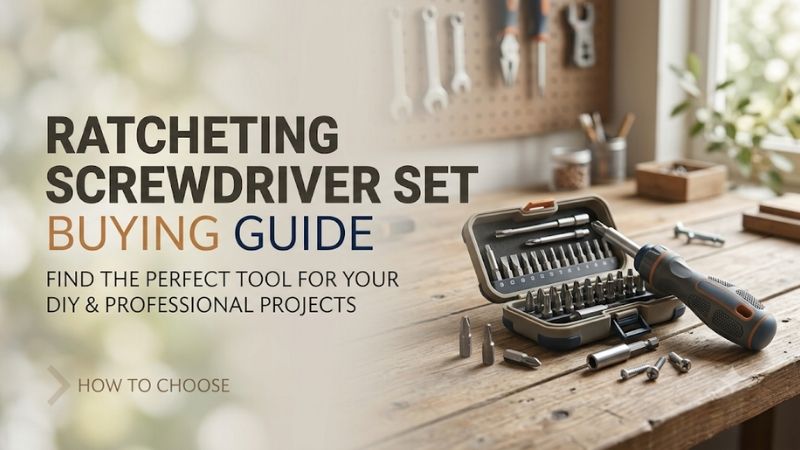
Check what the piece count includes
A count on the box may include bits, accessories, the handle, or a carrying case. An “in-one” label often describes working functions rather than separate parts. Confirm the exact assortment, including whether its bits have two ends and whether a shaft doubles as a nut driver.
A six-piece tip assortment can cover twelve profiles or sizes if every physical insert has two ends. It may be a better daily carry than a 40-piece case with several duplicates you never use. A large case can be a good choice when you need many known sizes and it includes compatible extensions or sockets. Start by marking the pieces you expect to reach for, then see what happens to your list after removing the unused accessories.
Check the exact SKU. A store may sell a starter driver and a larger version under nearly identical titles. Even within a brand, a similar model can swap Pozidriv for square drive or rearrange the socket assortment. Use the model number on the carton and the maker’s contents list. If the bundle includes two different handles, identify which one actually ratchets.
Storage affects usable coverage too. A set that nominally includes every bit does little good if you cannot identify it under poor light. Look for labels that remain legible on the case or on the bits. Practice replacing them in their slots. A missing Phillips bit is easier to notice in an organized case than at the bottom of a drawer.
Understand bit shank sizes and retention
Many full-size bit holders accept a 1/4-inch hex shank. Precision sets often use 4 mm bits, and some multifunction screwdrivers use double-ended pieces or sleeves specific to the design. Check the physical shank, retention method, insertion depth, and space around the screw.
Magnetic holders can grip compatible steel bits and help retain some screws. Other holders use a ring, a detent, or a quick-release sleeve. Each design may interact differently with short inserts and longer power-style bits. Look for the documentation for the particular model. A shallow holder that works well with one bit may seat a longer shank differently. Where a manufacturer supports a removable bar or a direct bit position, check both positions independently.
Consider how you would replace a worn PH2. It is usually easy to find in a common shank format, while a specific double-ended assembly may need an exact replacement. Check its cost and availability once before you buy the main tool. If the manufacturer offers separate matched replacements, a bespoke onboard system can still make sense for keeping common sizes organized.
Compare holder length with storage length. A tool may accept an insert at the nose but have too little room to store it under the handle cap. You can carry uncommon long bits in a small marked sleeve. If your main reason for buying an all-in-one driver is to leave that sleeve at home, test that the bits you would take along actually fit the storage.
Which ratchet and handle features are worth paying for
Mechanism design affects how the tool starts, resets, and transfers pressure. Compare the direction control, return resistance, and working angle with the shape of the handle. Decide which shortcomings would matter on your jobs before paying for a finer mechanism or added features.
Check tightening, loosening, and locked modes
A common ratcheting screwdriver has three settings for driving, reversing, and locking. Try changing the setting while keeping a normal grip on the tool. Then confirm which direction engages by making a short movement on a spare screw you can see clearly.
The locked setting gives a direct connection for checking bit fit, starting a delicate screw, or finishing a short adjustment. Many drivers put it between the two ratchet settings. Look for clear markings and a collar you can move intentionally. A collar placed where your thumb normally rests can be convenient or easy to bump. Try both hands if the work requires accessing screws from different sides.
Direction labels sometimes follow the movement of the handle, and orientation changes how a lever feels. After turning over a compact bit ratchet, check the new direction before applying torque. A brief check with no load is quick. When you cannot see the tool inside a cabinet, learn how the selector feels in a position where you can see the fastener.
Some tools drive on both handle strokes through a specialized mechanism. Look at the instructions for the exact model if the packaging advertises faster movement. A different drive mechanism changes direction feel and can be useful on frequent long runs. Try it on a lightly loaded screw before assuming it suits precision starting.
Compare nominal sweep, backdrag, and play
Sweep describes how far you move the handle to engage the next ratchet position. Backdrag is the resistance you feel on the return stroke. Play is the movement before the driver transfers force. Each can change the experience even with an identical bit and screw.
For a conventional 72-tooth ratchet, one tooth spacing is 5 degrees. The actual movement you need on the job can be greater after accounting for the bit holder, the screw recess, and your fingers. In an open work area, short sweep may matter less than comfort. In a cabinet where the lever nearly touches a shelf, a smaller nominal angle can help you make steady progress.
A free-running screw makes backdrag easier to notice. Reset the handle and check whether the screw rotates backward with it. If it does, a smooth return, a way to steady the shaft, or a locked setting may be useful. For larger screws with more thread friction, you may barely notice the same return resistance.
Play feels different from backdrag. Hold the working bit in a loose screw and move the handle carefully in locked mode, then try the ratchet. Check the tip fit first. A poor match can feel like mechanical slack even if the mechanism is sound. If you work on light hardware daily, a consistent return and positive engagement can justify more of the budget than a long list of tips.
Choose handle size by the way you apply pressure
A full-size grip gives the palm room to press forward through an accessible screw. A stubby shortens the assembly while reducing the space available to grip it. A low-profile bit ratchet approaches from the side, which changes where you support the bit and the tool.
Try a grip with your hand in a neutral position. A handle that looks large is useful when your palm can close around it and the texture helps you maintain control. It can be awkward in a narrow spot or with smaller hands. A slightly slimmer grip may be easier to use repeatedly. If a comfortable handle comes with limited bits, compare the cost of adding the few pieces you need.
A rotating palm cap can make a straight driver easier to steady while the body turns. A free-spinning ring near the shaft can help with alignment. These features matter mainly when you actually use that holding position. On an overhead board, you might need one hand for the workpiece and only one for the driver. Test the grip from that orientation before assuming an advertised feature will be useful.
To assess reach, compare the length with your bit installed. A primary driver with a removable extension can cover shallow and normal positions, while a slim fixed shaft may still reach farther into a narrow recess. Treat tool length and tip access separately on the shopping list.
How to use a ratcheting screwdriver set buying guide at checkout
Decide what the complete kit needs to do in its first month. Include any bits, extensions, or compact companions the main driver cannot supply. Compare prices for equivalent configurations and verify that the set can be stored, checked, and maintained where you work.
Decide which accessories solve a recurring problem
A longer bit may be enough for a deep screw, and a mini ratchet may be enough for a low overhead gap. A long extension, socket adapter, or extra handle can be valuable when it supports a task you expect to repeat. Buy with the exact access and fastener in mind.
For a shallow cover, choose the shortest combination that gives full tip seating. A long magnetic extension would add height and may block the approach. For a deep well, the longer accessory can put the thick holder outside the opening. Draw the rough dimensions before selecting a kit with many attachments that all have wide shoulders.
Sockets add flexibility for light hex-head work. Read the sizes in the set and look for the sizes identified on your actual parts. Metric and inch heads can be close enough to appear interchangeable while still fitting loosely. Select the correct fit. A 1/4-inch hex-to-square adapter provides a connection with the socket and increases tool height. Observe the working limits of the driver and the adapter.
If a second person needs the tool, choose a setup that is easy to identify by touch and label. Clear markings and a dedicated place for each bit can be worthwhile features even without a premium ratchet or a large handle.
Know where a standard set ends and a specialty tool begins
An ordinary ratcheting set is a general fastening tool. Equipment can specify an insulated tool, a defined torque range, or a special bit profile. Check the service instructions for the work you intend to do and include any required tool in your purchasing plan.
A plastic housing and a small machine screw invite a gentle finish. Where the maker states a torque value, an appropriate calibrated tool in that range provides a way to measure it. The clicks in an ordinary ratchet tell you that the mechanism is indexing. Use the scale or setting on a suitable torque tool to measure the specified fastener torque. Choose a drive and tool shape that fit the actual assembly.
A rubber grip is useful for comfort. Where insulation is required, look for the appropriate certification and follow the electrical work procedure. Work on de-energized equipment as directed and choose the right tool for the task. An electrical-looking combo bit describes the fastener interface. Verify the separate safety rating of the whole tool where applicable.
Precision jobs may benefit from a smaller handle and narrow shaft. A larger driver can still spin accessible case screws, but it may hide a deep screw or apply more force than intended. If those tasks recur, include the precision format in your main purchase decision.
Check the tool against a real job while returns are easy
Test the included bits, direction selector, and retention on spare hardware. Use the same lengths you expect to use on the real project. Confirm you can retrieve each bit and reload the handle or case without struggling. Then reproduce any access limit that affects the buying decision.
Start with the most common bit in the kit. Seat it, check for movement, and try a few turns on a scrap assembly. Repeat with a smaller screw in a supported bit format, handling it gently. Mark whether you can switch between locked and ratcheting operation without changing your grip awkwardly. On a removable holder, repeat with the short and long configurations you plan to use.
Check the most difficult fastener from your original inventory. Hold the driver against the access dimensions you measured or use a temporary mock-up. If it requires an extra bit, check the price and availability before keeping the kit. A driver should meet the need that made you shop for it.
Finally, put the set away and retrieve it the way you will on the next job. If a particular bit regularly falls out, solve the storage issue while the kit is new. Build the purchase around the jobs that occur repeatedly and keep the few special tools that handle the exceptions.
Turn your notes into a short purchasing checklist
A short checklist helps compare models with similar names or attractive accessories. Give each repeated job one required drive profile, one description of its access, and one handling preference. Select the first set that covers all of those requirements at a price you can justify.
For a cabinet, the entry might call for PZ2, a straight approach of limited depth, and a collar you can change while holding the door. A garage project might need T25, a long narrow shaft, and a place to store the extension. A household drawer might need PH2, a basic slotted tip, and a simple grip. The useful shopping notes describe the work you want to do and make it easier to rule out a box with the wrong styles.
If no single set meets the list, compare the cost of one basic driver plus a single specialist attachment against a larger kit. In some cases a focused set with a carefully selected extra bit provides better service than numerous accessories. Ask which items are most likely to wear out and whether you can replace them without changing the whole setup. Include suitable storage when the kit travels in a car or bag. Then keep the checklist with your tools so the next purchase can cover a real gap you observe while working.
Conclusion
Choose a set that matches your regular screw profiles, accepts replacements you can find, and gives you reliable control in the available space. Pay for better ratchet feel or extra accessories when they solve repeated jobs. Test the complete setup on representative screws before committing it to daily use.
More from Amazon
Programs that pair well with the guide above. Offers and eligibility are set by Amazon and may change.
Collect the home and kitchen items you want in one registry that guests can shop from.
Create a wedding registrySet up recurring deliveries of everyday items on eligible products. Terms and savings are set by Amazon.
Explore Subscribe & SaveFree shipping on eligible items, Prime Video and more. Eligible new members can start with a free trial.
Start a Prime free trialAudiobooks and podcasts to listen to on the go. Eligible new members can start with a free trial.
Try Audible freeAs an Amazon Associate we earn from qualifying purchases.