Key takeaways
- Explicit mention of refrigerator interiors or food-contact surfaces.
- Clear instructions stating whether rinsing is required.
- Fragrance-free or low-fragrance ingredients if food odors and chemical smells bother you.
- A dilution ratio or ready-to-use direction that is easy to follow.
- No warning against plastic, rubber, stainless steel, or coated surfaces used in your appliance.
- A spray pattern that produces a controlled mist rather than a stream into vents and controls.
The best cleaner for a refrigerator is a fragrance-free, food-contact-safe cleaner that cuts grease without leaving a film; for most households, that means warm water with a small amount of unscented dish soap for shelves and gaskets, followed by a clean-water wipe.
Commercial sprays can be more convenient, but “food-safe” does not always mean “safe to spray and leave on a food surface.” A cleaner may be suitable for food-contact areas only after rinsing, while another may be designed for exterior surfaces and should never be used inside the refrigerator. The right choice depends on whether you are removing sticky spills, old odors, greasy fingerprints, mold-like residue, or mineral deposits.
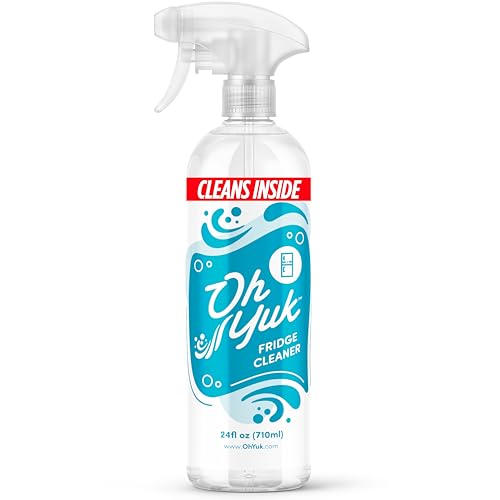
Oh Yuk Fridge Cleaner – Cleans Inside Refrigerator for Spotless, Food-Contact Safe Surfaces | Biodegradable, Vegan, Cruelty-Free | Effortlessly Lifts Sticky Messes & Dried-On Food | Spray Bottle
Included for 'Best Cleaner for Refrigerators' because the listing specifies Cleans Inside Refrigerator for Spotless and Food-Contact Safe Surfaces, details this guide uses to compare options.
View on Amazon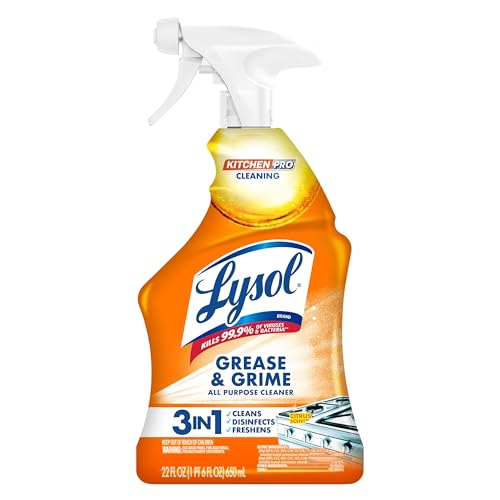
Lysol All Purpose Kitchen Cleaner Spray, For Grease & Grime, Citrus, 22 oz
Included for 'Best Cleaner for Refrigerators' because the listing specifies For Grease & Grime and Citrus, details this guide uses to compare options.
View on Amazon
Weiman Stainless Steel Cleaner & Polish Spray with Cloth, Anti-Fingerprint
Included for 'Best Cleaner for Refrigerators' because the listing specifies Anti-Fingerprint, details this guide uses to compare options.
View on Amazon
ACTIVE Home Appliance Surface Cleaner Wipes Heavy Duty Wipe for Cleaning Washing Machine, Dryer Stainless Steel Refrigerator, Glass Cooktop, Microwave, Dishwasher, Counter, Tile - 24 Large Wipes
Included for 'Best Cleaner for Refrigerators' because the listing specifies Dryer Stainless Steel Refrigerator and Glass Cooktop, details this guide uses to compare options.
View on AmazonBest refrigerator cleaner by situation
| Situation | Best formula | Why it fits | Important limitation |
|---|---|---|---|
| Routine interior cleaning | Unscented dish soap diluted in warm water | Good grease-cutting, low cost, easy to rinse | Needs a second wipe with clean water |
| Children, pets, or fragrance sensitivity | Fragrance-free soap or a food-contact cleaner labeled for rinsing | Less risk of perfume residue and masking odors | May be weaker on baked-on grease |
| Strong food odors | Unscented cleaner followed by baking soda or activated carbon | Removes the source instead of covering it with fragrance | Deodorizer does not replace cleaning |
| Greasy exterior, handles, and top surface | Mild dish soap or diluted all-purpose cleaner | Breaks down fingerprints and cooking grease | Check the finish before using a stronger product |
| Stainless-steel exterior | pH-neutral cleaner or diluted dish soap | Less likely to dull the finish or leave streaks | Wipe with the grain and dry immediately |
| Hard-water scale | Diluted white vinegar on removable, compatible parts | Dissolves mineral deposits effectively | Do not use on unsealed stone, rubber parts, or surfaces marked against acids |
Formula comparison: which cleaner performs best?
1. Unscented dish soap and water: the best all-purpose choice
A small amount of unscented dish soap is usually the safest starting point for refrigerator interiors. Use about 1 teaspoon in 1 quart, or 4 cups, of warm water. This concentration is strong enough for milk rings, sauce splashes, butter residue, and greasy drawer handles without creating a thick soap film.
Its main advantage is rinsability. Dish soap emulsifies grease, and a clean damp microfiber cloth removes the loosened soil. Its weakness is that it does not neutralize persistent odors by itself, and excessive soap makes rinsing tedious. Never pour the solution into vents, electrical controls, ice makers, or drain openings.
2. Food-contact surface sprays: convenient but read the label carefully
Products marketed for kitchens or food-contact surfaces can save time, particularly when they specify whether rinsing is required. Some are ready-to-use cleaners; others are sanitizers that require a stated wet contact time. These are different jobs: a sanitizer is not automatically the best product for removing grease, and a degreaser is not automatically appropriate for surfaces that touch unpackaged food.
For refrigerator shelves and drawers, choose a formula whose label explicitly includes food-contact surfaces. Follow its instructions for dilution, wet time, and rinsing. If the label says “rinse after use,” treat that as mandatory. Do not assume that a plant-based or “natural” label means no residue or unrestricted food contact.
3. Baking soda: useful for odor control, weak on grease
Baking soda is mildly abrasive and alkaline, so it can help with light residue and stale odors. A paste made with roughly 3 parts baking soda to 1 part water can loosen a dried spill on a glass shelf. Let it sit for 5–10 minutes, then wipe and rinse.
It is not a powerful degreaser. It also leaves powder in seams and drawer tracks if it is not thoroughly removed. Use it as a targeted treatment rather than the only refrigerator cleaner.
4. White vinegar: effective on scale and some odors, not every material
Equal parts white vinegar and water can dissolve mineral marks around a water dispenser or on compatible removable plastic parts. Vinegar can also reduce some food odors, but it does not replace mechanical removal of spoiled food or sticky residue.
Do not use vinegar on natural stone, unsealed wood, or any surface the manufacturer identifies as acid-sensitive. Avoid soaking rubber gaskets, because repeated acid exposure may contribute to deterioration. Never mix vinegar with chlorine bleach or other disinfectants.
5. Strong degreasers and bleach: usually the wrong interior choice
Heavy-duty degreasers can remove cooked-on grease, but they often have stronger solvents, fragrance, or alkaline builders that are unnecessary inside a refrigerator. They may haze plastic, damage printed markings, soften some coatings, or leave a difficult-to-rinse film.
Bleach is also a poor routine refrigerator cleaner. It can discolor materials, irritate the respiratory system, and create a hazardous gas if mixed with acids or ammonia. If a manufacturer specifically directs disinfecting with a bleach solution, follow that exact dilution and ventilation guidance; otherwise, use soap and water for ordinary cleaning.
Head-to-head buying criteria
| Formula type | Food-contact safety | Odor removal | Grease cutting | Residue risk | Surface compatibility | Rinsing effort |
|---|---|---|---|---|---|---|
| Unscented dish soap | Good when rinsed | Fair | Very good | Low to medium | Broad | Moderate |
| Food-contact spray | Depends on label | Fair to good | Good | Low to medium | Usually broad, but verify | Low to moderate |
| Baking soda paste | Good when fully removed | Good for light odors | Fair | Medium if poorly wiped | Good on hard plastics and glass | Moderate |
| Vinegar solution | Good when rinsed | Good for some odors | Fair | Low | Limited by acid sensitivity | Low |
| Heavy-duty degreaser | Often unsuitable inside | May mask odors | Very good | Medium to high | Limited | High |
How to clean a refrigerator without spreading residue
- Remove food first. Discard leaking, spoiled, or expired items. Keep perishable food below 40°F while cleaning; a cooler with ice is useful if the job will take more than 30–45 minutes.
- Take out removable parts. Let cold glass shelves warm toward room temperature for about 15–20 minutes before washing them. A sudden temperature change can crack glass.
- Clean from top to bottom. Use a microfiber cloth dampened with diluted soap. Work in sections so dirty liquid does not run into drawers or vents.
- Give sticky spots extra dwell time. Hold a warm, soapy cloth over the residue for 5 minutes rather than scraping plastic with a knife or abrasive pad.
- Rinse every food-contact surface. Use a separate cloth dampened with clean water. This step removes surfactants, fragrance, loosened soil, and cleaner ingredients.
- Dry completely. Moisture left in drawer rails, gasket folds, and shelf trim encourages odor and mildew-like buildup. Leave parts out until dry before reinstalling.
- Address the odor source. Place an open box or shallow dish of baking soda inside for about 30 days, or use activated carbon according to its instructions. Replace it after a strong spill rather than expecting it to absorb everything.
Surface compatibility matters more than scent
Glass shelves generally tolerate mild soap, while clear plastic can become cloudy from harsh solvents, abrasive powders, or very hot water. Rubber door gaskets need gentle wiping rather than prolonged soaking. Painted metal and coated doors can lose their sheen when scrubbed with abrasive cleaners.
For stainless steel, apply cleaner to the cloth instead of spraying directly onto the door. Wipe in the direction of the grain, then dry with a clean cloth. Avoid steel wool, powdered scouring products, and chlorine-based cleaners unless the appliance manufacturer specifically permits them.
What to look for on the label
- Explicit mention of refrigerator interiors or food-contact surfaces.
- Clear instructions stating whether rinsing is required.
- Fragrance-free or low-fragrance ingredients if food odors and chemical smells bother you.
- A dilution ratio or ready-to-use direction that is easy to follow.
- No warning against plastic, rubber, stainless steel, or coated surfaces used in your appliance.
- A spray pattern that produces a controlled mist rather than a stream into vents and controls.
Bottom line
For the majority of refrigerators, choose unscented dish soap, warm water, two microfiber cloths, and a thorough clean-water rinse. Add baking soda or activated carbon for lingering odors, and reserve vinegar for compatible mineral deposits. Choose a commercial food-contact cleaner when convenience matters, but judge it by its rinsing instructions and surface compatibility—not by fragrance, “natural” marketing, or degreasing strength alone.