Key takeaways
- Verify a Sunbrella fabric description against the selected furniture option, installed cover, tag and fabric code before choosing a cleaning guide.
What's inside
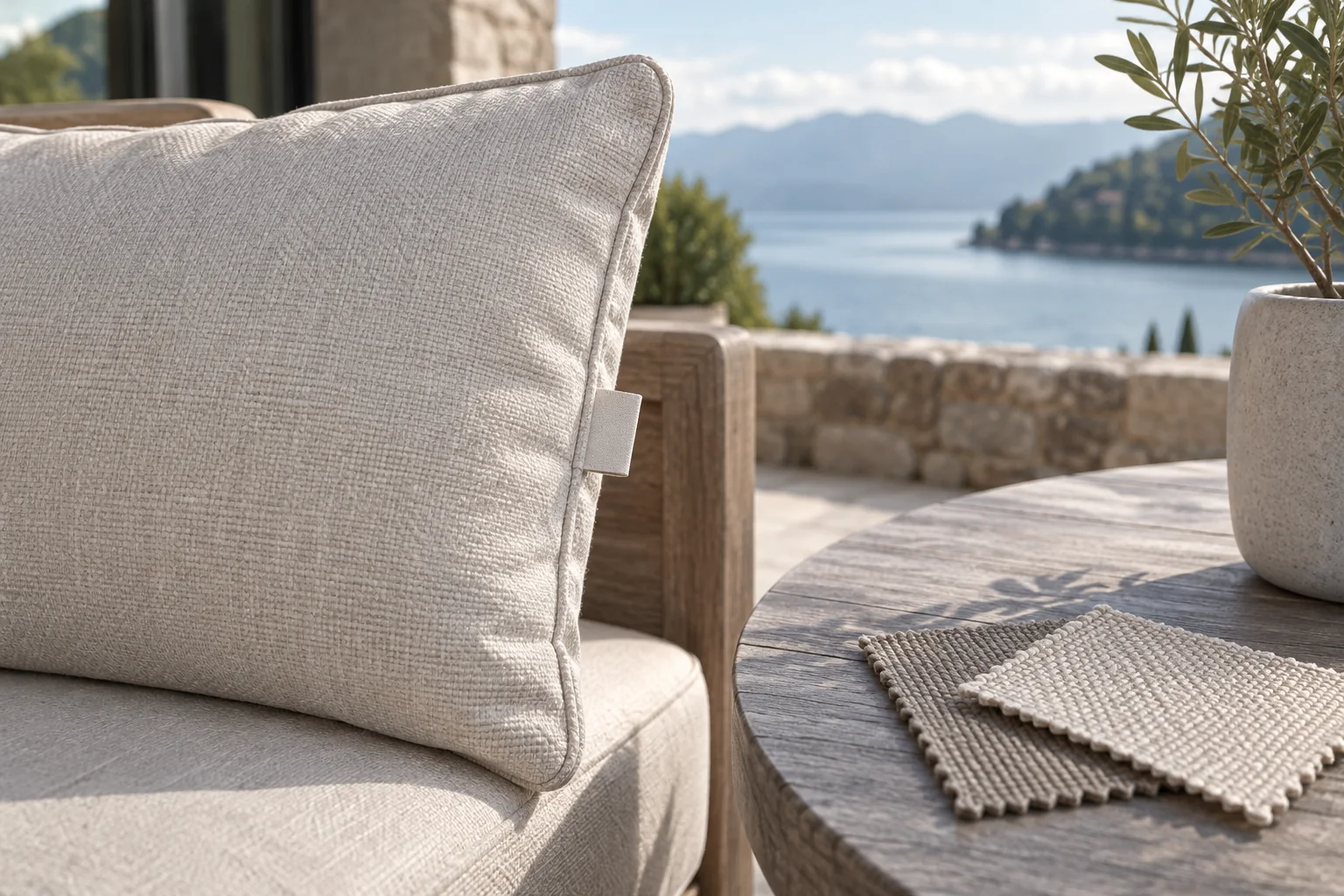
Before using a Sunbrella cleaning guide, confirm that the installed fabric is actually the named Sunbrella material and identify its product family. A similar weave, outdoor-fabric description or familiar color does not establish the brand. Connect the furniture order, selected upholstery option and fabric identification before choosing a care document.
Keep furniture identity and fabric identity separate
A cushion can have a furniture manufacturer’s model number, a retailer’s color name and a fabric supplier’s pattern code. Those identifiers serve different purposes. “Sand sofa” may identify a furniture option without telling you the fabric’s brand or collection. Photograph the accessible labels and save the order confirmation before trying to match a color online.
Sunbrella’s consumer support page explains that independent manufacturers use its fabric and sew a Sunbrella tag onto finished products to identify it. The same page directs customers seeking replacement cushions or furniture parts to the original retailer or product manufacturer first. This separates the fabric brand from the company responsible for the completed item.
A tag is useful evidence to record, not a reason to disregard conflicting information elsewhere. If a secondhand cushion has no readable label, do not declare it counterfeit or genuine from appearance. Describe the identity as unconfirmed and ask the appropriate supplier to help connect it to a documented product.
Follow the selected upholstery option back to the order
Check whether the exact furniture variant on your invoice specifies Sunbrella. A collection may offer several fabrics, with the brand name attached to only some options. A headline saying “available in Sunbrella” does not show which option was purchased. Save the selected color and fabric code, not merely the general collection page.
Distinguish the original purchase from later changes. A replacement cover, reupholstery job or separately purchased cushion can have a different fabric from the furniture’s original specification. The current installed material governs the fabric search, even if the frame still carries the original model label.
| Evidence | What it identifies | Question to resolve |
|---|---|---|
| Furniture invoice | Product and selected upholstery option | Does this option name the fabric brand? |
| Accessible sewn tag | Brand or product information on the item | Does it agree with the invoice? |
| Fabric pattern and color code | Specific textile variant | Can the supplier confirm the complete code? |
| Replacement-cover record | Material installed later | Did it replace the original specification? |
| Current fabric page | Technical information for that fabric | Which care family applies? |
| Finished-item instructions | Care of the assembled product | Are there construction restrictions? |
Use the code to find the right family
Search the manufacturer’s site using the confirmed pattern and color code. Preserve punctuation and suffixes rather than dropping them because two photographs look alike. Sunbrella’s technical-information guidance points readers to individual fabric pages and customer support when information cannot be located.
Product families matter. The consumer support page distinguishes machine-washing permissions among upholstery, shade, sling and Horizon fabrics. Do not turn the brand name alone into one universal washing instruction. Once the family is identified, read its applicable care guide and the furniture maker’s directions for the finished item.
If a code cannot be found, keep the unanswered part explicit. It may require clarification from the original supplier. An absent search result does not prove that a seller’s description is false, and a close visual match is not confirmation that you have found the right guide.
Resolve an ambiguous purchase description
Imagine a used outdoor chair advertised as “Sunbrella-style navy.” The frame’s label identifies the chair manufacturer, but the cushion’s label is unreadable. The seller has no fabric invoice. This fictional evidence establishes a description and a chair model, but it does not establish the cushion’s textile brand.
The buyer asks for any replacement-cover record and sends photographs plus the chair details to the original retailer. Until the fabric is identified, the buyer does not apply a Sunbrella-specific treatment. The correct interim result is unknown, rather than “close enough because it looks outdoor grade.”
Now imagine the retailer finds an order showing a specific Sunbrella fabric code, but the seller confirms that the cushion was recovered later. The old order describes the previous cover. The buyer needs the upholsterer’s record for the current material. Following the timeline prevents a perfectly genuine document from being applied to the wrong fabric.
Ask a question that the supplier can answer
Use a short request such as: “Please confirm the fabric brand, full pattern/color code and care family for the cover currently supplied with furniture model A, upholstery option B. Attached are the order line and accessible label photographs.” If replacement work occurred, include that information separately.
Do not cut seams, remove permanently attached upholstery or carry out a burn, solvent or bleach test to identify a textile. A response linking the product to its documentation is more useful than a destructive experiment that still cannot establish the complete manufacturing history.
Save the resolved identity with the care guide
Keep the supplier’s answer, exact fabric reference and finished-item instructions together. Mark which cushion or cover the record describes so a later replacement does not silently inherit the same treatment. The identity check is complete when the installed material is connected to the appropriate documentation, not when an online photograph happens to look convincing.