Key takeaways
- Prepare hook-and-loop textiles for washing by checking the whole-item care label, closing permitted fasteners and resolving attachment questions.
What's inside
- Identify the fastening on the actual item
- Close the matching surfaces before they enter the load
- Use two permissions, not one
- Sewn-on and adhesive products illustrate the difference
- A preparation example for two similar covers
- Keep debris removal separate from fabric cleaning
- Finish with a clear next-use check
- Identify the fastening on the actual item
- Close the matching surfaces before they enter the load
- Use two permissions, not one
- Sewn-on and adhesive products illustrate the difference
- A preparation example for two similar covers
- Keep debris removal separate from fabric cleaning
- Finish with a clear next-use check
Before washing a textile with hook-and-loop fasteners, establish that the complete item is washable, then prepare its fasteners as the maker directs. Closing a fastening can protect it from grabbing other material; it does not make an otherwise non-washable cover suitable for the machine.
Identify the fastening on the actual item
Hook-and-loop describes the two mating surfaces: one has hooks and the other receives them. VELCRO is a brand name, not the name of every fastening of this type. Start with the textile maker’s care label because the fabric, backing and attachment method form one assembled item.
Look for whether the fastening is sewn to the textile, bonded with an adhesive or attached to a removable component. You do not need to peel it away to identify it. If the construction is unclear, photograph the accessible area and ask the supplier before laundering.
A label on a removable cover should not be transferred to its insert or to a rigid part underneath. Separate only components that the product instructions allow you to remove. The fastening’s presence alone does not establish a disassembly method.
Close the matching surfaces before they enter the load
The VELCRO Brand fastening FAQ advises engaging the hook and loop before washing and keeping hooks covered so they do not catch unintended material. This supports a specific preparation step. It does not supply a wash temperature or drying permission for every item carrying a fastener.
Follow the garment or cover maker’s arrangement for closing each tab. Check that a hook strip is paired with its intended loop area instead of being folded against an unrelated piece of fabric. Keep the item in its approved wash configuration; do not improvise a knot, adhesive cover or permanent alteration.
If a tab will not stay engaged, identify the cause without forcing it. Visible trapped lint, an incomplete matching area or a damaged fastening can require different responses. A washing bag does not automatically correct a fastening that the item maker says must remain securely closed.
Use two permissions, not one
| Question | Textile instruction | Fastener check |
|---|---|---|
| May it be washed? | Complete-item care label | Attachment method is included |
| How should it be arranged? | Approved removal or turning instructions | Matching hooks and loops engaged |
| Is a bag specified? | Follow the named bag instruction | Do not substitute a bag for closure |
| What drying method applies? | Read the separate drying direction | Do not infer it from washing permission |
| What if the tab is damaged? | Ask the item supplier | Avoid an unapproved repair |
Sewn-on and adhesive products illustrate the difference
VELCRO Brand’s sew-on tape page gives its own laundering guidance and calls for closing the fastener. Its Sticky Back for Fabrics page describes a different attachment product with separate application and laundering conditions. A permission belonging to one tape should not be copied to the other.
For an existing household cover, you may not know which tape was used. That uncertainty is a reason to ask about the assembled cover, not to choose the most convenient tape instructions online. The supplier should identify the applicable care method for the finished product.
Likewise, a newly attached fastener may have instructions that do not apply to a long-established sewn tab. Keep installation directions and routine washing directions in their own context. This guide is not an instruction to add adhesive fastening to a textile.
A preparation example for two similar covers
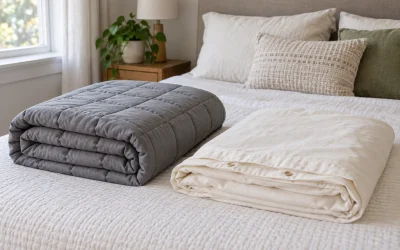
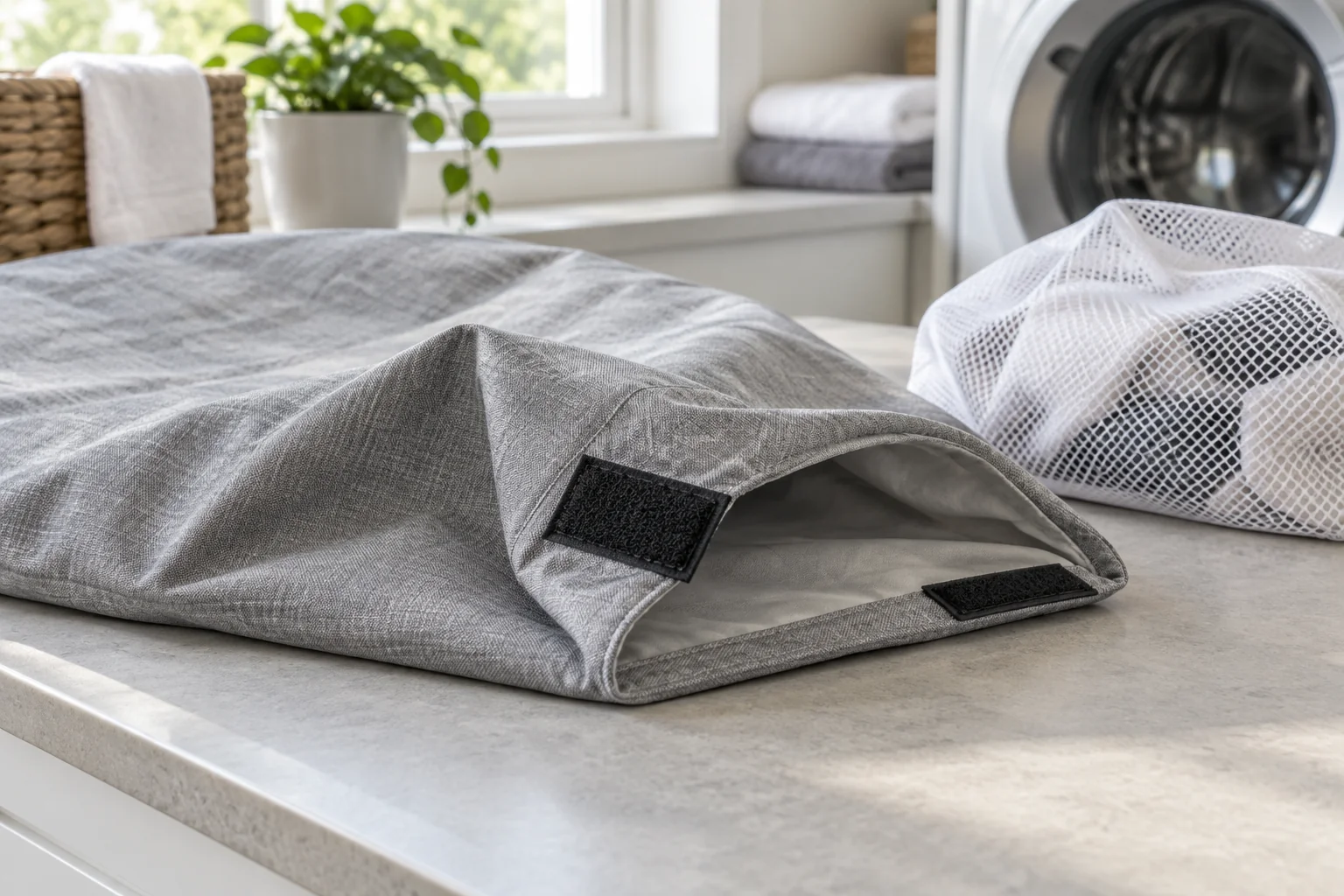
Imagine two removable covers lying beside the washer. Cover A has a readable machine-care label and the maker instructs the user to close its sewn tabs. Cover B looks similar but carries no readable instruction, and its fastening appears bonded. The owner prepares A as directed and sets B aside for identification.
That decision is based on documented permission, not on which cover feels sturdier. Putting both in the same bag would not resolve B’s unknown care requirements. Neither would copying A’s temperature setting to B simply because the exposed fabric has a similar texture.
Before starting A’s approved cycle, the owner checks the full perimeter for a missed tab. After following its drying instructions, they examine the closures before putting the cover back into use. This is a suggested owner workflow, not a test result for a particular fabric or fastening.
Keep debris removal separate from fabric cleaning
If hooks have collected lint, follow the fastening and textile maker’s compatible cleaning advice. A tool suited to the hook surface may be inappropriate for the neighboring fabric. Do not extend a fastener-cleaning method across a delicate cover merely because the two materials are stitched together.
Work only on accessible parts and avoid pulling the attachment away from the textile. If the fastening separates, loses its matching section or catches the surrounding fabric during ordinary closure, ask the supplier about the permitted next step.
Finish with a clear next-use check
Once the approved care process is complete, confirm that the item is in the required condition for reuse and that its tabs engage normally. Return removable pieces to the positions specified by the maker. Store spare items with their hooks covered where instructed.
The useful habit is simple: verify the whole item’s care permission, close the intended mating surfaces and keep unresolved construction questions out of the wash load. That addresses snagging preparation without guessing a universal laundry recipe.