Key takeaways
- Check polished porcelain, installed treatments and the exact cleaning pad before use. Includes a tool approval worksheet and a renovation-residue example.
What's inside
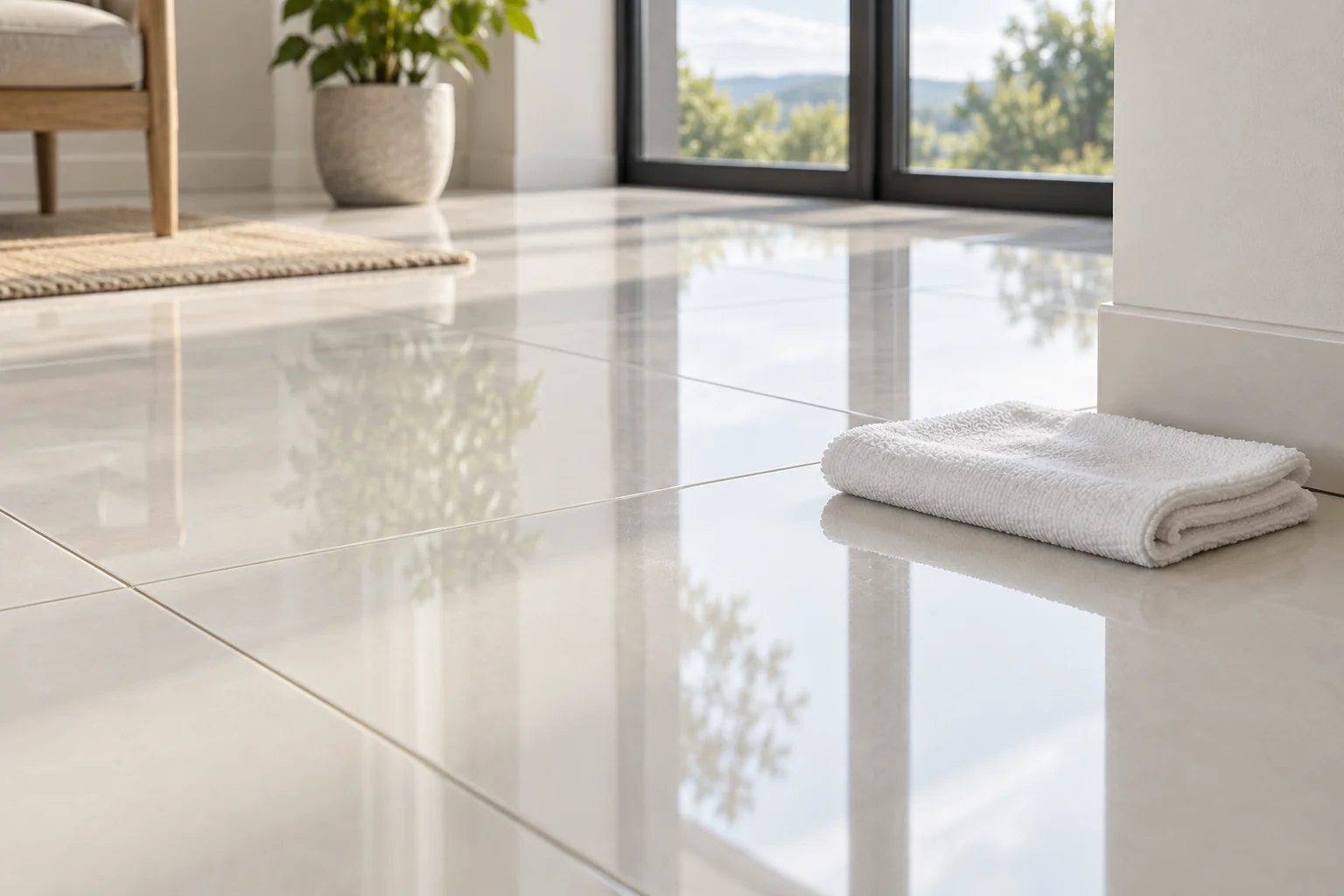
Before using a cleaning pad on polished porcelain, identify the tile and finish, then match the pad to a maintenance method approved for that product. A pad’s color, soft feel or “tile safe” label alone does not establish compatibility with the installed surface. Keep routine cleaning separate from construction cleanup, stain treatment and surface restoration.
This guide helps you ask for a documented tool choice. It does not supply a universal abrasive grade or a polishing procedure. If the finish or installed treatment is unknown, start with the supplier’s records rather than testing progressively rougher pads.
Confirm what surface is actually installed
Find the tile box label, invoice or installation record. Record the manufacturer, collection, exact product and finish designation. A marble pattern can be printed on porcelain, while a glossy appearance does not by itself identify how the surface was finished.
Also record any sealer or other treatment the installer documented. A tool recommendation should address the installed system, including relevant grout and adjacent trim, rather than only a generic material name. Leave undocumented treatments marked unknown instead of assuming the tile was never treated.
Read the correct maintenance section
Daltile’s care and maintenance guide separates routine tile cleaning from construction-related cleanup and warns that polished tiles deserve particular care against fine scratches. Its routine section mentions a microfiber mop head, while other sections describe different equipment for different tasks. Those sections should not be blended into one household cleaning instruction.
That guide is a source example, not approval for every porcelain product. Ask the manufacturer which current instructions govern your exact finish. If a document includes a more aggressive procedure elsewhere, do not assume it applies to your surface or to an ordinary household mark.
| Check | Record | Question to resolve |
|---|---|---|
| Surface identity | Tile code and finish | Does the care sheet match? |
| Installed treatment | Documented sealer or coating | Does it change tool permission? |
| Task | Routine soil, residue or unresolved mark | Which care section applies? |
| Tool identity | Brand, model and material | Is this exact pad permitted? |
| Method | Hand or specified equipment | Are equipment conditions relevant? |
| Next action | Written approval or support request | What remains unconfirmed? |
Identify the pad beyond its color
Keep the packaging or specification for the proposed tool. Record the product reference and intended use rather than calling it simply “the white pad” or “the green pad.” A color is useful for describing what you own, but it is not a complete technical specification.
Ask the tile supplier to identify an acceptable product or a sufficiently precise tool description. If the answer says nonabrasive, verify that the proposed item actually meets the intended requirement. Do not substitute a kitchen scouring pad because it has a similar color to a floor-care accessory.
Check the condition of any permitted reusable tool before use. A clean-looking cloth can carry debris from another task. Keep tools intended for this floor separate from workshop cleanup and construction residue so that their history is known.
Example: a mark after renovation work
Imagine a polished porcelain hallway with a cloudy patch after nearby decorating. The owner does not know whether the mark is ordinary soil, product residue or a changed finish. A general maintenance document includes both routine cleaning and construction cleanup, with different tools mentioned.
The owner photographs the patch, records the known work and sends the exact tile code to the supplier. The question is not “Which stronger pad should I try next?” It is “Which section applies to this condition and this finish, and what tool is approved?”
If the supplier identifies a permitted cleaning method, the owner follows that complete method, including any specified preliminary check and cleanup. If the supplier cannot identify the condition, a professional assessment may be appropriate. The example does not assume that visible haze will respond to scrubbing.
Keep chemical and mechanical permission together
An approved cleaner does not automatically approve any tool used with it. Conversely, a permitted cloth does not make an unsuitable chemical acceptable. Record both parts of the method and follow the applicable product directions, including any dilution, protective equipment and rinse requirements.
Do not combine cleaners or improvise an abrasive paste to increase their effect. If the documented method is not resolving the condition, report that result rather than increasing pressure or changing tools without guidance. Describe the exact product and action already used.
Stop when the task changes
A request to remove routine dirt can turn into attempted finish restoration if you begin buffing, grinding or polishing. Recognize that boundary. A household care worksheet does not establish the equipment, skill or finish-matching procedure required for restoration.
Keep photographs from before and after any approved cleaning under comparable lighting. Record visible results without claiming a diagnosis from appearance alone. Save the confirmed tool reference with the tile information so the next person does not have to reinterpret a vague instruction.
The result should be a specific match between surface, task and tool. That is more reliable than choosing a pad by color or assuming that porcelain’s general durability makes every cleaning accessory suitable for a polished finish.