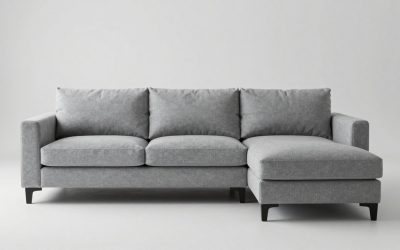
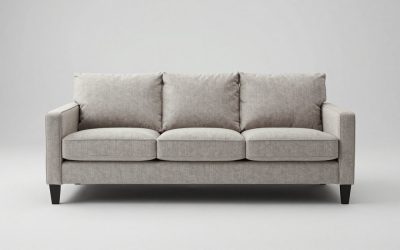
Choosing a new sectional sofa is one of the most significant furniture investments you will make for your home. Beyond mapping out the layout of your living room, you must confront a fundamental debate: top grain leather vs performance fabric sectional sofa. A sectional is not just a place to sit; it is a massive architectural element in your home, typically spanning 100 to 130 inches in width, weighing upwards of 250 pounds, and serving as the primary hub for family movie nights, afternoon naps, and social gatherings.
The material you select determines how your living space feels, how much time you will spend cleaning, and how the furniture will age over the next decade. Do you opt for the rich, buttery patina and hypoallergenic properties of genuine top grain leather, or do you choose the soft, stain-resistant, and highly customizable embrace of modern performance fabrics? As we look ahead to 2026, the lines between indoor luxury and practical utility have blurred, making this decision more nuanced than ever. To help you make the right choice, we will break down the physical characteristics, long-term costs, and real-world performance of both materials.
Our top picks


 106'' Modular Sectional Sofa with Pull Out
- Multiple Package Issues: Multiple package may not arrive…
- After unpacking, seat cushions recover about 80% in…
- Elegant Design: Featuring a unique rolled-arm design, this…
As an Amazon Associate we earn from qualifying purchases at no extra cost to you.
Quick Verdict
If your priority is heirloom longevity, easy allergen maintenance, and a sophisticated aesthetic that improves with age, top grain leather is the winner. It naturally repels dust, pet dander, and odors, and its surface develops a beautiful, unique character over time. However, if your priority is immediate cloud-like comfort, scratch resistance against cat claws, and a highly customizable, budget-friendly setup that you can deep-clean with standard household solutions, a performance fabric sectional sofa is the superior choice for your daily lifestyle.
Side by Side
To understand the core differences between these two heavyweights, let us look at their specifications and performance metrics side by side:
| Feature | Top Grain Leather Sectional | Performance Fabric Sectional |
|---|---|---|
| Comfort | Starts firm; breaks in over time to mold to your body. Temperature-responsive (can feel cool in winter, warm in summer). | Soft, cozy, and breathable from day one. Maintains a neutral, consistent temperature regardless of the season. |
| Durability | Excellent (15–20+ years). High tensile strength prevents ripping; naturally resists punctures from dog claws. | Very good (7–12 years). Highly resistant to pilling and abrasion, though heavy wear can thin fibers over time. |
| Price Range | $3,000 – $8,000+ for high-quality builds. | $1,000 – $4,500 depending on frame and fabric class. |
| Maintenance | Low. Wipe spills immediately with a dry cloth. Needs conditioning 1–2 times a year to prevent cracking. | Moderate. Requires regular vacuuming. Spills bead up but must be blotted; some designs feature machine-washable covers. |
| Space Needed | Visually heavy. Often requires breathing room (3–5 inches from walls) due to deeper frames and traditional styling. | Highly adaptable. Often modular, allowing configurations that tuck tightly into corners or small spaces. |
| Look & Style | Classic, luxurious, and stately. Develops a distinct patina that shows the story of its use. | Contemporary, casual, and highly versatile. Available in hundreds of colors, textures, and weave patterns. |
| Resale Value | High. Retains 40% to 60% of its original purchase value if well-conditioned. | Low to moderate. Typically retains 15% to 30% of its value due to perceived wear and tear. |
| Best For | Adult-centric homes, allergy sufferers, and those seeking a permanent, long-term investment. | Active families with young children, cat owners, and those who love a plush, cozy lounging experience. |
Where Top Grain Leather Wins
Top grain leather is widely regarded as the gold standard of upholstery materials for a reason. Unlike bonded or split leathers, top grain leather utilizes the outer layer of the cowhide, where the fibers are most densely packed. This dense structure gives the material immense tensile strength, allowing it to withstand the daily stretching and weight shifts of a busy household without tearing.
When evaluating genuine leather, look closely at the hide’s thickness and preparation. Much like the dense, pliable feel of professional crafting materials such as the RingSun 12”X24” Genuine Leather Sheets for Crafts Full Grain Leather Tooling Leather (2mm) Thick Cowhide Leather Pieces Square, Dark Brown ($29.99) or the rugged Genuine Leather Tooling Sheets 1.8-2.0MM Thick Genuine Top Full Grain Oil Tan Crazy Horse Cowhide Leather Sheets for Crafts Tooling Sewing Wallet Earring Hobby (Dark Brown, 8″x12″) ($6.99), top-tier sofa leather must feature a substantial thickness (typically 1.5mm to 2.0mm) to endure years of sitting, shifting, and stretching. This thickness ensures the leather will not sag or wear thin at the pressure points of your sectional, such as the seat cushions and armrests.
The absolute greatest advantage of top grain leather is its aging process. While fabric degrades and begins to look worn over time, leather develops a gorgeous patina. It absorbs the oils from your hands, reacts to light, and softens into a custom-molded seat that is uniquely yours. Furthermore, leather is inherently hypoallergenic. Dust mites, pet dander, and pollen cannot penetrate the sealed surface of a leather hide. A simple weekly wipe-down with a damp microfiber cloth keeps the environment completely clean, making it a lifesaver for family members with asthma or seasonal allergies.
Where Performance Fabric Sectional Sofa Wins
While leather offers timeless luxury, modern performance fabrics offer unmatched everyday utility and comfort. Performance fabrics—such as Crypton, Revolution, and high-grade olefin or polyester blends—are engineered at the molecular level. Each individual fiber is treated with a stain-resistant barrier before being woven, or the fibers themselves are naturally hydrophobic. This means that red wine, coffee, and muddy paw prints pool on top of the fabric rather than soaking in, giving you ample time to blot them away.
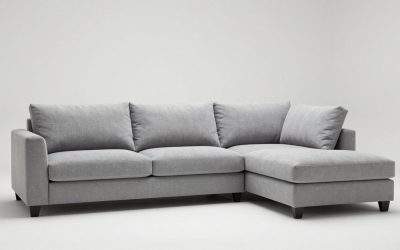
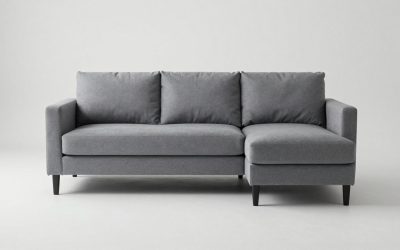
On the other end of the spectrum, performance fabrics have undergone a massive evolution. Modern options like the EASE MOOSE Oversized Sectional Modular Sofa, Comfty Deep Seat Couch for Living Room,Solid Wood Frame Sofa,Removable and Washable,Grey ($1399.99) showcase how these textiles can be engineered for ultimate physical comfort, featuring deeply padded frames and fully removable, machine-washable covers. For multi-functional spaces, performance fabrics also allow for complex mechanical integrations, as seen in the 106” Modular Sectional Sofa with Pull Out Bed, Sleeper Sofa, Dark Gray ($759.99), where the fabric must slide and flex against metal sleeper frames without tearing or wearing thin.
Performance fabric also wins handily when it comes to immediate physical comfort. There is no “cold shock” when you sit down on a chilly morning, and your skin will not stick to the cushions on a humid summer afternoon. Fabric is inherently breathable, offering a cozy, enveloping sensation that is perfect for deep relaxation. Additionally, if you have cats, performance fabrics are highly recommended over leather. While a cat’s claws can easily puncture and permanently scar leather, tightly woven performance fabrics like micro-velvet or flat-weave polyester offer no loops for claws to catch on, making them highly scratch-resistant.
Cost Over 5 Years
When purchasing a sectional, looking only at the retail price tag can be misleading. You must calculate the total cost of ownership over a five-year period, factoring in maintenance, professional cleanings, and depreciation.
Top Grain Leather Sectional (Initial Cost: $4,500)
Leather sectionals require a higher initial investment, but their ongoing costs are remarkably low. Over five years, your main maintenance expenses will be 2 to 3 bottles of high-quality leather cleaner and conditioner, totaling roughly $60. Because leather is highly durable, you are unlikely to need professional repairs or deep cleanings. After five years of use, a well-maintained top grain leather sectional retains a high resale value, often fetching around $1,800 to $2,200 on the secondary market.
Total Net Cost Over 5 Years: ~$2,360
Performance Fabric Sectional (Initial Cost: $2,200)
While a performance fabric sectional is much friendlier to your bank account upfront, its maintenance costs can add up. Even with stain-resistant coatings, a busy household will likely require at least one professional steam cleaning over a five-year span, costing about $200 to $300. Furthermore, fabric fibers naturally wear down over time, resulting in minor pilling or slight color fading in high-sunlight rooms. After five years, the resale value of a fabric sectional drops significantly, usually netting only $300 to $500.
Total Net Cost Over 5 Years: ~$2,050
Ultimately, while leather has a higher upfront barrier, its cost-per-year of service is nearly identical to—and sometimes lower than—a fabric alternative due to its incredible lifespan.
Which One for Your Home
Small Apartment
For tight living spaces, a performance fabric sectional is generally the better choice. Apartments benefit from furniture that can serve multiple roles. A modular fabric sectional can easily incorporate pull-out sleeper mechanisms or hidden storage compartments without looking excessively bulky. The soft texture of fabric also helps absorb sound, helping to dampen echo in rooms with hardwood floors and thin apartment walls.
Family with Kids and Pets
If your home is a high-traffic zone filled with toddlers, dogs, and cats, a performance fabric sectional with removable, washable covers is incredibly practical. Being able to strip the cushion covers off and toss them into a standard washing machine takes the anxiety out of juice spills and muddy paws. If you have cats specifically, the tight weave of performance fabric is the only reliable defense against scratching behavior.
Rental Property
For vacation rentals or lease properties, top grain leather is the undisputed champion. Renters can be notoriously tough on furniture, and fabric sofas quickly accumulate mystery stains, body odors, and pet smells that are difficult to extract between guests. Leather does not absorb odors, cannot be easily stained by spilled drinks, and can be quickly sanitized with a damp cloth during tenant turnovers, ensuring the property always looks pristine and high-end.
Long-Term Home
If you have settled into your forever home and want to design a space that looks curated, intentional, and timeless, invest in a top grain leather sectional. It acts as a stunning anchor piece for your living room, coordinating beautifully with natural wood, stone, and metal accents. Its ability to last for two decades means you will not find yourself shopping for a replacement sofa anytime soon.
FAQ
Does top grain leather scratch easily from pet claws?
While top grain leather is incredibly tough and highly resistant to punctures from dog claws, it can develop surface scratches from sharp, active scratching. However, unlike synthetic leather, minor surface scratches on high-quality oil-tanned leather can often be buffed out simply by rubbing them with the warmth of your fingertip or applying a small amount of leather conditioner.
Can you wash performance fabric sectional covers in a washing machine?
It depends entirely on the manufacturer’s care instructions. Many modern performance fabric sectionals feature removable zippered covers that can be washed on a cold, gentle cycle and air-dried. However, some performance fabrics rely on topical coatings that can be stripped away by harsh laundry detergents, so always check the fabric care tag before washing.
How do I know if a sectional is actually top grain leather?
Real top grain leather will have natural variations in its grain pattern, small insect bites, or healed scars, meaning no two panels look exactly identical. It will also have a distinct, rich earthy smell. If a sofa is labeled as “genuine leather,” “bonded leather,” or “leather match,” it is likely a composite material made of shredded leather scraps bonded with polyurethane, which will peel and crack within a few years.
Does performance fabric pill over time?
High-quality performance fabrics are specifically engineered and tested using the Martindale or Wyzenbeek abrasion methods to resist pilling. However, lower-grade polyester or acrylic blends can still develop small pills in high-friction areas over time. Regular vacuuming to remove abrasive dust particles and using a gentle fabric shaver can quickly restore the smooth texture of the fabric.