Shopping for a new living room chair used to be simple: you sat in a few, picked a fabric, and hoped it matched your rug. Today, the decision is much more strategic. The modern living room serves as a home office, a movie theater, a social hub, and a relaxation sanctuary all at once. Because our square footage has to work harder than ever, choosing the right seating mechanism is crucial. This brings us to a classic interior design dilemma: the wall hugger recliner vs rocker recliner for living room layouts.
The real decision comes down to how you interact with your physical space. Are you trying to maximize every square inch of a compact room, or are you looking for a dedicated relaxation station where you can sway your worries away? A wall hugger recliner is engineered to glide forward as it reclines, saving valuable floor space. On the other hand, a rocker recliner offers a soothing, traditional back-and-forth motion that many find essential for stress relief, nursing, or lounging. Making the wrong choice can lead to scuffed drywall, cramped walkways, or a chair that simply doesn’t fit your daily lifestyle.
Our top picks


As an Amazon Associate we earn from qualifying purchases at no extra cost to you.
Quick Verdict
If you have a tight living room, plan to place your chair directly against a wall, or have mobility issues that make exiting a moving chair difficult, the wall hugger recliner is your best option. It maximizes floor space by requiring only 3 to 5 inches of rear clearance. However, if you have an open-concept living space, want a soothing motion to help you relax or put a baby to sleep, and prefer extra features like 360-degree swiveling or built-in massage, the rocker recliner is the superior choice.
Side by Side
To help you visualize how these two popular seating options stack up, here is a direct comparison of their key specifications, performance metrics, and design footprints:
| Feature | Wall Hugger Recliner | Rocker Recliner |
|---|---|---|
| Space Needed (Rear Clearance) | 3 to 6 inches | 12 to 18 inches |
| Primary Movement | Slides forward on a track while reclining | Rocks back and forth on a curved track or spring chassis |
| Price Range | $250 to $800+ | $180 to $700+ |
| Stability & Ease of Exit | High; base remains stationary and solid | Moderate; chair can tilt or shift as you stand up |
| Comfort Profile | Firm, supportive, and space-efficient | Plush, motion-oriented, and deeply relaxing |
| Common Extra Features | Power motors, USB charging, adjustable headrests | 360-degree swivel, vibration massage, heated lumbar support |
| Durability & Maintenance | High; track mechanism is contained and sturdy | Moderate; springs and swivel joints require occasional lubrication |
| Resale Value | High (especially popular for RV owners and apartment renters) | Moderate (highly sought after by young families and parents) |
| Best For | Small apartments, RVs, seniors, and tight layouts | Nurseries, large open living rooms, and sensory relaxation |
Where Wall Hugger Recliner Wins
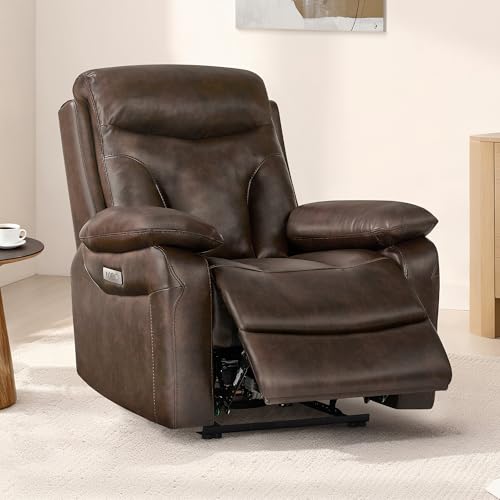
The wall hugger recliner is a triumph of mechanical engineering. Unlike traditional recliners that tip backward, a wall hugger utilizes a forward-gliding mechanism. When you activate the recline—either via a manual pull-tab or an electric button—the entire seat assembly slides forward on a metal track. This architectural design means you can place the back of the chair a mere 3 to 5 inches away from your drywall without worrying about scuffing your paint or damaging the upholstery.
This space efficiency makes it the undisputed king of small-space living. In tight living rooms, every inch of walkway matters. By keeping the footprint of the chair contained, you preserve clear traffic paths through your home. This is why manual fabric models like the INZOY Manual Recliner Chair ($258.99) are incredibly popular for compact reading corners and home theaters alike.
Additionally, wall huggers offer superior stability. Because the base of the chair does not rock or swivel, it remains completely stationary when you sit down or stand up. This is a critical safety feature for seniors, individuals recovering from surgery, or anyone with balance issues. Furthermore, the stationary base makes it easier to integrate high-powered electronics. Dual-motor electric options, such as the KISLOT Power Recliner Chair Wall Hugger ($439.99), can offer independent headrest and footrest adjustments alongside built-in USB and Type-C charging ports without risking pinched or frayed power cords.
Where Rocker Recliner for Living Room Wins
While wall huggers excel at space management, rocker recliners dominate when it comes to pure, unadulterated comfort and therapeutic motion. The rhythmic, back-and-forth rocking motion of these chairs has been scientifically proven to lower heart rates, reduce stress hormones, and promote relaxation. For many, a living room isn’t truly complete without a chair that lets them gently sway while watching television or reading a book.
This rocking function makes these chairs incredibly versatile, particularly for families. New parents frequently choose rocker recliners for their living rooms because the gentle motion is perfect for soothing fussy infants to sleep. Once the nursery stage is over, the chair transitions seamlessly back into a standard living room lounger.
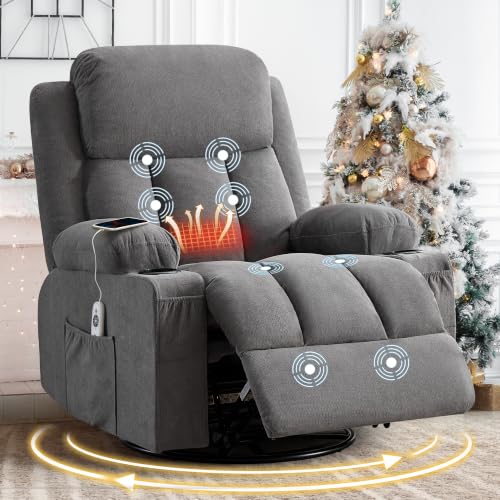
Because rocker mechanisms do not have to slide forward on a restricted track, manufacturers often have more freedom to pack them with luxury features. It is incredibly common to find rocker recliners that also swivel a full 360 degrees and include therapeutic add-ons. For example, budget-friendly options like the Massage Rocker Recliner Chair ($199.98) provide vibration massage and heated lumbar support, turning your living room into a private spa. Other models, such as the MAHOMICO Swivel Rocker Recliner Chair ($219.98), combine this soothing motion with integrated cup holders, side pockets, and USB ports, creating an all-in-one entertainment station that serves as the ultimate retreat after a long day.
Cost Over 5 Years
When investing in living room furniture, looking at the sticker price is only half the story. You must also consider the cost of ownership over a five-year lifespan, factoring in durability, maintenance, and utility usage.
Initial Purchase Price: Generally, manual rocker recliners are slightly less expensive upfront than wall huggers because their mechanisms are less complex. You can easily find a feature-rich rocker for around $200 to $300. Wall huggers, especially those with dual-motor power functions, usually start around $250 for manual versions and can quickly climb to $450 or more for advanced electric models.
Power and Utility Costs: If you opt for an electric wall hugger, it will draw power from your home. Under normal daily use, a power recliner motor draws about 50 to 100 watts only while actively reclining or uprighting. The standby power draw is virtually non-existent (less than 1 watt). Over five years, this adds a negligible $5 to $15 to your electricity bill.
Maintenance and Repairs: This is where the two types diverge. Rocker recliners have more exposed moving parts, including heavy-duty tension springs and swivel rings. Over five years of constant rocking, these parts can accumulate dust, lose their lubrication, and begin to squeak. You may need to spend $10 to $20 on specialty silicone lubricants or replacement springs over the years. Wall hugger tracks are more enclosed, but if an electric motor fails outside of its warranty period, a replacement motor can cost between $50 and $100, plus the effort of installation.
Ultimately, a manual wall hugger or a basic manual rocker will have the lowest cost of ownership, while a fully-loaded power or massage model will require a slightly higher financial commitment to keep running smoothly through 2026 and beyond.
Which One for Your Home
Choosing between a wall hugger recliner vs rocker recliner for living room spaces depends heavily on your living situation. Here is how the choice breaks down across four common household scenarios:
Small Apartment
If you live in a cozy downtown loft or a small apartment, space is your most valuable commodity. A rocker recliner is a poor fit here, as it requires up to 1.5 feet of dead space behind it to rock safely without striking your wall. In this scenario, the wall hugger recliner is the clear winner. You can push it right up against your wall or place it in a tight corner, opening up your floor plan and keeping your walkways clear.
Family with Kids and Pets
For busy households filled with toddlers, dogs, or cats, safety and durability are paramount. Rocker recliners have open undercarriages and moving bases that can pose a pinch hazard for curious little fingers or pet tails. Additionally, kids love to use rocker recliners as toys, which can lead to tipped chairs or worn-out springs. A sturdy, stationary wall hugger recliner is much safer and more durable under the chaotic demands of family life.
Rental Home
If you rent your home, versatility is key because you don’t know what your next living room layout will look like. A compact, manual wall hugger is highly adaptable; it can fit into tiny bedrooms, narrow living rooms, or even an RV if you decide to take your life on the road. It is easy to move and guarantees you won’t leave scuff marks on your landlord’s walls when you recline.
Long-Term Home
If you are settled into your forever home and have a spacious, open-concept living room, you have the freedom to prioritize personal comfort over spatial limitations. In this case, a rocker recliner—especially one equipped with swiveling, heat, and massage functions—will provide a level of luxurious relaxation and physical relief that a standard wall hugger simply cannot match.
FAQ
How much clearance does a wall hugger recliner actually need?
While it varies slightly by manufacturer, most wall hugger recliners require only 3 to 6 inches of clearance between the back of the headrest and the wall to achieve a full recline. This is because the seat cushion and backrest slide forward on a track system as you lean back, keeping the rear of the chair away from the wall.
Can you lock a rocker recliner so it doesn’t rock?
Most traditional rocker recliners automatically lock into a stationary position once you extend the footrest. However, when the footrest is closed and the chair is upright, the rocking mechanism is active. If you want a chair that can be manually locked into a completely stationary mode at any time, you will need to look for a specialty “transitional” recliner, as standard models do not offer this feature.
Are power wall hugger recliners louder than manual ones?
Electric power recliners utilize small, motorized actuators to adjust the chair. While they do make a quiet, low-humming sound when operating, they are generally much quieter and smoother than manual recliners, which can make a loud, metallic snapping sound when the footrest is kicked shut.
Which style is better for people suffering from chronic back pain?
For back pain relief, both options have unique benefits. A rocker recliner provides gentle, rhythmic movement that can help soothe sore muscles and improve circulation. However, if your back pain makes it difficult to stand up, a wall hugger is highly recommended. Because wall huggers do not rock or sway, they provide a firm, stable platform that allows you to stand up easily without straining your lower back.