Choosing the perfect seating for your living room is about more than just matching a color palette. It dictates how you interact with your family, how you unwind after a ten-hour workday, and how easily you can adapt your space for entertaining. If you are torn between a swivel accent chair vs stationary recliner living room layout, you are balancing two fundamentally different philosophies of home comfort: dynamic versatility versus deep, dedicated relaxation.
A swivel accent chair offers fluid, 360-degree movement, keeping you connected to multiple zones in an open-concept home. A stationary recliner, on the other hand, is a dedicated sanctuary designed to support your body through hours of reading, watching movies, or napping. To help you make the right investment, let’s break down how these two popular seating options compare in performance, space requirements, long-term costs, and everyday livability.
Our top picks


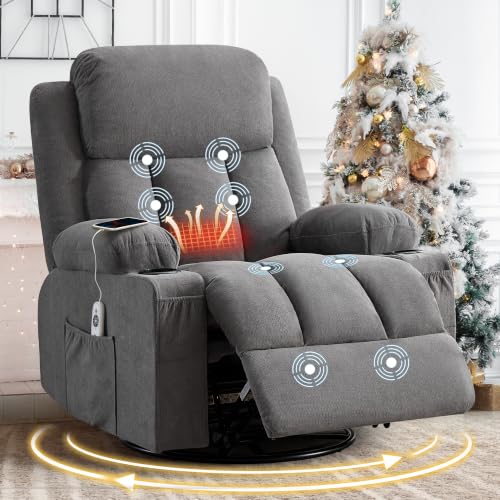
 HAPPYMONT Massage Recliner Chair
- Flexible Reclining Positions: Easily adjust between 90° and…
- Comprehensive Massage Functions: Delivers full-body relaxation via 8…
- Comfortable Materials & Strong Support: Crafted with breathable…
As an Amazon Associate we earn from qualifying purchases at no extra cost to you.
Quick Verdict
If your primary goals are aesthetic versatility, entertaining guests, and maintaining an open, conversational flow in a compact space, choose a swivel accent chair. If your priority is ergonomic relief, deep physical comfort, and dedicated leg support without the need for an extra ottoman, a stationary recliner is the superior choice for your living room.
Side by Side
When comparing a swivel accent chair vs stationary recliner living room setup, the differences lie in their mechanical footprints, aesthetic flexibility, and physical support. The table below outlines how these two categories stack up across key purchasing criteria.
| Feature | Swivel Accent Chair | Stationary Recliner |
|---|---|---|
| Comfort Profile | Upright, active seating; comfortable for 1–3 hours of socializing or reading. | Deep, passive relaxation; designed for extended sitting, napping, and lumbar relief. |
| Durability | High; fewer moving parts to break, though ball-bearing swivel plates can wear over time. | Moderate to High; metal tension springs, footrest levers, and motors can fail with heavy use. |
| Price Range | $150 to $900+ (depending on fabric grade and frame construction). | $110 to $1,500+ (power-operated and leather models command premium prices). |
| Maintenance | Low; simple fabric vacuuming and occasional lubrication of the swivel base. | Moderate; mechanical parts need monitoring; power models require proximity to outlets. |
| Space Needed | Small footprint; requires a 30″ to 40″ clearance circle to spin freely. | Large footprint; needs 12″ to 18″ of wall clearance and 3 to 4 feet of front clearance. |
| Aesthetic Style | Modern, sculptural, and tailored; easy to match with diverse decor styles. | Traditionally bulky, though modern profiles are sleeker; dominates visual space. |
| Resale Value | Moderate to High; easier to style in different rooms, appealing to more buyers. | Moderate; highly dependent on mechanical condition and fabric wear. |
| Best For | Open-concept spaces, reading nooks, and homes that host frequent social gatherings. | Home theaters, nursery rooms, and individuals seeking pain or pressure relief. |
Where Swivel Accent Chair Wins
The main advantage of a swivel accent chair is its agility. In modern, open-concept living rooms, a stationary chair can feel restrictive. A swivel chair allows you to turn effortlessly from a conversation in the kitchen to a movie playing on the television. It creates a dynamic social hub where guests do not feel locked into a single viewing angle.
From a design perspective, swivel chairs offer clean, architectural lines. Because they do not require bulky internal footrest mechanisms, designers can experiment with unique shapes, low-profile silhouettes, and high-end upholstery. For example, options like the INZOY Swivel Accent Square Chair with Thick Padded Backrest Cushion ($254.99) provide a compact, modern profile in vibrant colors like blue, making them perfect for tight corners or dedicated reading nooks.
If you have more room to spare but still want that fluid movement, oversized options like the UNUQLIVCO 360° Swivel Accent Armchair ($439.99) in camel fabric offer a generous 39.3-inch width. This oversized style gives you the cozy, curl-up comfort of a snug armchair without the heavy visual weight or mechanical complexity of a traditional recliner. Furthermore, swivel chairs are easier to reposition when you want to rearrange your room layout, as they typically weigh between 40 and 65 pounds compared to the hefty 80-to-120-pound weight of a recliner.
Where Stationary Recliner Living Room Wins
When it comes to pure physical decompression, the stationary recliner remains unmatched. Recliners are engineered with ergonomics in mind. By elevating your legs above your heart level, a quality recliner improves circulation, reduces lower back strain, and relieves pressure on your joints. This makes them a necessity for individuals who spend long hours on their feet or manage chronic back pain.
Modern stationary recliners have evolved far beyond the bulky, manual-lever chairs of the past. Budget-friendly models like the HAPPYMONT Massage Recliner Chair ($116.95) in ink fabric offer dedicated lumbar support and built-in massage features designed specifically for home theater setups. These chairs act as self-contained relaxation stations, offering thick padding that cradles the body during long movies or afternoon naps.
For those who want a hybrid experience, some chairs combine motion features with classic reclining. The MAHOMICO Swivel Rocker Recliner Chair with Vibration Massage and Heat ($219.98) features built-in heating, vibration massage, a USB charging port, and side storage pockets. While it includes a swivel and rocking base, its primary value lies in its heavy-duty reclining function, which provides a dedicated spot to decompress after a long day. If you prioritize physical recovery, personalized comfort zones, and integrated technology, a recliner is the clear winner.
Cost Over 5 Years
When budgeting for your living room furniture, looking only at the initial price tag can be misleading. Mechanical complexity directly impacts the lifespan and maintenance costs of your seating. As we look at the design landscape of 2026, investing in durable internal components saves money over time.
A high-quality swivel accent chair has a relatively simple anatomy: a solid wood or metal frame, high-density foam, and a heavy-duty steel ball-bearing swivel plate. Over five years, your main costs will be the initial purchase ($200 to $600) and perhaps one professional upholstery cleaning ($80). If the swivel mechanism starts to squeak or loosen after three or four years, a replacement swivel plate costs only $30 to $50 and can be installed with basic tools. Your total five-year cost typically ranges from $280 to $730.
A stationary recliner—especially a power-operated or therapeutic model—features a much more complex system of springs, tension bars, footrest extension arms, and electric motors. Over five years, a budget-friendly recliner ($110 to $300) is more likely to experience mechanical wear, such as a loose footrest latch or a worn-out motor. If a power transformer or hand remote fails, replacement parts and labor can run between $100 and $200. High-end leather recliners ($800 to $1,500) are built to last longer but require specialized leather conditioners ($25/year) to prevent cracking. Your estimated five-year cost for a recliner ranges from $250 for a basic manual model to over $1,800 for a premium power-lift version.
Which One for Your Home?
Small Apartment
If you are working with limited square footage, every inch counts. A stationary recliner is often too restrictive for small spaces because it requires significant rear clearance to lean back and several feet of front clearance to extend the footrest. A compact swivel chair like the INZOY Swivel Accent Square Chair is the ideal solution. It fits neatly into tight corners, keeps your sightlines clear, and allows you to pivot toward different parts of a studio or small one-bedroom apartment without cluttering the floor.
Family with Kids and Pets
For active households, safety and durability are top priorities. Traditional recliners have interior scissor mechanisms and open footrests that can pose pinch hazards for curious toddlers or small pets. If you choose a recliner, look for models with fully enclosed fabric shrouds. Alternatively, a spacious swivel chair like the UNUQLIVCO 360° Swivel Accent Armchair offers a safe, sturdy, and comfortable spot for storytime, snuggling, or pet cuddles without any dangerous moving metal parts.
Rental
If you rent your home, you will likely move every few years. Heavy, bulky furniture can make moving day incredibly difficult. A lightweight swivel accent chair is easy to pack, fits through narrow stairwells, and adapts effortlessly to different living room layouts in future apartments. Recliners, while incredibly comfortable, are heavy to transport and can be difficult to place in rooms with awkward layouts or limited wall outlets.
Long-Term Home
If you are settled in your forever home, you have the freedom to design dedicated comfort zones. If your living room serves as your primary space for evening relaxation and movie nights, investing in a high-feature option like the MAHOMICO Swivel Rocker Recliner Chair or a premium stationary recliner creates a dedicated personal oasis. You can also combine both styles: place a pair of elegant swivel accent chairs opposite your sofa for conversation, and position a plush recliner in a quiet corner near a window for reading and napping.
FAQ
Do swivel accent chairs scratch hardwood floors?
Most modern swivel accent chairs are designed with a circular metal collar or a flat pedestal base. If the metal base comes into direct contact with hardwood floors, grit and dust underneath can cause scratches over time. To protect your floors, place your swivel chair on a low-pile area rug, or attach heavy-duty adhesive felt strips along the bottom rim of the metal base.
How much wall clearance does a stationary recliner actually need?
Standard stationary recliners require between 12 and 18 inches of clearance between the back of the chair and the wall to fully recline. If you are tight on space, look specifically for a “wall-hugger” recliner. These models use a forward-sliding track mechanism that allows them to fully recline with as little as 3 to 6 inches of wall clearance.
Is it easy to lock a swivel chair so it stays stationary?
Most standard residential swivel accent chairs do not come with a locking mechanism; they are designed to glide freely on a 360-degree chassis. If you want a chair that remains stationary on demand, you will need to look for specialized swivel-glider nursery chairs or office hybrids that feature a manual locking brake built into the base.
Are modern recliners too bulky for a contemporary living room?
While the classic, overstuffed “club-style” recliners of the past can overwhelm a modern room, today’s market offers plenty of sleek, high-leg recliners. These contemporary models look exactly like stationary mid-century modern armchairs, featuring exposed wooden legs and clean upholstery. The footrest mechanism remains completely hidden until you push back on the armrests, allowing you to enjoy deep comfort without sacrificing your design aesthetic.