Key takeaways
- Record marble marks without acid or scratch tests. Use an observation worksheet to separate cleaning questions from damage needing expert advice.
A dull mark on marble may be residue on the surface, a change to the finish, a stain, or more than one problem at once. Etching is damage to the stone’s surface finish; it is not simply dirt waiting for a stronger cleaner. Start with material identification and a record of what happened, then use only care methods approved for that surface.
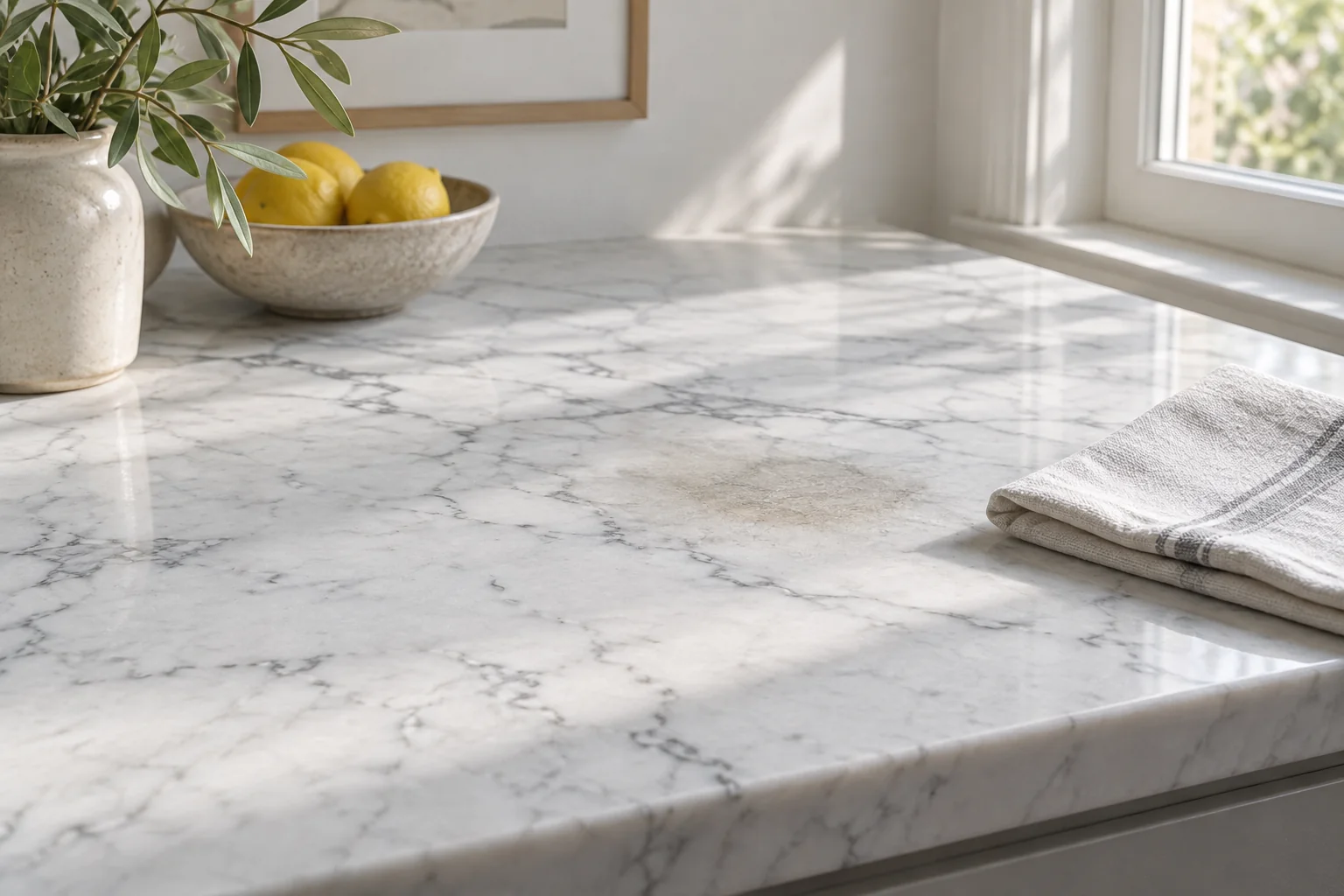
Confirm that the surface is actually marble
A marble-look tabletop might instead be porcelain, laminate, engineered material, or a coating over stone. Find the furniture specification, fabricator’s invoice, or care sheet. Record both the material and its finish, such as polished or honed, if known.
Do not identify the material by putting acid on a hidden spot or scratching it. A destructive test can create the very problem you are trying to understand. If the surface cannot be identified, send photographs and purchase details to the supplier before using a marble-specific treatment.
Understand the difference without diagnosing by appearance alone
The Natural Stone Institute’s stain guidance explains that acids can etch stone and that some substances can both etch and stain it. Its care guidance also notes that excessive cleaner or soap can leave film and streaks. These are different mechanisms even when both appear as a cloudy patch.
A change in shine is a clue, not a complete diagnosis. A colored patch may involve staining; a smear following the path of a mop may suggest a cleaning residue. Neither observation proves a cause. Polished and honed finishes also reflect light differently, so compare the affected area with nearby material of the same finish.
| Observation | What to record | What not to assume |
|---|---|---|
| Material | Supplier’s description and finish | Marble pattern proves marble |
| Event | Spill, cleaning or unknown start | The last person caused the mark |
| Appearance | Color change, dullness, streak or ring | One appearance identifies one cause |
| Location | Near drink, sink, plant or cleaning route | Location proves the substance |
| Products used | Exact names and dilution, if known | All stone cleaners are interchangeable |
| After approved care | Dry appearance and any change | Persistent dullness needs more scrubbing |
Make one controlled observation
Take photographs before changing anything. Use one overall image showing the mark’s location and one closer view in ordinary light. An additional angled view can show the reflection, but avoid changing filters or exposure so much that comparisons become meaningless.
If the material is confirmed and its care sheet permits routine cleaning, follow that instruction with the specified product, amount, tool, and any rinse step. Do not combine cleaning products or improvise an acid-based residue remover. For confirmed marble, vinegar and lemon are especially unsuitable diagnostic shortcuts.
Let the surface dry as instructed before comparing it with the original photograph. Record exactly what changed. If no approved method is available, skip this step and ask the supplier. Doing nothing further is preferable to turning an uncertain mark into a larger treated area that is harder to assess.
Worked example: partial improvement is useful information
Imagine a confirmed polished marble table with a broad cloudy smear and a smaller dull ring after a gathering. This is an illustrative case. The owner records the spill history as unknown and follows the table supplier’s routine care instructions. After drying, the smear is reduced but the ring remains visible in reflected light.
That result suggests that at least part of the appearance may have involved removable surface material. It does not prove that the remaining ring is an etch or that more cleaner will remove it. The owner sends both photographs and the care record to the stone supplier for assessment.
Separating the two observations is more useful than reporting “the cleaner failed.” It tells the assessor that the broad film changed while the localized finish difference did not, without pretending to know the underlying cause.
Stop before polishing becomes an experiment
Abrasive pads, polishing powders, scraping, and powered buffing change the nature of the task. They can alter a finish rather than simply remove loose contamination. A general article cannot establish the right abrasive, pressure, technique, or finish match for your particular tabletop.
Ask a stone-care professional or the fabricator to assess a persistent mark, especially on an unknown coating, a decorative inlay, or a surface with both staining and texture changes. Explain all previous products and attempts. Do not hide a prior treatment because it seems embarrassing; it may change the appropriate next step.
Do not expect sealer to repair dullness
Do not buy a sealer as a generic answer to a dull ring. First identify whether the issue is residue, staining, a finish change, or something else. Ask the supplier separately whether sealing is appropriate and when it should occur relative to any restoration. A product’s name does not establish that it repairs an existing mark.
Keep the completed observation sheet with the surface’s care instructions. It provides a baseline if the same area changes later and gives everyone in the household one agreed method for routine care. The goal is an informed next decision, not a home test that trades uncertainty for new damage.