Key takeaways
- Kiln-dried hardwood (oak, maple, ash, poplar) with corner blocks that are glued and screwed or dowelled is the best wood frame. It resists cracking at the joints.
- Steel frames are common in heavy-duty recliners and big-and-tall chairs and often carry the highest ratings.
- Engineered wood, particleboard or staple-only frames are the weak point in budget chairs. They tend to loosen at the arms and legs under repeated heavy use.
The best living room chair for a heavy person has a stated weight capacity of at least 350 to 400 pounds, a seat at least 22 to 24 inches wide between the arms, a seat height of 19 to 21 inches so standing up is easy, and a hardwood or steel frame with sinuous springs or webbing over high-density foam. Style matters far less than those four numbers. Below are the measurements to check, the construction details that decide whether a chair lasts, and which chair type suits which situation.
The Four Numbers That Matter Most
| Spec | Standard accent chair | What to look for | Why it matters |
|---|---|---|---|
| Weight capacity | 225–250 lb | 350–500 lb, clearly stated | Unlisted capacity usually means the standard rating |
| Inside seat width | 19–21 in | 22–28 in | Arms pressing on hips cause discomfort and stress the arm joints |
| Seat depth | 20–22 in | 21–24 in, matched to leg length | Too deep and the edge hits the back of the knees |
| Seat height | 16–18 in | 19–21 in | Higher seats reduce the effort of standing up |
Measure inside width between the arms, not the overall width. A chair listed as 34 inches wide may have thick rolled arms that leave only 20 inches of seat. If the listing does not give inside dimensions, the overall width minus both arm widths gives you the number.
Construction: What Holds Up and What Fails First
On a chair that carries more weight every day, three parts wear first: the seat foam, the suspension under it, and the leg joints. Here is how the common options compare.
Frame
- Kiln-dried hardwood (oak, maple, ash, poplar) with corner blocks that are glued and screwed or dowelled is the best wood frame. It resists cracking at the joints.
- Steel frames are common in heavy-duty recliners and big-and-tall chairs and often carry the highest ratings.
- Engineered wood, particleboard or staple-only frames are the weak point in budget chairs. They tend to loosen at the arms and legs under repeated heavy use.
Suspension
- Eight-way hand-tied coil springs are the most durable but uncommon outside higher-end furniture.
- Sinuous (S-shaped) springs are the most common good option; closer spacing and heavier gauge wire mean more support.
- Elastic webbing alone sags faster under heavy loads and is the least suited choice.
Foam
| Foam density | Typical lifespan under heavy daily use | Feel |
|---|---|---|
| 1.5 lb/ft³ or less | 1–2 years before noticeable dip | Soft at first, flattens quickly |
| 1.8 lb/ft³ | 3–5 years | Medium, common in mid-range chairs |
| 2.0–2.5 lb/ft³ (HD foam) | 5–8 years or more | Firmer, keeps shape |
| High-resilience (HR) 2.5+ lb/ft³ | 8 years or more | Supportive with good bounce-back |
Foam density measures durability, not firmness. A high-density cushion can still feel soft if it has a fiber or memory foam top layer. If a seller lists only “high density foam” without a number, ask or assume it is around 1.8 lb.
Which Chair Type Fits Your Situation
| Your situation | Best chair type | Key detail |
|---|---|---|
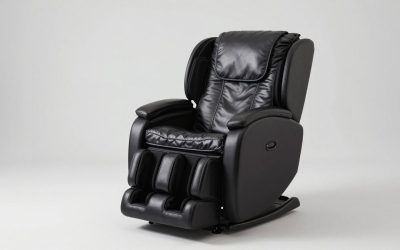
| Wants to recline daily | Heavy-duty or big-and-tall recliner | Steel mechanism, rating 350–500 lb |
| Knee or hip trouble getting up | Power lift recliner or high-seat armchair | Seat height 20–21 in, sturdy arms to push off |
| Small living room | Wide armless or track-arm chair | Thin arms add seat width without extra footprint |
| Wants to sit cross-legged or curl up | Chair-and-a-half | 38–50 in overall width, 28+ in seat |
| Shared chair with a lighter partner | Firm HD foam armchair | Firmness keeps both comfortable |
| Pets, kids, spills | Performance fabric or leather chair | Tight weave or top-grain leather, no loose cushions |
Chairs to Approach With Caution
- Swivel and glider chairs concentrate load on one central base or a glide mechanism. Some are rated well, but many standard ones top out around 250 pounds.
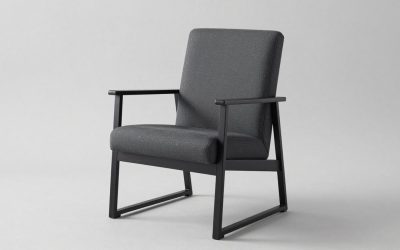
- Thin hairpin or tapered peg legs look good in mid-century chairs but the leg-to-frame joint is a common failure point. Look for thicker legs, ideally with a corner brace.
- Bean bags and floor chairs are hard to get out of from a low position, even if they hold the weight.
- Rocking chairs with thin runners and folding chairs are rarely built for higher loads.
- Wingback and slipper chairs often have narrow seats under 21 inches.
Fabric and Upholstery for Heavier Daily Use
Friction wears the front edge of the seat first. Upholstery durability is measured in double rubs; for daily heavy use look for 30,000 or more, and 50,000 plus for commercial-grade fabrics. Tight weaves, microfiber, performance polyester and top-grain leather handle friction well. Loose weaves, linen and bonded leather show wear early, with bonded leather often peeling within a few years.
Sizing Your Room Around a Bigger Chair
Larger chairs typically measure 34 to 42 inches wide and 36 to 40 inches deep. Recliners need extra space: a wall-hugger recliner needs about 4 to 6 inches behind it, while a standard rocker recliner may need 12 inches or more and around 60 to 70 inches of total depth when fully reclined. Keep 30 to 36 inches of walkway in front of the chair, plus room for the footrest.
Price Ranges and What They Usually Buy
| Price range | Typical capacity | Common construction |
|---|---|---|
| $200–$450 | 250–350 lb | Engineered wood, webbing or light springs, 1.5–1.8 lb foam |
| $450–$900 | 300–400 lb | Mixed hardwood, sinuous springs, 1.8–2.2 lb foam |
| $900–$2,000 | 350–500 lb | Hardwood or steel, heavier springs, HD or HR foam |
Established furniture makers such as La-Z-Boy offer recliners and lift chairs in wider and higher-capacity versions, and many mid-range brands sell explicitly labeled big-and-tall or heavy-duty lines. Always rely on the stated capacity for the specific model rather than the brand in general.
Checks Before You Buy
- Find a written weight capacity for the exact model and size.
- Get inside seat width and seat height, and compare them to a chair you already find comfortable.
- Confirm frame material and suspension type.
- Look for a foam density figure, ideally 2.0 lb/ft³ or higher.
- Check the warranty: good chairs often cover frames for 5 years to lifetime and cushions for 1 to 5 years.
- For recliners, check the mechanism warranty separately.
A chair that meets these numbers will feel more comfortable on day one and stay level and solid years later, which is what really separates a good chair for a heavier person from a nice-looking one.