Key takeaways
- Doorway width: Measure between the door stops with the door open, not the frame’s outer edge. Many sofas need at least a 30 to 36 inch clearance.
- Doorway height: Measure from floor to the top of the opening for when the sofa is tilted.
- Hallway width and turns: A 90-degree turn from a narrow hall is the most common failure point.
- Stairwell clearance: Measure width, ceiling height, and any landing turns for upstairs deliveries.
The most heartbreaking moment in furniture shopping is watching a brand-new sofa refuse to fit through your front door. It happens constantly, and it is entirely preventable. A few careful measurements before you click “buy” will tell you whether that couch can reach your living room, or whether you need a different model, a tilt strategy, or professional help.
This guide gives you a foolproof method for measuring doorways, hallways, and stairwells for sofa delivery in 2026, plus the tools and services that make moving a large piece far less stressful.
Our top picks


As an Amazon Associate we earn from qualifying purchases at no extra cost to you.
⚡ Save on Your Next PC — Amazon Prime
Prime members get fast free shipping on the systems above, plus early access to Prime Day & Black Friday PC deals. New members get a 30-day free trial.
Watch: How to Measure Your Doorways for Sofa Delivery — Video Review
Measure the Sofa’s Key Dimensions
Start with the product listing. You need four numbers: overall width, height, depth, and, crucially, the diagonal depth (the distance from the top back corner to the front of the arm). Movers often tilt a sofa on its side to slide it through, so the diagonal depth is what actually has to clear your narrowest opening.
Measure Every Opening on the Path
- Doorway width: Measure between the door stops with the door open, not the frame’s outer edge. Many sofas need at least a 30 to 36 inch clearance.
- Doorway height: Measure from floor to the top of the opening for when the sofa is tilted.
- Hallway width and turns: A 90-degree turn from a narrow hall is the most common failure point.
- Stairwell clearance: Measure width, ceiling height, and any landing turns for upstairs deliveries.
Do the Math With the Right Method
Compare the sofa’s height to your doorway width, since a tilted sofa passes on its side. If the sofa height is less than the door width, it usually fits standing on end. For tight cases, calculate whether the diagonal depth clears the doorway height when tilted. Some sofas, like certain Signature Design by Ashley models, list a minimum doorway clearance (for example, a 32-inch minimum) directly in the specs, which takes the guesswork out entirely.
Have a Plan B Before You Buy
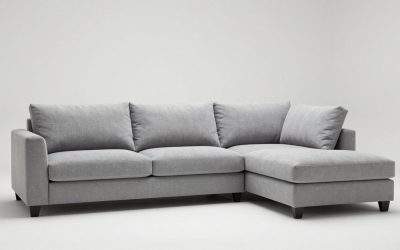
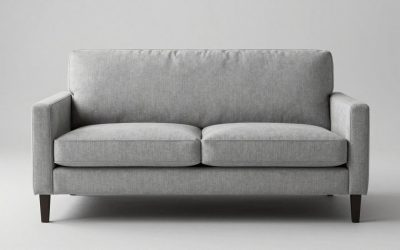
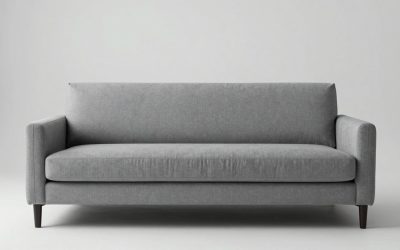
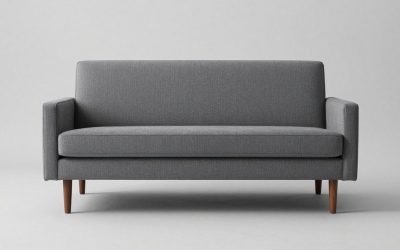
If the numbers are borderline, choose a sofa designed to fit. Modular and boneless couches arrive in separate boxes and assemble inside the room, sidestepping doorway limits completely. Track-arm sofas with slim profiles clear tighter openings than deep rolled-arm designs. And if a favorite piece simply will not fit, a room-of-choice delivery service that carries the sofa up two flights of stairs, priced around $99 to $100, is money well spent.
Make the Move Easier
- Furniture sliders let you glide a heavy sofa across hard floors without scratching them or straining your back.
- A wheeled furniture dolly rated for 850 to 1,650 pounds moves the sofa between rooms with minimal lifting.
- Remove the door from its hinges to gain an extra inch or two of clearance when it is truly close.
Tips
- Always measure the diagonal: It is the number that decides tight fits, not width alone.
- Photograph the path: Note every turn, radiator, and light fixture that could block a tilt.
- Add a two-inch buffer: Hands need room to grip, so never plan for a zero-clearance squeeze.
- Prefer boneless designs when unsure: They assemble in the room and skip the doorway problem.
Frequently Asked Questions
What is the minimum doorway width for a sofa?
Many standard sofas need 30 to 36 inches of clearance, but it depends on the sofa’s height and depth when tilted. Always check the listing’s stated minimum clearance if provided.
Why does diagonal depth matter more than width?
Because movers tilt sofas on their side to pass through doors. The diagonal from the back top corner to the front arm is the true dimension that must clear the opening.
What if my sofa will not fit through the door?
Consider a modular or boneless couch that assembles inside the room, remove the door from its hinges for extra inches, or book a room-of-choice delivery service to handle the maneuver.
Are furniture sliders or a dolly better for moving a sofa?
Sliders are best for gliding across hard floors, while a wheeled dolly is better for longer distances and heavier pieces. Many movers use both together for a smooth, back-friendly move.
Conclusion
Measuring for delivery takes ten minutes and saves you from a return headache. Capture the sofa’s width, height, depth, and diagonal, measure every opening and turn on the path, and compare them with a buffer to spare. When a fit is borderline, lean toward boneless or modular designs, and keep sliders, a dolly, or a delivery service in your back pocket. Do that, and your new sofa will land in the living room on the first try.