Key takeaways
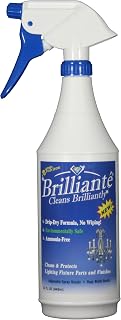
- Fixture material: Glass and natural crystal tolerate virtually all drip-dry formulas. Acrylic and plastic crystals are more sensitive — always choose an ammonia-free option like the BRILLIANTÉ cleaner, since ammonia can cloud or soften acrylic over time.
- Room size and fixture height: If your chandelier hangs above a high entryway or stairwell, a formula with a long-distance spray nozzle (such as the Jaxry or the CrystalPlace sprayer) saves you from buying a tall ladder.
- Volume and frequency: If you clean quarterly or have multiple fixtures, a gallon refill like the CrystalPlace BRILLIANTÉ Refill is significantly cheaper per ounce than repeated 32 oz bottles.
- Finish on metal components: Avoid anything with harsh solvents if your chandelier has brass, nickel, or painted finishes, as overspray can dull or discolor those surfaces.
What's inside
There’s a moment every time you get a chandelier properly clean — the light hits those crystals and the whole room lifts. It’s not vanity; it’s maintenance. Dust films over faceted glass faster than people expect, and once buildup sets in, it takes more effort (and often risk) to undo. Whether your fixture is a vintage heirloom or a modern statement piece over your dining table, learning the right way to clean chandelier crystals saves money, avoids damage, and keeps that sparkle consistent year-round.
This guide walks you through exactly how to do it safely — from choosing the right drip-dry cleaner to handling delicate drop crystals without chipping. I’ll cover the tools that work, the steps that matter, and the mistakes I’ve seen people repeat over and over. If you’ve been putting this off because it sounds fiddly or risky, this should give you the confidence to handle it yourself in under thirty minutes.
As an Amazon Associate we earn from qualifying purchases.



Why Drip-Dry Cleaners Changed the Game
Traditional chandelier cleaning meant climbing a ladder with a bucket of water and a rag — or worse, disassembling the entire fixture. Drip-dry crystal cleaners eliminate almost all of that risk. You spray the product onto each crystal while it’s still hanging, and the formula dissolves dust and grime on contact, dripping off naturally to dry without streaks. No wiping, no disassembly, no water spots. Products like the Sparkle Plenty Chandelier Cleaner and Jaxry Crystal Chandelier Cleaner are specifically formulated for this method, and they genuinely work well when applied correctly. The key is that the cleaner does the labor — your job is simply to apply it evenly and let gravity do the rest.
Preparing Your Chandelier for Cleaning
Before you touch a spray bottle, take a few precautions that prevent headaches later. Turn off the light fixture and let the bulbs cool completely — hot surfaces interact poorly with liquid cleaners and can cause spotting. Lay a thick towel, drop cloth, or even a flattened cardboard box on the table or floor directly beneath the chandelier. This catches drips and protects your furniture or flooring. If your chandelier has candles-style bulbs or exposed halogens, remove them and set them aside. For fixtures with fabric shades or delicate metal filigree, mask those off with painter’s tape. Finally, give the crystals a quick once-over with a dry microfiber cloth to knock off loose dust before you apply any liquid — this prevents the cleaner from turning surface grit into a muddy streak.
Applying the Cleaner: Technique That Prevents Streaks
Start at the top of the chandelier and work downward. Hold the spray bottle roughly twelve to eighteen inches from the crystals and mist each one individually — don’t flood a whole section at once. For most standard rooms, a product with an extended-reach nozzle like the Jaxry Professional Cleaner (rated to spray up to 25 feet) makes overhead work far more manageable. Pay special attention to the undersides and inner facets of each crystal, since that’s where dust accumulates most aggressively. Allow the cleaner to drip freely — resist the urge to dab or wipe. If you notice stubborn spots after the first pass, wait a minute and mist the area again rather than rubbing. The entire application typically takes ten to fifteen minutes on a medium-sized chandelier.
Drying Time and What Comes After
This is the part people rush, and it’s the part that matters most. Let the chandelier sit undisturbed for at least twenty minutes while the cleaner finishes dripping and evaporating. Good drip-dry formulas — like those in the CrystalPlace BRILLIANTÉ line — leave no residue when they’re given adequate time, but cutting them short results in faint drip marks on the lower crystals. Once dry, inspect the fixture from below with a flashlight to catch any missed spots. For a quick touch-up, a barely damp microfiber cloth works well. Avoid paper towels, which shed fibers that cling to wet crystal. Finally, reinstall your bulbs, remove any painter’s tape, and reset the area beneath the fixture.
Choosing the Right Product for Your Chandelier
Not all chandelier cleaners are created equal, and picking the wrong one can cause damage. Here’s what to weigh:
- Fixture material: Glass and natural crystal tolerate virtually all drip-dry formulas. Acrylic and plastic crystals are more sensitive — always choose an ammonia-free option like the BRILLIANTÉ cleaner, since ammonia can cloud or soften acrylic over time.
- Room size and fixture height: If your chandelier hangs above a high entryway or stairwell, a formula with a long-distance spray nozzle (such as the Jaxry or the CrystalPlace sprayer) saves you from buying a tall ladder.
- Volume and frequency: If you clean quarterly or have multiple fixtures, a gallon refill like the CrystalPlace BRILLIANTÉ Refill is significantly cheaper per ounce than repeated 32 oz bottles.
- Finish on metal components: Avoid anything with harsh solvents if your chandelier has brass, nickel, or painted finishes, as overspray can dull or discolor those surfaces.
Tips
- Place a dark-colored towel beneath the chandelier — it makes it much easier to see whether crystals are still dripping or fully dry.
- Clean your chandelier before a dinner party, not the day of. Give yourself a buffer day so any accidental smudges can be spotted and fixed.
- For crystal figurines and glass collectibles, the same drip-dry sprays work beautifully — just place the item over a sink or basin and spray from a few inches away.
- Never mix cleaners. If your chandelier has both crystal and metal parts, stick to one all-purpose formula rather than layering products.
Frequently Asked Questions
How often should I clean my chandelier?
Most homes benefit from a full cleaning every three to four months. Kitchens and dining rooms near cooking areas may need attention every six to eight weeks due to grease residue. A quick dry microfiber dusting monthly extends the time between deep cleans significantly.
Can I use regular glass cleaner on my chandelier?
Standard window sprays like Windex can work in a pinch, but they’re formulated for flat glass panes, not faceted crystal. They often leave streaks in the intricate cuts of crystal drops and may contain ammonia that damages acrylic or plated finishes. A dedicated chandelier cleaner is always the safer bet.
Do I really need to remove crystals before cleaning?
With modern drip-dry formulas, no — that’s the entire point. Removing crystals is only necessary if they’re heavily encrusted with old wax, smoke residue, or calcium deposits that a spray can’t dissolve. For routine maintenance, leave them in place.
What if my chandelier has real wax candle drips on the crystals?
Hold a warm (not hot) cloth against the wax for a few seconds to soften it, then gently peel it away before applying your crystal cleaner. Spraying directly onto wax buildup won’t remove it effectively.
Conclusion
A clean chandelier isn’t just about aesthetics — it reflects the care you put into your living space, and the right approach makes it a quick, satisfying task rather than an ordeal. Grab a quality drip-dry cleaner suited to your fixture, follow the steps above, and give yourself the kind of home comfort that genuinely shines.