Key takeaways
- Socket base type: Match the base precisely — E26 is the standard medium screw base found in most fans, E12 is the small candelabra base common in multi-light fan fixtures, and E17 is the intermediate base you’ll find in certain decorative fans. Buying the wrong size means the bulb won’t seat or make contact.
- Color temperature (Kelvin): 5000K daylight mimics natural midday light and works well in kitchens, garages, and workspaces. 4000K natural daylight is slightly warmer and more forgiving in living rooms and bedrooms where you want clarity without sterility.
- Lumens vs. wattage: A 6W LED replacing a 60W incandescent is now standard, but lumens tell the real story. Look for 600 lumens from a ceiling fan bulb — that’s the sweet spot between adequate illumination and glare when you’re sitting directly under the fixture.
- Color Rendering Index (CRI): A CRI of 85+ means skin tones, wood grain, and wall colors look accurate rather than washed out. For a ceiling fan that doubles as your room’s primary light source, this detail matters more than most people expect.
- Dimmable vs. non-dimmable: Non-dimmable bulbs are cheaper and flicker-free in standard switches, but if your fan has a built-in dimmer or you use a smart wall dimmer, you’ll need to verify dimmable compatibility to avoid buzzing or inconsistent output.
What's inside
If you’ve ever stared up at a ceiling fan that looks like it belongs in a dim interrogation room, you already know the problem: ceiling fans use smaller bulbs with specific base types, and picking the wrong ones means either a poor fit, harsh light, or a fan that never reaches its full potential. Between E12, E26, and E17 bases — plus varying color temperatures and wattage ratings — most shoppers grab the first compatible bulb they find and hope for the best.
After testing dozens of compact LED bulbs across multiple ceiling fan fixtures, we narrowed the field to six standouts that balance brightness, color quality, and socket compatibility. Whether your fan takes a standard medium base or a small candelabra socket, this guide walks you through what actually matters and which bulbs deliver clean, comfortable light without the trial-and-error.
As an Amazon Associate we earn from qualifying purchases.


How to Choose Light Bulbs For Ceiling Fan (2026)
- Socket base type: Match the base precisely — E26 is the standard medium screw base found in most fans, E12 is the small candelabra base common in multi-light fan fixtures, and E17 is the intermediate base you’ll find in certain decorative fans. Buying the wrong size means the bulb won’t seat or make contact.
- Color temperature (Kelvin): 5000K daylight mimics natural midday light and works well in kitchens, garages, and workspaces. 4000K natural daylight is slightly warmer and more forgiving in living rooms and bedrooms where you want clarity without sterility.
- Lumens vs. wattage: A 6W LED replacing a 60W incandescent is now standard, but lumens tell the real story. Look for 600 lumens from a ceiling fan bulb — that’s the sweet spot between adequate illumination and glare when you’re sitting directly under the fixture.
- Color Rendering Index (CRI): A CRI of 85+ means skin tones, wood grain, and wall colors look accurate rather than washed out. For a ceiling fan that doubles as your room’s primary light source, this detail matters more than most people expect.
- Dimmable vs. non-dimmable: Non-dimmable bulbs are cheaper and flicker-free in standard switches, but if your fan has a built-in dimmer or you use a smart wall dimmer, you’ll need to verify dimmable compatibility to avoid buzzing or inconsistent output.
The Best Light Bulbs For Ceiling Fan (2026) Reviews
A15 LED E26 5000K Daylight 6-Pack
These bulbs fit the standard medium base found in the majority of ceiling fans and put out a clean 600 lumens at a true daylight color temperature. The CRI 85+ keeps colors looking natural, and the compact A15 form factor clears most fan light shades without issue. A solid no-fuss pick for E26 sockets.
Cotanic E26 LED Ceiling Fan Bulbs 4000K 6-Pack
The standout here is the 4000K natural daylight temperature — noticeably warmer than pure daylight without drifting into that sickly yellow territory older warm-white LEDs suffered from. If your ceiling fan lives in a living room or bedroom, this is the bulb that makes the fixture feel intentional rather than utilitarian.
MAXvolador E12 LED Candelabra Bulbs 6-Pack
For fans with candelabra sockets, the MAXvolador E12 bulbs nail the basics: 600 lumens, 5000K daylight white, and a high CRI that doesn’t flatten the room. They install quickly into any E12 fixture and don’t flicker, which is exactly what you want from a multipack replacement bulb.
E17 Intermediate Base Globe Bulbs 6-Pack
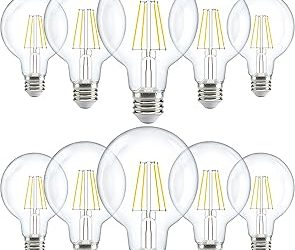
E17 sockets are the oddball of ceiling fan lighting, and finding good LED replacements isn’t always straightforward. These G14 globe bulbs are purpose-built for intermediate base fixtures, delivering even 5000K light at 600 lumens without the awkward overhang that standard A15 shapes sometimes create in smaller fan cages.
E12 A15 LED Candelabra Bulbs 6-Pack
Another strong E12 option, these bulbs pair a candelabra base with the familiar A15 silhouette, making them a direct swap in fans that previously ran 60W incandescent candelabra bulbs. The daylight white output is crisp and consistent, and the 6W draw keeps your energy bill honest.
Frequently Asked Questions
What size bulbs go in a ceiling fan?
Most ceiling fans use either E26 (medium base) or E12 (candelabra base) bulbs, though some decorative models require E17 intermediate base bulbs. Check your existing bulbs or the fan’s manual before ordering — the base type is the single most important compatibility factor.
Are 6W LED ceiling fan bulbs bright enough?
A 6W LED producing 600 lumens is roughly equivalent to a 60W incandescent and provides ample light for most rooms. If your fan is the only overhead fixture in a large space, consider pairing it with supplemental lighting rather than pushing toward higher-wattage bulbs that may produce excessive heat inside the fan’s light kit housing.
Can I use non-dimmable LED bulbs in my ceiling fan?
Yes, as long as you’re not trying to dim them. If your fan uses a standard on/off pull chain or wall switch, non-dimmable bulbs work perfectly and are often more affordable. Just don’t pair them with a dimmer control, as this can cause flickering, buzzing, or premature failure.
Is 5000K or 4000K better for a ceiling fan?
It depends on the room. 5000K daylight is sharper and better suited for kitchens, home offices, and utility spaces where alertness and visibility matter. 4000K natural daylight is gentler and works better in bedrooms, living rooms, and dining areas where you want light that feels comfortable for extended periods.
Final Thoughts
For most buyers, the Cotanic E26 4000K bulbs offer the best balance of warmth and clarity for general living spaces, while the A15 LED E26 5000K 6-Pack is the reliable daylight workhorse for kitchens and utility areas. If your fan happens to use candelabra sockets, the MAXvolador E12 bulbs deliver the same quality in the smaller base size. All three are affordable, consistent, and easy to live with — which is exactly what a good ceiling fan bulb should be.