Key takeaways
- Noise Level (Sones): Anything under 1.5 sones is genuinely quiet—barely noticeable during a shower. Units at 2.0 sones are acceptable but audible, especially late at night. Prioritize sub-1.5 ratings if your bathroom shares a wall with a bedroom.
- Airflow (CFM): The industry rule of thumb is 1 CFM per square foot of bathroom area. A standard 5×8 bathroom needs around 50 CFM; larger or tiled bathrooms with glass showers benefit from 80–130 CFM to pull moisture out fast enough to prevent mold.
- Light Output and Quality: Look for at least 800 lumens for general illumination. Dimmable and color-temperature-adjustable LEDs (3CCT or 5CCT) let you shift from warm nightlight ambiance to bright task lighting without swapping bulbs or buying a separate fixture.
- Installation Footprint: A standard 10″ × 10″ housing fits most existing ceiling cutouts, which means no drywall surgery. Check whether the unit mounts between joists or needs a specific clearance—this detail saves hours of frustration during a retrofit.
- Added Features Worth Having: Humidity sensors automate ventilation so you don’t forget to flip the switch. Built-in heaters add genuine comfort in cold climates. Nightlight modes let the fixture serve double duty for late-night visits without waking the whole house.
What's inside
Finding the right bathroom ceiling fan with light sounds simple until you realize most options quietly frustrate you in different ways—either they rattle like a freight train, blast light like an interrogation room, or move barely enough air to keep your mirror fog-free for thirty seconds. The stakes are higher than people think: poor ventilation leads to peeling paint, mildew in grout lines, and a musty smell that never fully leaves.
This guide cuts through the noise. I evaluated the leading bathroom exhaust fan and light combos of 2026 on noise output, airflow performance, light quality, and ease of installation—prioritizing the features that actually matter once you’re standing in a steamy bathroom at 6 a.m. Below you’ll find my top picks and a straightforward buying framework so you can match the right unit to your specific bathroom.
As an Amazon Associate we earn from qualifying purchases.



🛒 Best Price Today on Amazon
Prime members get fast, free shipping on everything above, plus member-only deals. New members get a 30-day free trial — cancel anytime.
How to Choose a Bathroom Ceiling Fan With Light (2026)
- Noise Level (Sones): Anything under 1.5 sones is genuinely quiet—barely noticeable during a shower. Units at 2.0 sones are acceptable but audible, especially late at night. Prioritize sub-1.5 ratings if your bathroom shares a wall with a bedroom.
- Airflow (CFM): The industry rule of thumb is 1 CFM per square foot of bathroom area. A standard 5×8 bathroom needs around 50 CFM; larger or tiled bathrooms with glass showers benefit from 80–130 CFM to pull moisture out fast enough to prevent mold.
- Light Output and Quality: Look for at least 800 lumens for general illumination. Dimmable and color-temperature-adjustable LEDs (3CCT or 5CCT) let you shift from warm nightlight ambiance to bright task lighting without swapping bulbs or buying a separate fixture.
- Installation Footprint: A standard 10″ × 10″ housing fits most existing ceiling cutouts, which means no drywall surgery. Check whether the unit mounts between joists or needs a specific clearance—this detail saves hours of frustration during a retrofit.
- Added Features Worth Having: Humidity sensors automate ventilation so you don’t forget to flip the switch. Built-in heaters add genuine comfort in cold climates. Nightlight modes let the fixture serve double duty for late-night visits without waking the whole house.
The Best Bathroom Ceiling Fan With Light (2026) Reviewed
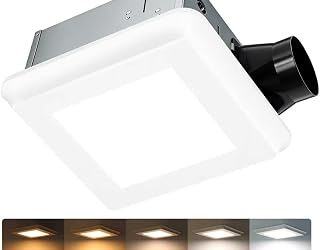
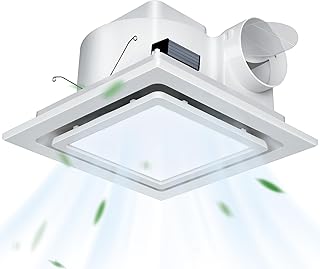
Ultra Quiet Exhaust Fan with Light (120 CFM, 1.0 Sones)
At 1.0 sone and 120 CFM, this unit punches well above its price bracket. The 1,000-lumen LED panel delivers even, flicker-free light across a standard bathroom, and the slim 10″ × 10″ profile drops into most existing openings without modification. It’s the rare budget pick that doesn’t feel like a compromise.
Panasonic WhisperFit (FV-0511VFL1)
Panasonic’s WhisperFit line has earned its reputation honestly—the variable CFM settings (50/80/110) give you real control over noise versus airflow depending on the situation. The dimmable LED integrates cleanly with wall dimmers, and the brushed steel grille looks intentional rather than utilitarian. This is the one professionals install in their own homes.
Round Exhaust Fan with Light & Nightlight (110 CFM, 1.5 Sones)
The built-in nightlight mode is the standout feature here—it provides a soft amber glow that’s genuinely useful for middle-of-the-night bathroom trips without flipping on the main light. The round black grille breaks from the usual white-square aesthetic, and at 110 CFM it handles medium bathrooms comfortably. A solid choice if you want personality and function in one package.
Humidity Sensor Fan with Light (130 CFM, 1.0 Sones)
This is the set-it-and-forget-it option. The humidity sensor detects moisture and automatically ramps up ventilation, then powers down when conditions normalize—no forgotten switches, no wasted energy. With 130 CFM of airflow, 5CCT selectable lighting, and ETL/FCC certification, it covers every practical base and then some. Larger bathrooms and tiled shower rooms benefit most from this level of airflow.
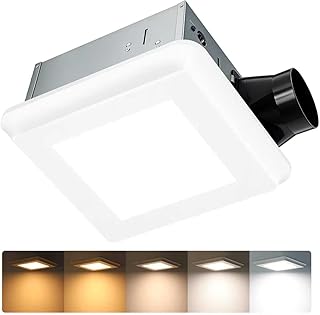
Broan-NuTone Fan with Heater and 3-Level CCT Lighting
The integrated heater transforms this from a ventilation device into a genuine comfort upgrade. Stepping out of a shower into warm air—rather than bracing against cold—changes your winter morning routine entirely. The three-level CCT lighting covers everything from warm ambiance to bright task lighting, and 80 CFM handles standard-sized bathrooms without issue.
Frequently Asked Questions
How many CFM do I actually need for my bathroom?
Measure your bathroom’s square footage and match it to that number in CFM as a baseline. Tiled showers, jetted tubs, or bathrooms larger than 100 square feet benefit from stepping up to 110–130 CFM to keep moisture under control. Undersized fans run longer, use more energy, and still leave you with foggy mirrors.
What does “sones” mean and why should I care?
Sones measure perceived loudness, not technical decibels. A rating of 1.0 sone is roughly equivalent to a quiet refrigerator humming in the next room—present but easy to ignore. Above 2.0 sones, you’ll notice the fan constantly, especially in a quiet house at night. For primary bathroom fans, aim for 1.5 sones or lower.
Can I install a bathroom ceiling fan with light as a DIY project?
Most of these units are designed for straightforward ceiling mounting and come with detailed instructions. If you’re replacing an existing fan of similar size, the job typically involves disconnecting the old unit, securing the new housing to joists, connecting wiring, and attaching the grille. Moderate DIY experience is enough, though you should always shut off the breaker before working with electrical connections and verify your local building codes.
Is a humidity sensor worth the extra cost?
If anyone in your household regularly forgets to turn on or off the exhaust fan, absolutely. Humidity-sensing fans activate automatically when moisture rises and shut off when levels normalize—preventing mold growth without requiring anyone to remember a switch. The energy cost of running a fan unattended is minimal compared to the repair cost of moisture damage over time.
Final Thoughts
For most households, the Panasonic WhisperFit remains the benchmark—it balances quiet operation, reliable airflow, and clean installation better than anything else in its class. If automation and high airflow are priorities, the humidity-sensing 130 CFM unit is hard to beat for the peace of mind alone. And for anyone wanting a simple, effective upgrade without overthinking it, the Ultra Quiet 120 CFM model delivers performance that rivals units costing twice as much. Pick the one that matches your bathroom’s size and your morning routine, and you’ll stop noticing your fan—which is exactly the point.