
Triceps punish you for being slow. The long head fatigues in about 40 seconds of hard work and recovers almost as quickly, which is why the classic protocols — skull crusher into close-grip press, overhead extension dropped twice in a row, kickbacks stripped down until the last four reps are ugly — only work if the weight change happens in the gap between breaths. In a commercial gym you grab the next pair off the rack. At home, if it takes you 45 seconds to unscrew collars and slide plates, you haven’t done a drop set. You’ve done three separate sets with generous rest, and your arms know the difference.
So the gear question for home tricep work isn’t really “which dumbbells are heaviest” — most people cap out around 40 to 50 pounds per hand on extensions anyway. It’s how many seconds sit between load A and load B, whether the handle is short enough to clear your skull on a lying extension, and whether the thing survives being set down hard when your elbows give out mid-rep. Below are five pieces I’d build a tricep-focused corner around, judged on change speed first, handle geometry second, and durability third.
Our top picks
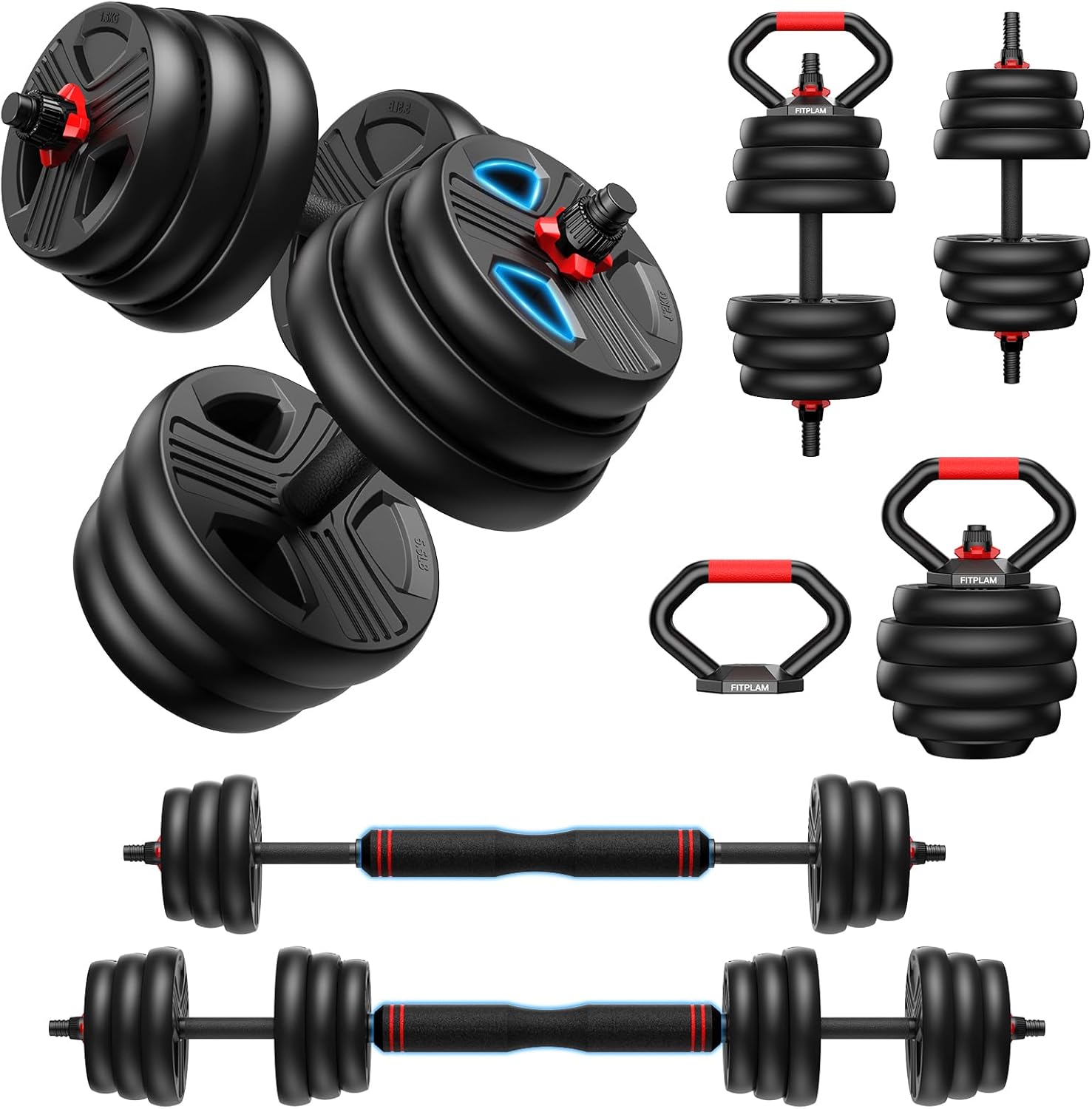 FITPLAM Adjustable dumbbell set
- Easily converts into dumbbells, kettlebells, barbells, weight plates,…
- Featuring a unique red-and-black double-lock system, the red…
- Customize your training intensity with adjustable weights options



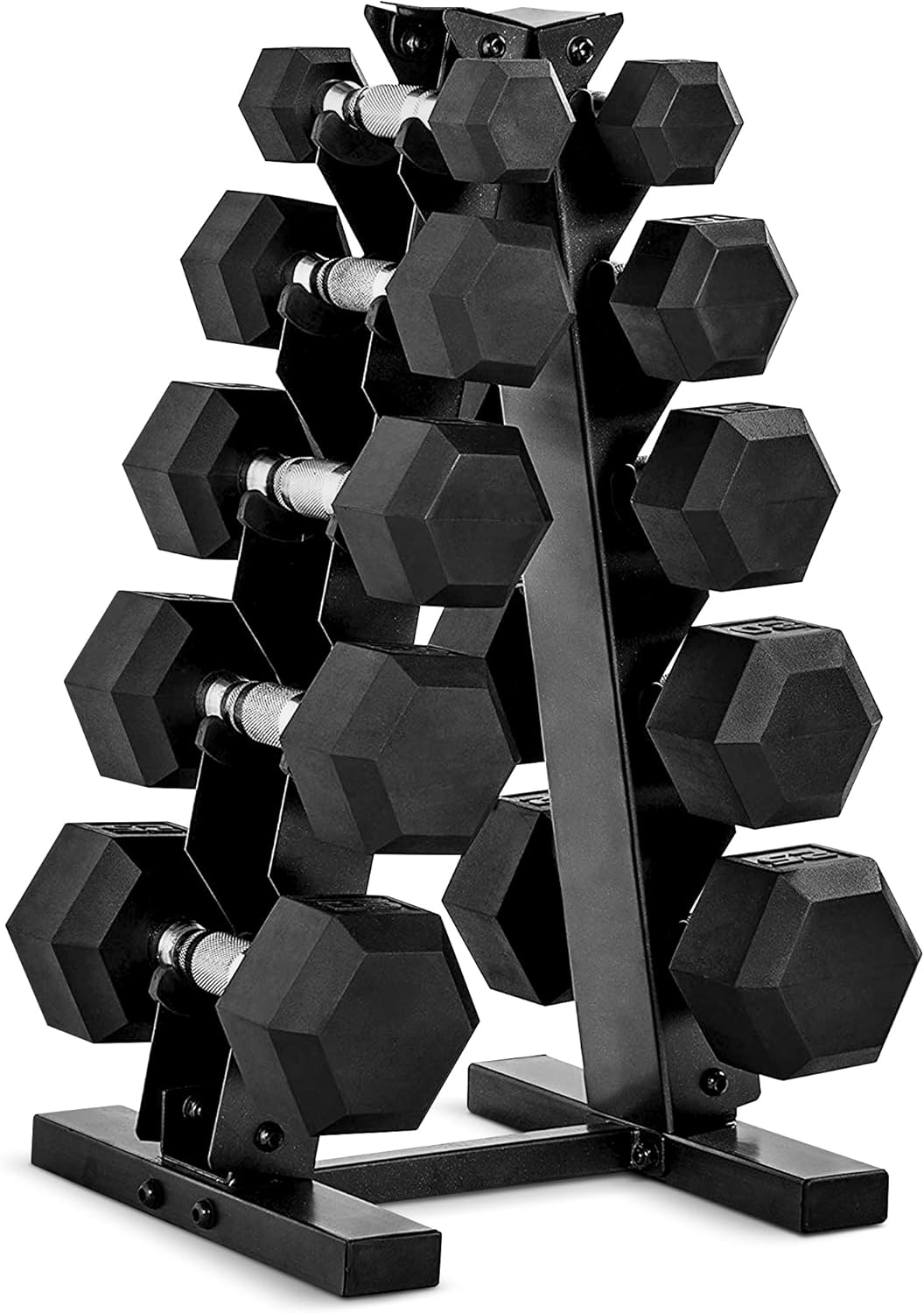 CAP Rubber Coated Hex Dumbbell Set with
- Frame Type: A-Frame
- Material: Metal
- Item Dimensions D x W x H: 12.8"D x 14.37"W x 25.98"H


As an Amazon Associate we earn from qualifying purchases at no extra cost to you.
Quick Comparison
| Pick | Adjustment | Range per hand | Realistic change time | Best for |
|---|---|---|---|---|
| Bowflex SelectTech 552 | Twin dials, in cradle | 5–52.5 lb (2.5 lb steps to 25) | 4–6 seconds | Fine-grained drop sets |
| NÜOBELL 80LB Classic | Quarter-turn handle | 5–80 lb (5 lb steps) | 3–4 seconds | Fastest changes, compact shape |
| PowerBlock Elite EXP | Selector pin | 5–50 lb, expandable to 90 | 5–8 seconds | Small floor space, growth room |
| Ironmaster Quick-Lock 75 | Screw lock, stacked plates | 5–75 lb (2.5 lb steps) | 20–35 seconds | Heavy pressing, drop tolerance |
| REP AB-3000 bench | Ladder pins, 7 back angles | 1,000 lb rated | 10 seconds per angle | Incline and decline extensions |
How to Choose
- Time the swap, not the spec sheet. Anything over ten seconds kills a drop set. Dial and twist-handle designs land under six; plate-loaded systems don’t, and you should plan your programming around that instead of pretending otherwise.
- Check handle length against your head. Lying extensions and behind-the-neck presses need clearance. Long selectorized bodies (PowerBlock’s cage, older Bowflex units) force a wider, less comfortable path than a short 6-inch grip section.
- Decide whether you’ll ever drop them. Tricep failure is sudden. Selectorized dumbbells are plastic-shrouded and expect a controlled return to the cradle; Ironmaster’s steel plates don’t care. If you train alone to true failure, that matters more than four seconds.
- Increment size drives progress. Jumping 5 pounds per hand on an overhead extension is a 15–20% load increase. Look for 2.5 lb steps in the range you actually press, roughly 15 to 40 pounds.
- Budget for the bench, not just the weights. Long-head work responds to stretched positions, which means incline and decline. A flat-only bench cuts off half the useful exercise list.
Top Picks Reviewed
Bowflex SelectTech 552 — best increments for drop sets
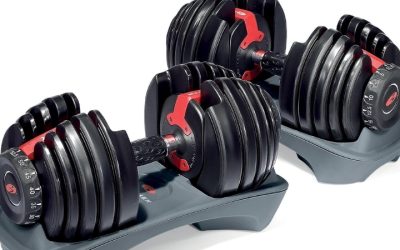
Two dials, one per end, and the plates you didn’t select stay behind in the base. The 2.5-pound steps below 25 pounds are the real selling point: you can run 30 → 25 → 20 on skull crushers without the load falling off a cliff. Downsides are honest ones — the body is 15.75 inches long, so overhead work feels wide, and the plastic tray means you set them down deliberately rather than dropping them. Ceiling is 52.5 lb, plenty for extensions, tight for heavy close-grip pressing.
NÜOBELL 80LB Classic — fastest changes in the category
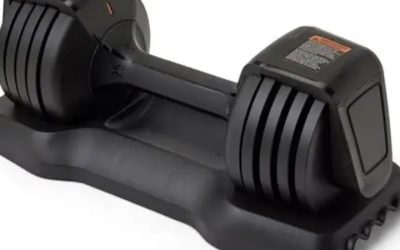
Set it in the cradle, rotate the handle a quarter turn, lift. It’s the closest thing to grabbing a fixed pair off a rack, and the overall shape stays close to a traditional dumbbell, so lying extensions don’t feel like you’re wrestling a brick. Five-pound jumps are coarse for isolation work, and the mechanism rewards you for seating it properly — rush the return and you’ll hear it. Worth it if drop sets and mechanical supersets are the core of your training.
PowerBlock Elite EXP — best for tight spaces and future weight
The nesting-cage design gives you the smallest footprint here, and the expansion kits take a 5–50 lb set up to 70 and then 90 without buying new dumbbells. The pin is quick once it’s muscle memory. The tradeoff is geometry: your hand sits inside a rectangular cage, which limits wrist rotation and makes deep overhead positions feel constrained for some lifters. Try the grip before committing if you can.
Ironmaster Quick-Lock 75 — best when you train to failure alone
All steel, screw-lock collars, 2.5-pound increments across the whole range, and a genuine 75 pounds per hand. Changes take half a minute, so you program around it — straight sets and rest-pause instead of rapid drops. In exchange you get a dumbbell you can set down hard, a compact loaded profile, and a stand that stores the plates in order. This is the buy-once option if longevity outranks speed.
REP AB-3000 adjustable bench — the piece people skip
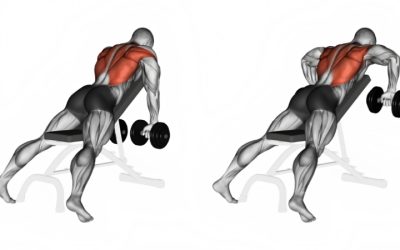
Seven back positions including decline, a low 17-inch pad height, and a small gap between seat and back so you’re not lying across a crack. Decline extensions load the long head in a lengthened position that flat pressing never reaches, and incline kickbacks stop being a balance exercise. Adjustment takes about ten seconds with the ladder pins — fast enough to keep inside a superset.
Frequently Asked Questions
How much weight do I actually need for triceps?
Most lifters plateau on dumbbell extensions somewhere between 30 and 50 pounds per hand. A 52.5 lb set covers isolation work indefinitely. You’d want 70–80 lb only if the same dumbbells double for chest and back pressing.
Are adjustable dumbbells safe for overhead extensions?
Yes, provided the plates are locked and you check the mechanism before each set. The real risk isn’t the dumbbell failing — it’s a wide body forcing a poor bar path near your head. Use a two-hand grip on a single dumbbell for heavy overhead work and keep the elbows tracking forward.
Can I train triceps well with only two loads?
You can, using mechanical drop sets: run overhead extensions to near failure, then switch to close-grip presses with the same weight. The stronger position lets you keep going after the weak one is spent, which produces a drop-set effect without touching the dial.
Is a cable machine better than dumbbells here?
Cables give constant tension and easier drop sets, but dumbbells beat them on stretched-position overhead work and cost a fraction as much. Fast-adjusting dumbbells plus a decline bench closes most of the gap.
Final Thoughts
If your tricep training lives on drop sets and short rests, buy for adjustment speed and take the coarser increments: the NÜOBELL or the 552, paired with a bench that reaches decline. If you train alone, push to genuine failure, and would rather not think about plastic shrouds, the Ironmaster is the better long-term purchase and you adapt the programming to suit it. Either way, add the bench before you add pounds — the extra range of motion will do more for your arms than another 10 pounds you can’t control.
Write Your Review
No reviews yet. Be the first to share your experience!