
Key takeaways
- Set Name: Expandable Set
- Item Dimensions L x W: 4.88"L x 1.78"W
- Handle Diameter: 1 inch
The single most consequential decision in a home arm setup is not which brand you buy, it is whether you buy fixed weights or adjustable ones. Fixed dumbbells are instant, silent and indestructible, but you need a pair at each weight, and arm training moves in small increments. Going from 10 to 15 pounds on a bicep curl is a 50 percent jump, which for most people means grinding out sloppy reps for weeks until they suddenly can do it. Adjustable sets fix that problem and introduce a different one: every weight change costs you 30 to 90 seconds of fiddling, which is dead time in the middle of a superset.
Arms are also the body part where load requirements are lowest and progression is slowest. Curls and extensions rarely need more than 25 to 35 pounds per hand for years, while presses and rows climb faster. That asymmetry is why so many people end up owning both: a light fixed pair for high-rep isolation work and an adjustable set for everything else. The four options below cover both approaches, and the right answer depends mostly on how you actually train.
Our top picks
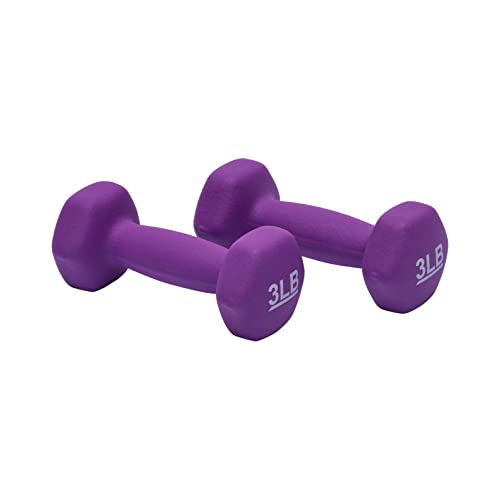
 Amazon Basics Neoprene Dumbbell Hand Weights for
- Set Name: Expandable Set
- Item Dimensions L x W: 4.88"L x 1.78"W
- Handle Diameter: 1 inch

 NICEPEOPLE Adjustable Weight Bench for Home Gym
- Item Dimensions D x W x H: 46"D x 16.7"W x 17.2"H
- Material: Superior Alloy Steel

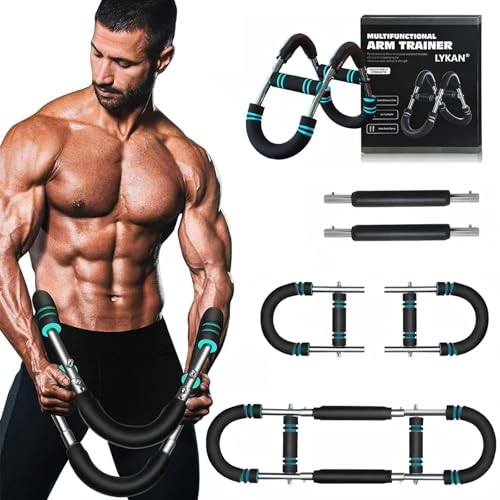
 Abahub Twister Arm Exerciser
- Warranty Description: 2 Year
- Tension Supported: 440 lbs
- Strap Type: Hydraulic

As an Amazon Associate we earn from qualifying purchases at no extra cost to you.
Quick Comparison
| Product | Best For | Standout Feature | Watch Out For |
|---|---|---|---|
| Amazon Basics Neoprene Dumbbells | Light high-rep isolation work | Soft coating that is kind to bare hands | Tops out well below what arms eventually need |
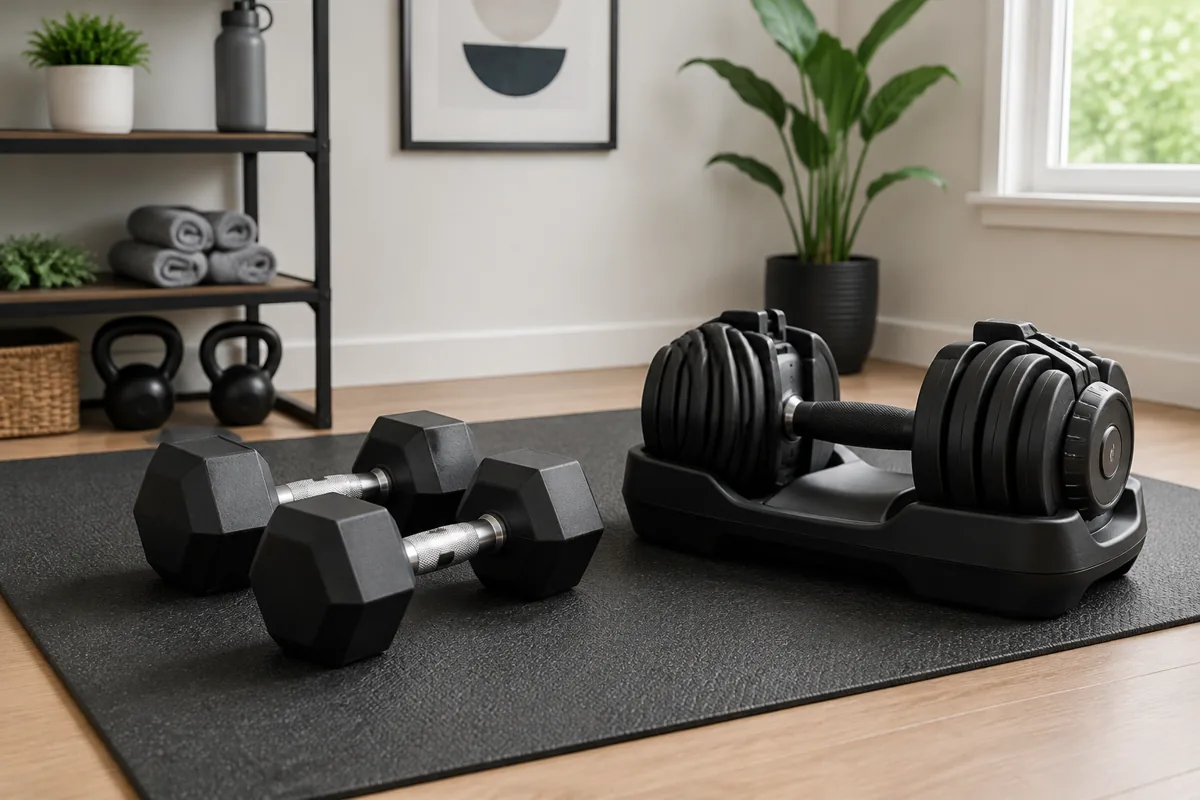
| Amazon Basics Rubber Hex Dumbbell | A permanent fixed pair at your working weight | Hex ends will not roll away mid-set | You need multiple pairs to progress |
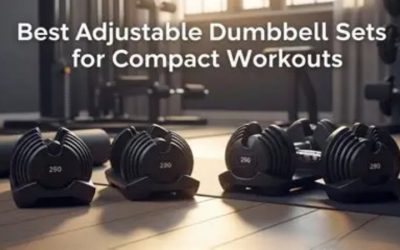
| FITPLAM Adjustable Set | One purchase covering years of progress | Spans roughly 20 to 90 lb in one system | Plate changes interrupt superset rhythm |
| EQUIPRO Adjustable Set | Smaller increments for lighter lifters | 4-in-1 design starting from very light loads | Lower ceiling than heavy-duty sets |
How to Choose
- Map your increment needs: For curls and extensions, jumps of 2.5 to 5 pounds keep progress smooth. A system that only offers 10-pound steps will stall you repeatedly, regardless of its top-end capacity.
- Estimate your real ceiling: Most people training arms at home never exceed 30 to 40 pounds per hand for isolation work. Buying a 90-pound-capable system for curls alone is over-specifying; buying it because you will also press and row is sensible.
- Count the weight changes in your workout: A superset of curls and overhead extensions can require four changes per round. On an adjustable set that is several minutes of standing around per session, which is worth knowing before you commit.
- Check the handle diameter: A thicker handle taxes grip strength and can limit curl volume before the biceps are done. Around 1 to 1.25 inches is standard and comfortable for most hands.
- Consider a hybrid setup: A light fixed pair for warm-ups, finishers and high-rep work, plus one adjustable set for the heavier compound movements, solves both problems for less than a full fixed rack.
Top Picks Reviewed
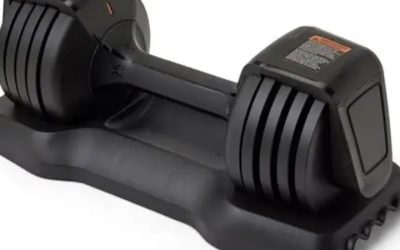
Best Fine Increments: EQUIPRO Adjustable Set
Starting from genuinely light loads with small steps is exactly what arm training wants. You can add a couple of pounds to a curl rather than jumping a whole size, which keeps reps clean and progress steady over months rather than in frustrating leaps.
The ceiling arrives sooner than with heavy-duty systems. If your plan includes progressing to heavy rows and presses with the same dumbbells, you will eventually need something with more capacity.
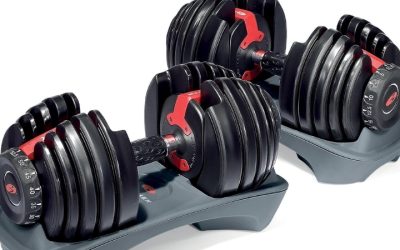
Best Long-Term Range: FITPLAM Adjustable Set
Covering roughly 20 up to 90 pounds in one purchase means the set will still be useful years from now, when curls have crept up and your rows have climbed considerably higher.
Changing plates takes real time. In a workout built around back-to-back arm supersets, those interruptions add up and quietly change how you train, usually toward straight sets with longer rests.
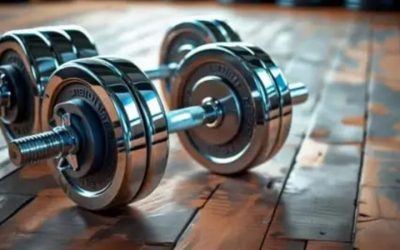
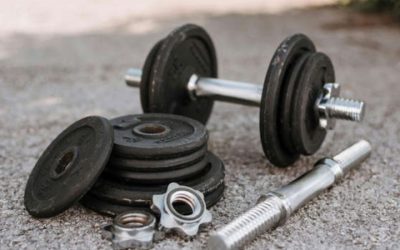
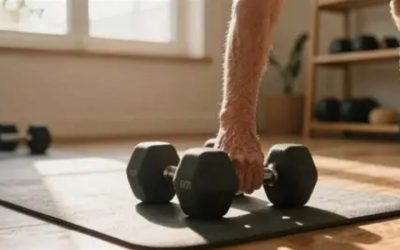
Best Fixed Working Pair: Amazon Basics Rubber Hex Dumbbell
There is a good argument for owning one fixed pair at the weight you use most. No adjustment, no doubt, no dropped plates, and the hex ends stay put on the floor between sets.
Progression means buying more pairs. Each purchase is cheap in isolation and expensive in aggregate, and each pair needs somewhere to live.
Best Light Isolation Option: Amazon Basics Neoprene Dumbbells
For lateral raises, high-rep curls and rehab-style work, a light neoprene pair is the most practical thing in the room. The soft coating is comfortable in bare hands and forgiving against furniture and shins.
The available range stops well short of what arms will need within a year of consistent training. Treat these as an accessory to a heavier setup, not as the setup itself.
Frequently Asked Questions
What weight should I start with for arm exercises?
A good test is picking a weight you can curl for 12 clean reps with two or three left in reserve. For many beginners that lands between 8 and 15 pounds per hand, but the rep quality matters more than the number.
How many pairs of fixed dumbbells do I need?
Three pairs covers most home training: a light pair for raises, a medium pair for curls and extensions, and a heavier pair for rows and presses. Beyond that, adjustable sets become better value.
Are adjustable dumbbells safe for curls?
Yes, provided the collars or locking mechanism are fully engaged before each set. Check the lock every time you change weight; that habit prevents the one failure mode that matters.
How often should I train arms?
Two sessions a week covering biceps and triceps is enough for most people, especially if you also row and press. Arms recover quickly but they still need rest days to adapt.
Final Thoughts
Decide based on increments and interruptions rather than headline weight. If your arm training lives in supersets and high reps, fixed pairs at two or three weights will serve you better than any adjustable system. If you want one purchase that grows with you across curls, rows and presses, an adjustable set with a wide range is the sensible investment, and a light fixed pair alongside it covers everything the adjustable set is too slow to do.
Write Your Review
No reviews yet. Be the first to share your experience!