Key takeaways
- Base type: Almost every residential chandelier uses E12 (candelabra) sockets, not the standard E26. Double-check before ordering — a mismatch means the bulb physically won’t screw in.
- Color temperature: 2700K gives that soft, golden glow people associate with incandescent light. Drop to 2500K for an even warmer, candlelit feel; go above 3000K and the room starts reading “office.”
- Wattage equivalence vs. lumens: The “40W equivalent” label is useful shorthand, but lumens tell the real story. A 40W-equivalent LED usually lands around 400–470 lumens — compare that number, not the wattage.
- Dimmer compatibility: Not all LEDs dim smoothly. Look for explicitly “dimmable” labeling, and pair them with an LED-rated dimmer switch to avoid flicker or early burnout at low settings.
- Bulb shape and size: B10, B11, and CA10 shapes all look slightly different in exposed fixtures. If your chandelier has narrow glass sleeves, measure the sleeve opening and compare it to the bulb’s widest diameter.
What's inside
Replacing chandelier bulbs sounds simple until you realize how many variables actually matter: base size, wattage equivalence, color temperature, dimmer compatibility, and the way a bulb’s shape interacts with your fixture’s glass shades. Pick wrong, and you get harsh light, buzzing dimmers, or bulbs that stick out past the socket collar. Pick right, and the entire room shifts from “just okay” to genuinely warm and inviting.
This guide walks through six popular chandelier-rated bulbs across the most common factors shoppers get wrong, then narrows the field to five standout picks for different needs and budgets. Whether you’re outfitting a formal dining fixture or a hallway pendant cluster, the notes below should save you a return trip to the box store.
As an Amazon Associate we earn from qualifying purchases.


How to Choose a Bulb For Chandelier (2026)
- Base type: Almost every residential chandelier uses E12 (candelabra) sockets, not the standard E26. Double-check before ordering — a mismatch means the bulb physically won’t screw in.
- Color temperature: 2700K gives that soft, golden glow people associate with incandescent light. Drop to 2500K for an even warmer, candlelit feel; go above 3000K and the room starts reading “office.”
- Wattage equivalence vs. lumens: The “40W equivalent” label is useful shorthand, but lumens tell the real story. A 40W-equivalent LED usually lands around 400–470 lumens — compare that number, not the wattage.
- Dimmer compatibility: Not all LEDs dim smoothly. Look for explicitly “dimmable” labeling, and pair them with an LED-rated dimmer switch to avoid flicker or early burnout at low settings.
- Bulb shape and size: B10, B11, and CA10 shapes all look slightly different in exposed fixtures. If your chandelier has narrow glass sleeves, measure the sleeve opening and compare it to the bulb’s widest diameter.
The Best Bulb For Chandelier (2026)s Reviewed
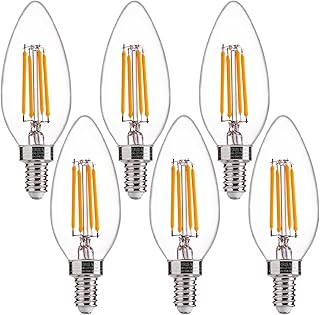
60W Equivalent LED Candelabra Bulbs (6-Pack)
These deliver 600 lumens per bulb — noticeably brighter than the typical 40W-equivalent candelabra LED — making them a smart pick for dining rooms where you want the table well-lit without cranking overheads. The clear B11 filament design looks attractive in open fixtures, and the 2700K warmth holds up well at lower dimmer settings without shifting greenish.
E12 Flame Tip Candle Bulbs (12-Pack)
The tapered flame-tip silhouette on these 4W bulbs flatters ornate chandeliers with exposed sockets, where a blunt bulb shape would look out of place. At 460 lumens they sit right in the sweet spot for ambient lighting, and the 12-pack quantity makes them practical for fixtures with six or more arms — you’ll have spares on hand for the inevitable burnout months down the road.
Dimmable E12 LED Candelabra Bulbs (12-Pack)
At roughly 450 lumens and a 40W-equivalent rating, these B11 vintage-filament bulbs thread the needle between price and build quality. The clear glass showcases the filament loop attractively in minimalist fixtures, and the included 12-count keeps per-bulb cost low — a solid all-rounder if you’re outfitting multiple rooms at once.
E12 LED Edison Candle Bulb (5-Pack)
The B10 shape on these 470-lumen Edison-style bulbs is slightly more compact than a standard B11, which makes them ideal for tight-fitting chandeliers and ceiling fans where every millimeter of clearance counts. The warm 2700K tone and visible filament deliver that café-ambiance look, though the 5-pack count means you’ll need multiples if you’re filling a larger fixture.
MEQIQTEK 60 Watt Incandescent Candle Bulbs (12-Pack)
This is the outlier: an actual incandescent filament rather than an LED, producing a full 600 lumens of genuinely continuous-spectrum light at 2500K. Incandescent purists will notice the difference — dimming curves are perfectly smooth with zero flicker, and the color rendering is excellent. The trade-off is energy consumption and shorter lifespan, but for a formal chandelier you only run for a few hours each evening, that may not matter much.
Frequently Asked Questions
What base type do chandelier bulbs use?
Almost universally E12 (candelabra base), which has a 12mm diameter — smaller than the E26 “standard” base found in table lamps. Always confirm your fixture’s socket type, but E12 is the safe default when shopping for chandelier replacements.
What color temperature is best for a chandelier?
2700K is the most popular choice because it closely matches the warm glow of traditional incandescent bulbs. If your chandelier is in a room with lots of warm wood tones or cream-colored walls, dropping to 2500K can add an extra layer of coziness. Anything at 3000K or above tends to feel too clinical for ambient dining lighting.
Can I use non-dimmable LED bulbs in a chandelier on a dimmer switch?
You shouldn’t. Running a non-dimmable LED on a dimmed circuit can cause flickering, buzzing, and premature failure of both the bulb and the dimmer. Always match dimmable bulbs with an LED-compatible dimmer for reliable performance across the full brightness range.
How many lumens do I need per chandelier arm?
For general ambient lighting in a dining room, 400–500 lumens per bulb works well. If your chandelier is the primary light source in a larger room or you prefer brighter settings, lean toward 600-lumen options. Keep in mind that a fixture with eight arms at 450 lumens each already delivers 3,600 total — plenty for most spaces.
Final Thoughts
For most shoppers, the 60W Equivalent LED Candelabra Bulbs (6-Pack) hit the best balance of brightness, warm tone, and filament aesthetics. If you’re filling a tight-fitting fixture, the E12 LED Edison Candle Bulb’s slimmer B10 profile is worth the smaller pack count. And for anyone who values perfect, flicker-free dimming above all else, the MEQIQTEK incandescent set remains hard to beat despite the higher energy draw.