Key takeaways
- Protection level: If your workplace requires steel or composite toe certification, confirm the shoe carries a proper ASTM rating before you buy. Non-certified “safety” sneakers won’t cut it on regulated sites.
- Sole construction: A Kevlar or composite midsole prevents puncture injuries without the weight penalty of steel plates. Look for puncture-resistant soles under 12 ounces per shoe for genuinely light performance.
- Toe box shape: Workers on their feet all day need room for natural toe splay. A wider, rounder toe box reduces pressure points and prevents the numbness that comes from cramped footwear over long shifts.
- Slip resistance: Factory floors, loading docks, and kitchen prep areas all present slip hazards. Rubber outsoles with aggressive tread patterns grip wet and oily surfaces far better than smooth or minimalist designs.
- Fit and entry style: Consider whether slip-on convenience or lace-up adjustability matters more for your workflow. Slip-ons save time but offer less ankle support; laces let you dial in a precise fit across the instep.
What's inside
Shopping for light work shoes in 2026 shouldn’t feel like a second shift, but it often does. Between steel-toe requirements on the job, long hours on concrete floors, and the nagging reality that most “safety footwear” looks and feels like it was designed as punishment, finding shoes that actually balance protection with day-long comfort is a genuine challenge. If you’ve ever limped to your car after a twelve-hour warehouse shift, you know exactly what I mean.
This guide breaks down six standout options that refuse to compromise between safety and wearability. Whether you need puncture-resistant soles for a factory floor, a roomy toe box for swollen feet, or something light enough for transitions between work and errands, these picks cover the real-world scenarios where light work shoes earn their keep. Here’s what actually holds up.
As an Amazon Associate we earn from qualifying purchases.


How to Choose Light Work Shoes (2026)
- Protection level: If your workplace requires steel or composite toe certification, confirm the shoe carries a proper ASTM rating before you buy. Non-certified “safety” sneakers won’t cut it on regulated sites.
- Sole construction: A Kevlar or composite midsole prevents puncture injuries without the weight penalty of steel plates. Look for puncture-resistant soles under 12 ounces per shoe for genuinely light performance.
- Toe box shape: Workers on their feet all day need room for natural toe splay. A wider, rounder toe box reduces pressure points and prevents the numbness that comes from cramped footwear over long shifts.
- Slip resistance: Factory floors, loading docks, and kitchen prep areas all present slip hazards. Rubber outsoles with aggressive tread patterns grip wet and oily surfaces far better than smooth or minimalist designs.
- Fit and entry style: Consider whether slip-on convenience or lace-up adjustability matters more for your workflow. Slip-ons save time but offer less ankle support; laces let you dial in a precise fit across the instep.
The Best Light Work Shoes (2026) Reviewed
Steel Toe Safety Sneakers
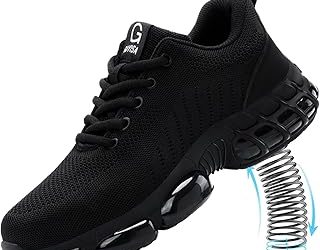
These puncture-resistant Kevlar-midsole sneakers hit the sweet spot for warehouse and light construction work. The cushioned insole absorbs concrete-floor impact surprisingly well for a safety shoe, and the breathable upper keeps feet from overheating during active shifts. At this price point, the combination of full steel-toe protection and sneaker-level lightness is hard to beat.
Steel Toe Slip-On Safety Loafers
If fumbling with laces before a shift feels pointless, this slip-on safety shoe deserves a close look. It delivers a steel toe and puncture-proof sole in a loafer-style silhouette that slips on in seconds. The trade-off is slightly less ankle stability, but for factory and warehouse workers who prioritize speed and simplicity, the convenience factor alone makes these a strong contender.
Joomra Whitin Supportive Running Sneakers
Originally built for running, this cushioned Whitin model has found a loyal following among workers who spend entire shifts standing on hard surfaces. The removable insole lets you swap in custom orthotics, while the durable rubber outsole grips polished floors and outdoor walkways equally well. It’s not a steel-toe shoe, but for roles where puncture and impact protection aren’t mandated, the all-day comfort is exceptional.
WHITIN Wide Toe Box Zero Drop
Workers dealing with bunions, hammertoes, or general foot swelling will appreciate the roomy toe box on the WHITIN S81. The zero-drop platform promotes a natural gait that reduces lower-back strain over long days, and the breathable mesh upper prevents the swampy heat that plagues heavier work footwear. If barefoot-style footwear appeals to you but your job still demands traction and durability, this is your shoe.
Kricely Men’s Trail Running Shoes
The Kricely trail runners bring a surprisingly polished look to the work shoe category without sacrificing functional grip. The non-slip outsole handles wet warehouse floors and outdoor terrain alike, making these a versatile pick for workers who split time between indoor and outdoor environments. The lightweight build and breathable knit upper round out a shoe that transitions smoothly from a shift to everyday errands.
Frequently Asked Questions
Do I really need steel-toe shoes for warehouse work?
Check your employer’s safety policy and local OSHA requirements. Many warehouses mandate ASTM-rated steel or composite toe protection, especially around heavy equipment or pallet racks. Even if it’s not required, toe protection is worth the small weight increase when you’re working around falling objects.
Can light work shoes protect against punctures?
Yes — shoes with Kevlar or composite midsoles provide puncture resistance without the weight and stiffness of traditional steel plates. Several options in this guide offer full puncture protection while still feeling like regular sneakers on your feet.
What’s the difference between zero-drop and traditional work shoes?
Zero-drop shoes keep your heel and forefoot at the same height, which encourages a more natural walking pattern and can reduce knee and lower-back fatigue. Traditional work shoes typically have a raised heel that shifts your weight forward, which some workers find more stable but others find fatiguing over eight to twelve hours.
How often should I replace my light work shoes?
Most light work shoes last between three hundred and five hundred miles of use, or roughly six to twelve months depending on your schedule and floor surfaces. Replace them when the outsole tread flattens significantly, the midsole loses its cushion rebound, or the toe area shows visible wear.
Final Thoughts
For most workers who need full safety compliance, the Steel Toe Safety Sneakers with the Kevlar midsole offer the best balance of protection, weight, and comfort. If safety certification isn’t required and all-day cushioning is your priority, the Joomra Whitin Supportive Running Sneakers consistently outperform shoes costing twice as much. And for anyone struggling with wide or swollen feet, the WHITIN Wide Toe Box Zero Drop is a genuine game-changer that proves work footwear doesn’t have to hurt.