Key takeaways
- Best all-around professional choice: Sennheiser MKH 416, especially for outdoor dialogue, film, and broadcast work.
- Best lightweight boom microphone: RØDE NTG5, with low weight and a relatively short body for location recording.
- Best camera-mounted option: RØDE VideoMic NTG, which combines a compact design, internal battery, headphone monitoring, and camera-friendly controls.
- Best for humid outdoor locations: DPA 4017B, a high-end interference-tube microphone designed for demanding production environments.
- Best value long-microphone option: Audio-Technica AT897, suitable for cameras, booms, interviews, and general field recording.
- Best for controlled indoor dialogue: A short shotgun microphone or supercardioid boom microphone, rather than an extra-long shotgun.
The best shotgun microphones for clearer audio depend less on the longest tube and more on your recording distance, room reflections, camera or boom setup, and wind protection.
Quick picks by recording situation
- Best all-around professional choice: Sennheiser MKH 416, especially for outdoor dialogue, film, and broadcast work.
- Best lightweight boom microphone: RØDE NTG5, with low weight and a relatively short body for location recording.
- Best camera-mounted option: RØDE VideoMic NTG, which combines a compact design, internal battery, headphone monitoring, and camera-friendly controls.
- Best for humid outdoor locations: DPA 4017B, a high-end interference-tube microphone designed for demanding production environments.
- Best value long-microphone option: Audio-Technica AT897, suitable for cameras, booms, interviews, and general field recording.
- Best for controlled indoor dialogue: A short shotgun microphone or supercardioid boom microphone, rather than an extra-long shotgun.
What makes a shotgun microphone different?
A shotgun microphone uses an interference tube in front of its capsule. Slots along the tube allow sound arriving from the sides to cancel more than sound arriving from the front. This creates a narrow forward pickup pattern, helping the microphone emphasize a subject while reducing some sound from off-axis directions.

RØDE VideoMicro II Ultra-Compact On-Camera Shotgun Microphone for
Included for 'Best Shotgun Microphones for Clearer Audio' as a relevant option in this category; details come from the product listing.
View on Amazon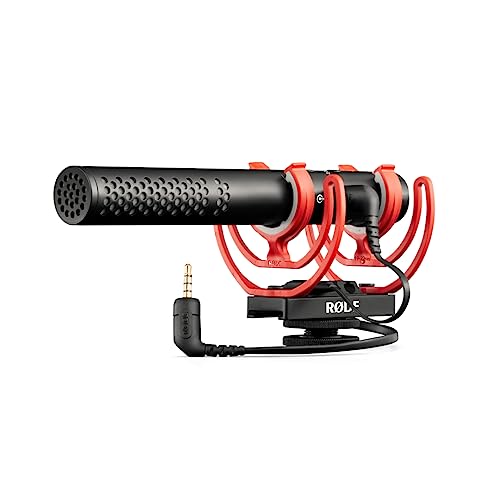
Rode VideoMic NTG Camera-mount Shotgun Microphone,Black
Included for 'Best Shotgun Microphones for Clearer Audio' because the listing specifies Black, details this guide uses to compare options.
View on Amazon
RØDE VideoMic Pro+ Premium On-Camera Shotgun Microphone with High-Pass
Included for 'Best Shotgun Microphones for Clearer Audio' as a relevant option in this category; details come from the product listing.
View on Amazon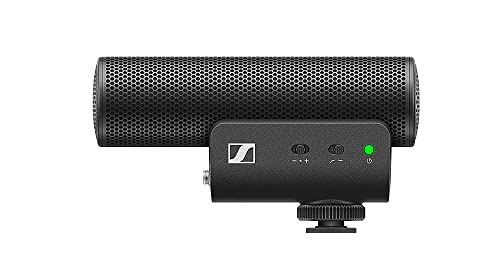
SENNHEISER Professional MKE 400 Directional On-Camera Shotgun Microphone with 3.5mm TRS and TRRS Connectors for DSLR, Mirrorless & Mobile , Connects with Auxiliary
Included for 'Best Shotgun Microphones for Clearer Audio' because the listing specifies Mirrorless & Mobile and Connects with Auxiliary, details this guide uses to compare options.
View on AmazonThat design does not let a microphone “zoom” into distant speech. A shotgun still needs to be close to the speaker, and it performs best when aimed accurately at the speaker’s mouth or upper chest. Moving a microphone from 2 feet away to 6 feet away usually causes a larger improvement than changing from one good microphone to another.
Pickup pattern: narrow is not always better
Short shotguns and supercardioid microphones
Short shotgun microphones, commonly about 5–8 inches long, offer a useful compromise between directionality and practicality. They work well on a camera, a compact boom pole, or a stand. Many have a supercardioid or lobar-style pattern that rejects some side noise without becoming excessively sensitive to room reflections.
For a small living room, bedroom, office, or 10-by-12-foot room, this is often the safer choice. The microphone can be placed just outside the camera frame and aimed downward, while the wider pattern is less likely to produce unnatural tonal changes when the speaker moves.
Medium and long shotguns
Medium microphones around 8–12 inches long provide stronger off-axis rejection and are common for narrative film, documentary work, and outdoor dialogue. Long models over 12 inches can be valuable when the operator needs maximum directivity, but they demand more accurate aiming and a quieter, less reflective environment.
In a furnished room, a long shotgun can sound thin, phasey, or hollow because reflected sound arrives from walls, floors, ceilings, and furniture at different angles. The tighter pattern may reject some direct room sound while leaving an unnatural mixture of reflections. Indoors, a short shotgun or supercardioid microphone is frequently more forgiving.
| Microphone type | Typical length | Best working distance | Practical fit |
|---|---|---|---|
| Compact camera shotgun | 5–8 in / 13–20 cm | 1–4 ft / 0.3–1.2 m | Camera mount, small boom, travel kit |
| Medium boom shotgun | 8–12 in / 20–30 cm | 2–8 ft / 0.6–2.4 m | Interviews, documentary, exterior dialogue |
| Long shotgun | 12–20 in / 30–51 cm | 3–12 ft / 0.9–3.7 m | Professional boom work and noisy outdoor locations |
| Supercardioid indoor microphone | 5–10 in / 13–25 cm | 1–6 ft / 0.3–1.8 m | Rooms with noticeable reflections |
These distances are working guidelines, not guarantees. Background noise, microphone angle, room acoustics, speech volume, and the quality of the preamp all affect the result.
Camera compatibility versus boom compatibility
A camera-mounted microphone needs to tolerate movement, cable handling, and vibration. Look for a 3.5 mm output, a supplied or compatible shock mount, a short body, and controls that are easy to reach without entering the frame. A camera microphone should also have low self-noise because it may be several feet from the subject.
The RØDE VideoMic NTG is a practical camera-oriented example. It includes a rechargeable battery, adjustable output, a safety channel feature, and a headphone output for monitoring. Compact camera shotguns are convenient, but they are still a compromise: placing the microphone on top of a camera usually leaves it too far away for clean dialogue.
A boom microphone normally uses a balanced XLR connection and requires a recorder, mixer, or camera with an XLR input and suitable phantom power. The Sennheiser MKH 416, RØDE NTG5, Audio-Technica AT897, and DPA 4017B are examples of microphones commonly suited to boom or professional field setups.
Check more than the connector. Confirm that your recorder supplies 48-volt phantom power, that the microphone’s output level suits the input, and that the shock mount fits the microphone’s diameter. A microphone that weighs about 1 pound can become tiring on a fully extended boom, particularly during a long interview.
Wind protection is part of the microphone system
The foam sleeve supplied with many microphones is mainly useful for light air movement and plosive protection. It is not enough for walking outdoors, vehicle movement, fans, or even a moderate breeze.
- Foam: compact and inexpensive, but limited outdoors.
- Furry slip-on cover: useful for light-to-moderate wind when the microphone remains close to the subject.
- Basket windshield: the better choice for exposed locations, especially when combined with a furry cover.
- Full wind system: best for strong wind, moving shots, and professional boom work, but larger, heavier, and more expensive.
Allow clearance between the microphone and the inside of a windshield. Crushing the furry cover against the interference tube can transmit handling noise and reduce wind performance. Keep the microphone in its suspension mount rather than gripping the body, and use a cable with a soft, flexible jacket to reduce vibration.
Indoor versus outdoor audio quality
For indoor recording
Position the microphone 6–18 inches above the speaker and aim toward the upper chest or mouth. Keep it just outside the frame, usually angled 30–45 degrees downward. In a 10-by-12-foot room, a microphone placed 2 feet from the speaker will usually sound more natural than one placed 5 feet away, regardless of its price.
Choose a short shotgun or supercardioid microphone when the room has hard floors, bare walls, glass, or a low ceiling. Soft furnishings, curtains, rugs, and bookcases reduce reflections. However, heavy acoustic treatment is not always necessary; moving the microphone closer and away from a bare wall can make a larger difference.
For outdoor recording
Outdoors, the main problems are wind, traffic, air-conditioning units, birds, and distant voices. A medium or long shotgun can provide useful rejection when the microphone is aimed precisely, but it cannot remove noise that arrives from directly behind the subject or from the same direction as the speech.
Outdoor dialogue usually benefits from a proper shock mount, a boom pole, balanced XLR cabling, and a basket-style windshield. The MKH 416 is a well-established choice for exterior speech, while the NTG5 offers a lighter setup for operators who carry equipment over long distances.
Material and construction trade-offs
| Construction feature | Advantage | Trade-off |
|---|---|---|
| Metal body | Durable, shields electronics, resists regular location use | Heavier and can become cold or tiring during long handheld sessions |
| Lightweight aluminum design | Reduces boom fatigue and travel weight | May transmit more handling noise if the shock mount is poor |
| Sealed RF-resistant circuitry | Better reliability near wireless transmitters and difficult electrical environments | Usually found in more expensive professional microphones |
| Battery-powered electronics | Useful with cameras lacking phantom power | Requires charging or spare batteries |
How to choose by budget and use
For occasional camera work, a compact shotgun microphone generally costs about $150–$350. These models are convenient for travel, but the camera position still limits dialogue quality.
For regular interviews, documentaries, and independent film, expect roughly $400–$1,000 for a dependable boom microphone, shock mount, cable, and wind protection. The Audio-Technica AT897 and RØDE NTG5 sit in the practical field-recording range, while the Sennheiser MKH 416 represents a more established professional investment.
High-end microphones such as the DPA 4017B can cost $1,500–$2,500 or more before accessories. Their value is most apparent when reliability, low noise, consistent off-axis response, and professional production requirements matter more than minimizing the kit price.
Final buying checklist
- Choose a short shotgun or supercardioid microphone for reflective indoor rooms.
- Choose a medium or long shotgun for controlled outdoor work where accurate aiming is possible.
- Prioritize microphone distance before buying a longer model.
- Confirm 3.5 mm or XLR compatibility and whether phantom power is available.
- Budget for a shock mount, boom pole, and proper wind protection.
- Check microphone weight before planning long handheld boom sessions.
- Listen for handling noise, room reflections, and wind rather than judging only by pickup width.
The best shotgun microphones are the ones that match the environment and mounting method. For most creators, a well-supported short or medium microphone placed close to the speaker will deliver clearer audio than a longer, more expensive model mounted on a distant camera.