Key takeaways
- Thin-frame metal: black, bronze or brushed brass steel frames, often with a glass, stone or wood top. Lightest visual weight.
- Fluted or reeded wood: vertical grooved fronts on oak or walnut veneer, often with closed storage. Warmer and heavier-looking.
- Stone and stone-look tops: travertine, marble or sintered stone on a plinth or slab base. Sculptural, very heavy.
- Waterfall or slab forms: one continuous top-and-side panel, often in lacquer or veneer, no visible hardware.
- Curved and pill shapes: rounded ends that soften a room full of rectilinear furniture and are kinder to shins in tight walkways.
A modern console table for a living room works best when it is 28 to 32 inches tall, 12 to 16 inches deep and about two-thirds the length of the sofa or wall it sits against, built from a material that keeps clean lines without sagging: powder-coated steel, a thick veneer over plywood, sintered stone or tempered glass. Style matters less than proportion. A sleek table that is 6 inches too short or too long will look wrong no matter how good the finish is.
This guide is about the living room specifically: the three places a console actually earns its spot there, the proportions for each, and which modern materials hold up to remotes, keys, lamps and the occasional kid climbing on it.
Three living room jobs, three different sizes
“Console table” covers several pieces of furniture that happen to share a shape. In a living room it usually does one of three jobs, and each one changes the numbers you should shop by.
Behind a floating sofa
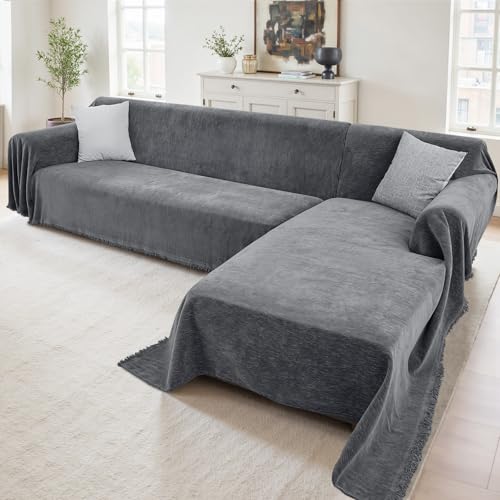
When the sofa sits in the middle of the room, the console fills the gap behind it and gives you somewhere for lamps. The table should be level with or up to 1 inch below the sofa back. Most modern sofas have backs between 28 and 32 inches, so measure yours before anything else. Length should stop 6 to 12 inches short of each sofa arm so the table reads as part of the sofa instead of sticking out past it.
Against a wall as a display surface
On a bare wall, under art or a mirror, height is freer: 30 to 34 inches is typical. Here the console is a focal point, so length should be roughly two-thirds of the wall section it occupies, and any art above it should be no wider than the table itself.
Under a wall-mounted TV
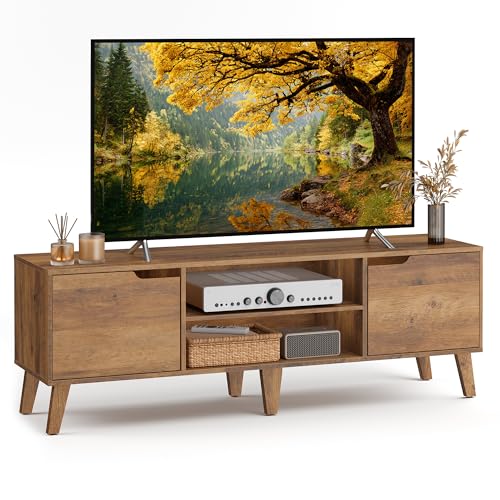
Many people use a slim console instead of a bulky media unit. This changes the rules: the top should sit lower, around 24 to 30 inches, so the TV can be mounted with its center near seated eye level (roughly 40 to 44 inches off the floor). The table should be at least as wide as the TV, ideally a few inches wider on each side.
| Placement | Height | Depth | Length rule |
|---|---|---|---|
| Behind a floating sofa | Sofa back height minus 0–1 in (typically 28–31 in) | 10–14 in | Sofa length minus 12–24 in |
| Wall display / under art | 30–34 in | 12–16 in | About 2/3 of the wall section |
| Under a mounted TV | 24–30 in | 14–18 in | TV width plus 6–12 in |
| Open-plan room divider | 29–32 in | 14–18 in | Match the sofa or seating group |
Walkways matter as much as the table. Leave at least 30 inches of clear floor behind a console in a path you use daily, and 36 inches if it is the main route through the room. A 16-inch-deep table behind a sofa eats more of that than people expect.
What makes a console read as “modern”
Modern in 2026 living rooms usually means one of a few looks rather than a single style:
- Thin-frame metal: black, bronze or brushed brass steel frames, often with a glass, stone or wood top. Lightest visual weight.
- Fluted or reeded wood: vertical grooved fronts on oak or walnut veneer, often with closed storage. Warmer and heavier-looking.
- Stone and stone-look tops: travertine, marble or sintered stone on a plinth or slab base. Sculptural, very heavy.
- Waterfall or slab forms: one continuous top-and-side panel, often in lacquer or veneer, no visible hardware.
- Curved and pill shapes: rounded ends that soften a room full of rectilinear furniture and are kinder to shins in tight walkways.
The common thread is restraint: no carved legs, minimal hardware, and a material that is shown honestly. Pick the look that matches the room’s dominant material. If your sofa has metal legs and the coffee table is glass, a thin-frame metal console ties in; if the room is mostly wood and textiles, fluted wood will feel more at home.
Material trade-offs for living room use
A console in a living room gets less abuse than a dining table but more than people assume: lamps get dragged, drinks get set down, and the behind-sofa version gets bumped every time someone sits down hard.
| Material | Typical top thickness | Weight of a 60 in table | Strengths | What wears first |
|---|---|---|---|---|
| Solid hardwood (oak, walnut) | 0.75–1.5 in | 45–80 lb | Refinishable, ages well | Water rings, dents on edges |
| Wood veneer over plywood | 0.75–1 in | 35–60 lb | Stable, does not warp much | Chipped veneer at corners |
| Laminate over particleboard | 0.6–1 in | 30–50 lb | Cheap, wipe-clean | Swelling at edges if wet, sagging over 48 in spans |
| Tempered glass on steel | 0.3–0.5 in glass | 30–55 lb | Visually light | Fingerprints, scratches; corners on kids |
| Natural stone (marble, travertine) | 0.75–1.25 in | 90–200 lb | Striking, heat-proof | Etching from acids, staining if unsealed |
| Sintered stone / porcelain | 0.25–0.5 in | 50–90 lb | Stain and scratch resistant | Edge chips from hard knocks |
| Powder-coated steel only | 14–16 gauge frame | 25–45 lb | Slim, strong | Coating scratches at feet and corners |
Two practical notes. First, laminate and particleboard tops longer than about 48 inches without a center support often bow under a lamp and books within a few years; look for a center leg, a metal apron or a thicker top on long budget tables. Second, natural stone consoles can exceed 150 pounds assembled, which makes moving them a two-person job and rules them out for renters who move often.
Stability, tipping and power
Console tables are tall and shallow, which makes them easier to tip than almost any other living room piece. A 12-inch-deep, 32-inch-tall table with a heavy lamp on one end can rock if a child pulls on it. If you have small children or pets that jump, choose a depth of at least 14 inches, look for wide-set legs or a plinth base, and use the anti-tip wall strap that most furniture now includes. Behind a sofa, the sofa itself braces the table, which is one reason that placement is the most stable.
Plan the cable path before buying. A console behind a floating sofa needs power for lamps, which usually means a floor outlet or a flat cord cover running across the rug. Some modern consoles have a back cutout or built-in outlet strip; if yours does not, a slim power strip mounted to the underside of the top keeps cords off the floor.
Picks by situation
| Your situation | Best type | Size to aim for |
|---|---|---|
| Small apartment, sofa against wall | Wall-mounted floating shelf console or 10-in deep metal frame | 36–48 in long |
| Open plan, sofa floating | Behind-sofa console with lower shelf for baskets | Sofa length minus 12–24 in |
| Kids and pets | Rounded-corner wood or veneer, no glass, wide base | 14–16 in deep |
| Renter who moves often | Steel frame with veneer or laminate top, flat-pack | Under 50 lb |
| Statement piece under art | Stone or fluted wood on plinth | 2/3 of wall width |
| TV wall | Low, closed-storage console with cable port | TV width plus 6–12 in |
Price ranges and where the money goes
Flat-pack metal and laminate consoles are usually $80 to $250. Veneered wood and solid-wood-frame designs with drawers or fluted doors typically run $250 to $700. Stone tops, solid walnut and designer slab forms commonly cost $700 to $2,000 or more. The jump in price buys thicker tops, better edge finishing, real drawer slides and heavier bases, which are the same things that decide whether a console still looks crisp in five years.
Quick checklist before you buy
- Measure sofa back height or the wall section and write down the target height and length range.
- Confirm the depth leaves at least 30 inches of walkway.
- Check top thickness and whether there is center support on anything over 48 inches.
- Look at assembled weight if you rent or move often.
- Plan where lamp cords will run and where the nearest outlet is.