Key takeaways
- Club chair / armchair: wide, low arms, upholstered all over. Most “armchair” or “club chair” slipcovers target this shape.
- Wingback: tall back with side wings. Needs a wingback-specific cover; a regular armchair cover will bunch at the wings.
- Recliner: separate footrest and lever. Requires a recliner cover with a lever opening.
- Dining armchair (captain’s chair): wooden frame, open arms or upholstered seat and back. Uses a dining chair cover with arm sleeves.
- Accent chair with exposed wood arms: often better covered with seat and back covers only, leaving the arms showing.
To get a slipcover for a chair with arms that actually fits, measure the chair’s outside width across the arms, the seat depth, and the back height, then choose a stretch cover whose stated range puts your chair in the middle, not at the edge; for chairs with unusual arms or a seat wider than 30 inches, a two-piece or custom cover fits better than a one-piece stretch design. Everything else, including fabric and closures, comes after those numbers.
Step 1: Identify Your Chair Type
“Chair with arms” covers several shapes, and slipcover makers size them differently:

SearchI Stretch Sofa Cover Printed Couch Covers, Floral Pattern 2 Piece Armchair Slipcover with Separate Chair Cushion Cover, Washable Furniture Protector for Living Room(Armchair, Flower Shadow)
Included for 'Slipcover for Chair With Arms: How to Measure, Pick a Style and Make It Stay Put' because the listing specifies Washable Furniture Protector for Living Room(Armchair and Flower Shadow), details this guide uses to compare options.
View on Amazon
Easy-Going Stretch Oversized Chair Slipcover with Arm Washable Dark Gray
Included for 'Slipcover for Chair With Arms: How to Measure, Pick a Style and Make It Stay Put' as a relevant option in this category; details come from the product listing.
View on Amazon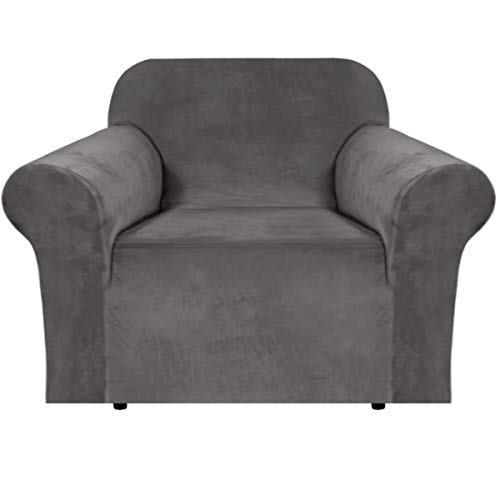
H.VERSAILTEX Stretch Velvet Armchair Cover Couch Covers 1 Cushion Chair Slipcover for Living Room Furniture Cover Crafted from Thick Comfy Rich Velour (Chair 31"-49", Gray)
Included for 'Slipcover for Chair With Arms: How to Measure, Pick a Style and Make It Stay Put' because the listing specifies Gray), details this guide uses to compare options.
View on Amazon- Club chair / armchair: wide, low arms, upholstered all over. Most “armchair” or “club chair” slipcovers target this shape.
- Wingback: tall back with side wings. Needs a wingback-specific cover; a regular armchair cover will bunch at the wings.
- Recliner: separate footrest and lever. Requires a recliner cover with a lever opening.
- Dining armchair (captain’s chair): wooden frame, open arms or upholstered seat and back. Uses a dining chair cover with arm sleeves.
- Accent chair with exposed wood arms: often better covered with seat and back covers only, leaving the arms showing.
Step 2: Measure These Five Points
| Measurement | How to take it | Typical armchair range |
|---|---|---|
| A. Outside width | Outer edge of one arm to outer edge of the other | 30–40 in |
| B. Seat width | Inside the arms, across the cushion | 20–28 in |
| C. Seat depth | Front edge of seat to where the seat meets the back | 20–24 in |
| D. Back height | Floor to top of the back | 30–40 in (wingbacks 40–46 in) |
| E. Arm height | Floor to top of arm | 22–27 in |
Most stretch slipcover listings give a single “fits chairs from X to Y inches wide” range based on measurement A. If your chair is within 2 inches of either end of that range, expect either a strained fit or loose fabric. Seat depth is the second most common mismatch: a deep chair (24 inches or more) pulls fabric off the front edge of a cover designed for 21 inches.
Step 3: One-Piece, Two-Piece or Custom
| Style | Fit quality | Ease of use | Best for | Typical price |
|---|---|---|---|---|
| One-piece stretch (spandex/polyester) | Good on standard shapes; can look tight-wrapped | Easiest; 5–10 minutes to fit | Renters, pets, quick refresh | $25–$70 |
| Two-piece (separate seat cushion cover) | Better; cushion stays crisp | Moderate | Chairs with a loose seat cushion | $40–$100 |
| Relaxed-fit woven (cotton, linen blend) | Loose, casual drape | Moderate; needs tucking | Cottage or farmhouse looks | $60–$150 |
| Custom-made | Tailored, like upholstery | Easy once made | Odd shapes, heirloom chairs, long-term use | $200–$600+ |
Some furniture brands, such as IKEA, sell made-to-fit covers for their own armchairs. If you own a chair from a brand with replacement covers, that is nearly always the best-fitting option.
Fabric Trade-Offs
| Fabric | Stretch | Pet hair and claws | Wash behavior | Look |
|---|---|---|---|---|
| Polyester-spandex jersey | High | Hair sticks; claws snag loops | Washes cold, dries fast, minimal shrink | Smooth, shows chair contours |
| Jacquard stretch | Medium-high | Textured weave hides hair | Easy | Patterned, hides wrinkles |
| Velvet-look stretch | Medium | Fur shows; resists snags fairly well | Cold wash; avoid high heat | Richest look |
| Microfiber / faux suede | Low | Best for claws; hair wipes off | Water-resistant; quick spot cleaning | Matte, upholstered feel |
| Cotton or cotton duck | None | Hair clings; resists claws | Shrinks 3–5% unless pre-washed | Casual, breathable |
| Linen blend | None | Moderate | Wrinkles; softens over time | Relaxed, natural |
For homes with cats, tightly woven or microfiber covers outlast stretch knits, which develop pulls quickly. For dogs that climb on furniture, a water-resistant backing is worth the extra cost.
Step 4: Fitting the Cover So It Stays Put
- Remove the seat cushion if it is loose.
- Find the tag or seam marking the back, then pull the cover over the chair back first.
- Work the arm sleeves down over each arm, matching the cover’s arm seams to the front of the arms.
- Pull the skirt or bottom elastic down and under the frame on all sides.
- Push excess fabric deep into the crevice where the seat meets the back and arms. Most covers include foam rods or tuck sticks; use them, because they do most of the work of preventing slipping.
- Replace the cushion and fit its separate cover if there is one.
- Fasten any ties or straps under the chair to anchor the hem.
If the cover still shifts when someone sits down, a pool noodle cut to length and pushed into the seat crevice works like a larger tuck stick.
Wear and Washing Realities
- The front edge of the seat and the tops of the arms wear first, because that is where hands and legs rub.
- Wash stretch covers cold on gentle and air dry or tumble low. High heat breaks down spandex and causes bagginess.
- Rotate two covers if the chair sees daily use by pets or kids; each cover lasts longer and one is always clean.
- Expect a budget stretch cover to look tired after 1–2 years of daily use; heavier woven covers often last 3–5 years.
When a Slipcover Is Not the Right Fix
A slipcover hides worn fabric but does not fix sagging springs, crushed foam or a wobbly frame. If the seat sinks more than 2 inches when you sit, replacing the cushion foam (typically $50–$150 for a chair) will do more for comfort than a new cover. And for chairs where the covering is torn but the frame is solid hardwood, reupholstering may cost more upfront but outlasts several slipcovers.
Quick Recommendations
- Renting and want a fast update: one-piece polyester-spandex stretch cover.
- Cats: microfiber or tightly woven cover; avoid loopy knits.
- Loose seat cushion: two-piece cover for a crisp seat.
- Wingback or recliner: buy the shape-specific version only.
- Chair you plan to keep for a decade: custom or brand-made cover.