Key takeaways
- Buying by looks in a product photo. Photos hide scale. A chair that looks dainty online may be 34 inches wide; check the spec sheet every time.
- Ignoring depth. Width is what people measure, but a 34-inch-deep chair sticks 6 inches farther into the walkway than a 28-inch one.
- Forgetting the side table and lamp. A chair with nowhere to set a drink is a chair nobody sits in; reserve 16 to 20 inches beside it.
- Pushing the chair fully into the corner. Angle it 30 to 45 degrees and pull it out 3 to 6 inches; the room will look larger, not smaller.
- Mismatched heights. A 16-inch seat next to a 20-inch sofa seat feels like a child’s chair. Stay within 2 inches.
- Choosing oversized because it is comfortable. An oversized chair at 38 inches wide eats a small room; a well-padded 30-inch chair with a 21-inch seat depth is comfortable enough for a two-hour read.
The Short Answer
For a small living room corner, aim for an accent chair 26 to 30 inches wide (66 to 76 cm), 28 to 32 inches deep (71 to 81 cm), and no taller than about 33 inches (84 cm) at the back. That footprint fits a corner pocket of roughly 36 by 36 inches once you allow a few inches behind and beside the chair, and it keeps the chair from competing visually with the sofa. Seat height should be 16 to 18 inches (41 to 46 cm) and seat depth 19 to 22 inches (48 to 56 cm) so the chair is comfortable to actually sit in rather than just look at. If the corner is under 32 inches on either side, drop to an armless or slipper chair around 22 to 25 inches wide.
Standard Sizes
| Chair type | Width | Depth | Back height | Seat height | Best corner size |
|---|---|---|---|---|---|
| Slipper or armless chair | 22 to 26 in (56 to 66 cm) | 26 to 30 in (66 to 76 cm) | 28 to 32 in (71 to 81 cm) | 16 to 18 in (41 to 46 cm) | 30 x 30 in and up |
| Compact mid-century lounge chair | 26 to 30 in (66 to 76 cm) | 28 to 32 in (71 to 81 cm) | 28 to 33 in (71 to 84 cm) | 15 to 17 in (38 to 43 cm) | 34 x 34 in and up |
| Barrel or tub chair | 28 to 32 in (71 to 81 cm) | 28 to 31 in (71 to 79 cm) | 29 to 33 in (74 to 84 cm) | 17 to 19 in (43 to 48 cm) | 36 x 36 in and up |
| Standard club or reading armchair | 30 to 35 in (76 to 89 cm) | 32 to 36 in (81 to 91 cm) | 32 to 38 in (81 to 97 cm) | 18 to 20 in (46 to 51 cm) | 40 x 40 in and up |
| Oversized or chair-and-a-half | 36 to 44 in (91 to 112 cm) | 36 to 40 in (91 to 102 cm) | 34 to 40 in (86 to 102 cm) | 18 to 20 in (46 to 51 cm) | 48 x 48 in and up; rarely a small-room corner |
| Swivel accent chair | 28 to 32 in (71 to 81 cm) | 30 to 34 in (76 to 86 cm) | 30 to 34 in (76 to 86 cm) | 17 to 19 in (43 to 48 cm) | 40 x 40 in (needs turning room) |
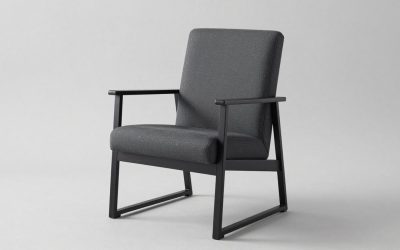
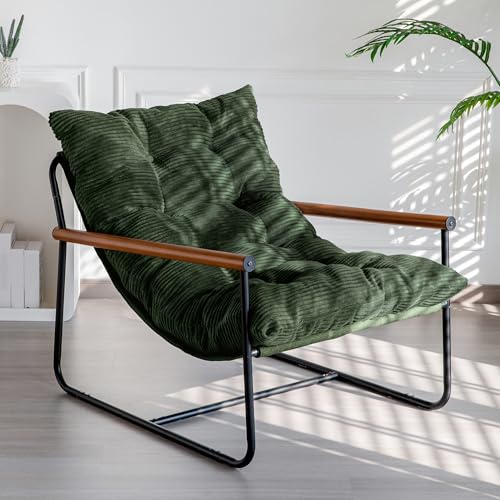
Most of what sells for a small corner sits in the compact mid-century and barrel rows, in the $80 to $150 range. The DUMOS Mid Century Modern Accent Chair with a 16-inch seat height, about $89.96, is a low lounge profile that keeps sightlines open. The MAXYOYO Modern Accent Chair with a metal frame, about $104.99, and the DUMOS Accent Chair sold as a lounge chair for a home corner, about $99.97, are both in the 27- to 30-inch-wide class. The Howjoe Oversized Reading Armchair in beige at about $99.99 is the exception; anything labeled oversized generally needs a 40-inch corner and works only in small rooms that are long rather than square.
Our top picks



As an Amazon Associate we earn from qualifying purchases at no extra cost to you.
How to Measure Your Space
- Measure the two walls that form the corner, from the corner out to the nearest obstacle on each wall, such as a window casing, sofa arm, radiator, or door swing. Write both numbers down; the smaller one governs.
- Subtract 3 to 4 inches from each measurement for breathing room behind and beside the chair. A chair jammed tight into a corner looks smaller than the room and traps dust.
- Subtract another 12 to 18 inches on the open side if a side table or floor lamp will sit next to the chair. A small drum table is 16 to 20 inches across.
- Check the walkway. There should be at least 24 inches, ideally 30, between the chair front and the nearest piece of furniture such as the coffee table or sofa. Measure from where the chair front will land.
- Measure the sofa’s arm and back height. The accent chair’s back should be within about 4 inches of the sofa back height so the two read as a set; a 34-inch sofa back pairs with a 30- to 36-inch chair.
- Tape the intended footprint on the floor with painter’s tape, sit in a dining chair placed inside it, and confirm you can see the TV or window and reach a lamp switch.
By Room or Use Case
Studio or apartment under 400 square feet
Choose a slipper or armless chair 22 to 26 inches wide with exposed legs. Legs let light pass underneath and make the chair read 20 percent smaller than a skirted chair of the same width. A seat depth of 19 to 20 inches keeps the footprint under 28 inches. Budget $70 to $150.
Reading corner beside a window
Here comfort beats compactness, so go to the top of the small range: 28 to 30 inches wide, 30 to 32 inches deep, and a back at least 31 inches so your head is supported. A slightly lower 16- to 17-inch seat encourages lounging. Add an 18- to 22-inch-tall side table for a lamp and a mug.
Corner beside a sofa in a family room
Match the sofa’s seat height within 1 inch and the arm height within 2 inches so the chair does not look like a stool next to it. A barrel chair 28 to 31 inches wide works well because its curved back turns naturally toward the conversation. Leave 18 to 24 inches between the chair and the sofa arm for a shared side table.
Corner opposite the TV
Pick a swivel base if the corner is at least 38 inches on each side, so the chair can face either the TV or the sofa. If the corner is smaller, a fixed chair angled 45 degrees toward the room does the same job with a smaller footprint.
Bedroom corner
Bedroom corners are usually tighter, so 24 to 27 inches wide is the sweet spot, and a chair with a low 28- to 30-inch back will not block a window. Upholstered arms are worth it if you use the chair to put on shoes.
Common Sizing Mistakes
- Buying by looks in a product photo. Photos hide scale. A chair that looks dainty online may be 34 inches wide; check the spec sheet every time.
- Ignoring depth. Width is what people measure, but a 34-inch-deep chair sticks 6 inches farther into the walkway than a 28-inch one.
- Forgetting the side table and lamp. A chair with nowhere to set a drink is a chair nobody sits in; reserve 16 to 20 inches beside it.
- Pushing the chair fully into the corner. Angle it 30 to 45 degrees and pull it out 3 to 6 inches; the room will look larger, not smaller.
- Mismatched heights. A 16-inch seat next to a 20-inch sofa seat feels like a child’s chair. Stay within 2 inches.
- Choosing oversized because it is comfortable. An oversized chair at 38 inches wide eats a small room; a well-padded 30-inch chair with a 21-inch seat depth is comfortable enough for a two-hour read.
FAQ
What is the smallest accent chair that is still comfortable?
Around 24 inches wide with a 19-inch seat depth and a 16- to 17-inch seat height. Below that you are into dining-chair territory. A slim frame with 2 to 3 inches of high-density foam over the seat will feel better than a wider chair with thin padding.
How much space should be around an accent chair?
Allow 3 to 4 inches behind and to the wall side, 16 to 20 inches on the open side for a table, and 24 to 30 inches in front for a walkway. A 28-inch chair therefore wants a corner of roughly 36 by 36 inches to sit well.
Should the accent chair be smaller than the sofa?
Yes, in every dimension except possibly seat height. A chair about 75 to 85 percent of the sofa’s back height and no deeper than the sofa’s seat looks proportionate. Two accent chairs of the same size can flank a sofa, but in a small room one chair is usually the better call.
Do accent chairs come in standard sizes?
Not officially, but the market clusters. In 2026 the most common small accent chair spec is 27 to 29 inches wide, 29 to 31 inches deep, and 30 to 32 inches tall, with a 17-inch seat; if a listing does not show dimensions at all, assume it is larger than it looks and move on.