Our Top Picks
 HOOBRO 29.5" Narrow Console Table with 2 Fabric29.5" L x 9.4" W x 29.5" H9.4 x 9.4 x 29.5 inches15 poundsCheck on Amazon
 HOOBRO 47.2" Narrow Console Table with Power Outlet47.2"L x 5.9"W x 31.5"H5.9 x 47.2 x 31.3 Inches11.2 PoundsCheck on Amazon
An 8 inch deep console table is the deepest slim table that still works in a hallway around 42 inches wide — and the shallowest one that reliably holds a real table lamp — which is why it sits at the sweet spot of the narrow-table range. In a code-minimum 36-inch hallway it leaves about 28 inches of passage; in a 48-inch hallway it leaves 40. Behind a floating sofa it needs only a 2–4 inch gap from the sofa back. The sections below give the exact fit math, the stability fixes this footprint demands, and the storage workarounds that make up for what 8 inches can’t hold.
Where an 8 Inch Deep Console Table Actually Fits
Fit is a subtraction problem: measure your passage width, subtract 8 inches, then judge what’s left against these thresholds:

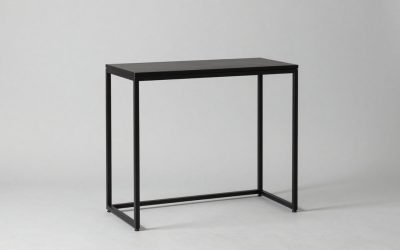
HOOBRO Narrow Console Table, 29.5" Small Entryway Table, Thin Sofa Side Display Table, for Hallway, Bedroom, Living Room, Foyer, Rustic Brown and Black BF75XG01
Chosen because it specifies 29.5" Small Entryway Table and Thin Sofa Side Display Table.
View on AmazonHOOBRO 29.5" Narrow Console Table with 2 Fabric Drawers, Sofa Table, Small Entryway Table with 3-Tier Storage Shelves, Behind Couch Table, for Living Room, Hallway, Rustic Brown and Black BF72XG01
Chosen because it specifies Sofa Table and Small Entryway Table with 3-Tier Storage Shelves.
View on AmazonHOOBRO 47.2" Narrow Console Table with Power Outlet, Behind Couch Table
Chosen because it specifies Behind Couch Table.
View on Amazon
HOOBRO Narrow Console Table for Small Space, 15.7" Entryway Table 2-Tier
Chosen because it specifies 15.7" Entryway Table 2-Tier.
View on Amazon- Under 24 inches remaining: a squeeze point. Skip the table or go shallower.
- 24–28 inches remaining: single-file walking only. Workable in a 36-inch hallway if the household is small, awkward when carrying laundry baskets or passing another person.
- 30–36 inches remaining: comfortable everyday passage. This is the target zone, which a narrow console table 8 inches deep hits in hallways roughly 38–44 inches wide.
- 36+ inches remaining: generous. At this point you could fit a deeper table if you want more storage.
Three more fit checks people miss:
- Door swings: an 8-inch table inside a bedroom or closet door’s swing arc is a daily collision. Tape the footprint on the floor and swing every nearby door before buying.
- Baseboards: a standard baseboard projects about 0.75 inch, so the tabletop will sit that far off the wall unless the design has a baseboard notch. The gap is actually useful for routing lamp cords — just know it exists when you measure.
- Behind the sofa: floating sofas need 30–36 inches of walkway behind them. In a 12-foot-deep living room, a 38-inch-deep sofa + 3-inch gap + 8-inch table + 30-inch walkway uses about 79 inches, leaving plenty for a coffee table and opposite seating. Keep the table height at or just below the sofa back — most sofa backs run 30–36 inches and most consoles run 30–34 inches tall.
How 8 Inches Compares to Neighboring Depths
Console tables come in nearly every depth from 6 to 20 inches, and each step changes what the surface can do. If 8 inches isn’t obviously right, this table settles it:
| Depth | Best situation | What realistically fits on top | Trade-off |
|---|---|---|---|
| 6 inch deep console table | Hallways at or under 36 inches wide; gallery walls | Keys, phone, mail, a small bud vase | Too shallow for almost any lamp base; essentially a wall ledge |
| 7 inch deep console table | Tight halls that still need a small lamp | Lamp bases up to ~5.5 inches, slim trays | Awkward middle size — fewer styles available |
| 8 inch deep console table | Hallways ~40–44 inches; behind sofas | Lamp bases up to ~7 inches, stacked paperbacks, a 7-inch-deep tray | Still can’t hold a letter-size tray facing forward or decor deeper than ~7.5 inches |
| 9 inch deep console table | Entries needing light storage | Small baskets, layered frames, most trays | That extra inch pushes some 40-inch halls below comfortable clearance |
| 11 inch deep console table | Entryways 44+ inches wide wanting real function | Letter trays, books standing upright, deeper baskets below | No longer “ultra-slim” — behaves like a standard console |
| 14–16 inches (standard) | Dining rooms, wide entries | Full styling, serving duty | Won’t fit narrow halls at all |
| 20 inch deep console table | Large foyers, behind sofas in big rooms, shallow-desk duty | Lamps plus storage baskets, even a laptop workspace | Needs 44+ inches of clearance to keep a walkway open |
One terminology caution: listings labeled “8 inch wide console table” almost always mean 8 inches front-to-back — sellers routinely swap “wide” and “deep.” True left-to-right width on these runs 30–60 inches. Always check which dimension is which before assuming fit.
Stability: The Real Weak Point of This Footprint
An 8-inch-deep base supporting a 32-inch-tall table has a narrow tip-over arc — a hip bump or a toddler pulling on the edge can rock a lightweight frame in a way a 14-inch-deep table shrugs off. Handle it four ways:
- Anchor it. Most slim consoles ship with an anti-tip kit. Use it — one screw into a stud turns a tippy table into a fixed one.
- Renters who can’t drill: choose a heavier solid-wood or panel-base design (30+ lbs assembled) over a spindly metal frame, keep weight low, and place it at the end of a hall rather than mid-traffic.
- Base style matters: sled bases and full side panels resist racking better than four skinny legs. Flat-pack frames with cam-lock fasteners loosen — retighten after the first two weeks, then twice a year.
- Load the bottom: books or a weighted basket on a lower shelf drops the center of gravity noticeably.
Storage Workarounds When 8 Inches Isn’t Much
An 8 inch deep console table with drawers sounds like the storage fix, but know the real numbers: the drawer box interior ends up about 5–6 inches deep and 2–3 inches tall. That’s perfect for mail, keys, sunglasses, and charging cables — useless for anything bulkier. Also, drawer pulls add 1–1.5 inches of effective depth, so in a borderline hallway choose recessed or finger-pull designs.
Other ways to stretch the function:
- A lower shelf gives roughly 7–7.5 inches of usable depth — enough for narrow rectangular baskets (look for 6–7 inch depths) holding gloves, pet leashes, or shoes side-loaded.
- Put the wall to work: a floating shelf or row of hooks mounted 10–12 inches above the table adds storage without touching floor clearance.
- If you genuinely need a drop zone for bags and stacks of stuff, step up to a 9 or 11 inch deep console table rather than fighting the 8-inch limit — or pair the slim table with a wall-mounted organizer.
Materials and Construction at This Depth
Weight matters more at slim depths because mass is your unpaid anchor. Typical market ranges:
| Construction | Typical price range | Typical top weight rating | What wears first / trade-offs |
|---|---|---|---|
| Solid wood (pine, acacia, oak) | $250–$600 | 40–75 lbs | Heaviest and most tip-resistant; joints loosen before the wood fails; easy to refinish |
| Engineered wood / MDF with veneer | $80–$250 | 25–50 lbs | Lightest and cheapest; drawer slides and edge banding chip first; cam locks need retightening |
| Metal frame + wood top | $100–$300 | 30–60 lbs | Slimmest look; budget frames can rack side-to-side — check for a rear crossbar |
| All metal or metal + glass | $120–$350 | 20–40 lbs | Very durable frame; glass tops show dust and limit how you use the edge |
Moving and assembly realities: flat-packed versions ship in boxes roughly 44 × 14 × 6 inches weighing 25–40 lbs — one person can carry and assemble them in 30–60 minutes, and the boxed table fits through any standard doorway. Fully assembled solid-wood versions may arrive freight and won’t bend around tight stair turns, so measure your route.
Match the Depth to Your Situation
- Hallway exactly 36 inches: go with a 6 or 7 inch deep console table — or skip the table and use a picture ledge.
- Hallway 40–44 inches: 8 inches is the sweet spot — maximum surface that keeps a comfortable walkway.
- Hallway 46+ inches: take the 9 or 11 inch depth and enjoy real trays and baskets.
- Behind a sofa in a room under 12 feet deep: 8 inches, height at or below the sofa back, 2–4 inch gap.
- Toddlers or large dogs: wall anchor is non-negotiable; pick rounded corners and a panel base.
- Rental, no drilling allowed: heavy solid-wood freestanding design, weighted low, felt pads on feet.
- Mail-and-keys drop zone: an 8-inch model with a recessed-pull drawer handles it fully.
Styling an 8-Inch Surface
- Lamps: cap the base diameter at 6–7 inches. Slim buffet and candlestick lamps are made for exactly this; route the cord through the baseboard gap.
- Trays: keep depth under 7.5 inches so nothing overhangs the edge into traffic.
- Art and mirrors: lean a framed print (2–3 inch footprint) against the wall, or hang a mirror 4–8 inches above the tabletop to stretch the wall vertically.
- Books: stack horizontally — a paperback lies flat in about 7 inches of depth; letter-size items only fit turned sideways.
- Below: two matching 6–7-inch-deep baskets under a lower shelf read as intentional and hide the clutter the top can’t hold.
FAQ
Is 8 inches deep enough for a console table?
For a lamp, keys, mail, and decor — yes. For letter trays facing forward, storage baskets over 7.5 inches, or display books standing upright — no. That’s the dividing line between 8 and 11 inch depths.
How much clearance does a console table need?
Aim for 30–36 inches of walkway beside it; 24 inches is the bare minimum for single-file passage and feels tight in daily use.
Can an 8 inch deep console table go behind a sofa?
Yes — it’s a common sofa-table depth. Keep a 2–4 inch gap so the sofa doesn’t rub it, keep the top at or below sofa-back height, and confirm 30+ inches of walkway remains behind it.
What’s the difference between an 8 inch deep and an 8 inch wide console table?
Usually nothing — sellers inconsistently label the front-to-back measurement as either “deep” or “wide.” Verify the dimension diagram; depth should read ~8 inches and width typically 30–60 inches.