An oversized reading chair buying guide should help you choose more than the softest-looking piece of furniture. Seat width, depth, backrest height, arm positioning, and cushion construction determine whether a chair supports your preferred reading posture. Learn how to evaluate room fit, upholstery, long-term care, and value before choosing a spacious reading seat.
What Qualifies as an Oversized Reading Chair?
There is no universal retail definition of oversized.
Some manufacturers use the term for a chair with a broad exterior frame. Others describe a wide cushion, a deep barrel seat, or a chair-and-a-half intended for spacious single-person lounging.
These designs can feel very different.
A chair measuring 44 inches across its exterior may provide less usable seating room than a narrower model with slim arms.
Likewise, a very deep chair may accommodate reclining but prove uncomfortable for upright reading.
The correct buying process must begin with the intended reading posture and the chair’s interior geometry.
Compare the Main Oversized Reading-Chair Types
| Chair type | Main advantage | Main limitation |
|---|---|---|
| Chair-and-a-half | Wide one-person seating | Substantial footprint |
| Oversized traditional armchair | Padded arms and familiar back support | Thick arms reduce usable width |
| Modular one-seat lounge | Broad cushion and adaptable furniture system | Often low and deep |
| Deep barrel chair | Curved, relaxed enclosure | Limited structured back support |
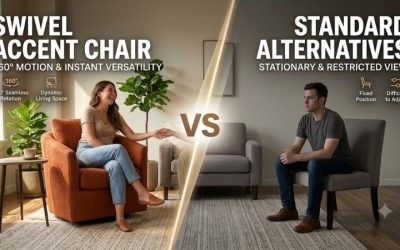
| Oversized swivel chair | Changes orientation without relocating furniture | Needs rotation clearance |
| Wing chair with ottoman | Upright back and separate leg support | Not necessarily wide |
| Chaise lounge chair | Continuous leg support | Long fixed footprint |
Step 1: Identify How You Actually Read
A reading chair should be selected for the position you maintain most often.
Some people sit upright with both feet on the floor and a book held in front of them. Others curl up sideways, sit cross-legged, or lean against the chair’s arm.
These positions require different seating dimensions.

Upright Reading
Upright readers benefit from suitable back support and armrests.
A relatively moderate seat depth can allow the body to rest against the back cushion without stretching excessively.
A very deep seat may require a lumbar pillow.
Cross-Legged Reading
Readers who sit cross-legged need enough usable seat width for their knees and hips.
The position should not require excessive compression against the arms.
The right width depends on body proportions, so a fixed universal measurement is not reliable.
Sideways Lounging
A reader who tucks both legs onto one side of the chair needs more width and often greater cushion depth.
A broad chair-and-a-half or modular lounge section may be more appropriate.
However, the backrest and arm geometry should still support comfortable posture.
Reading With Legs Extended
A chair with an ottoman or a chaise may offer more natural support.
In that case, paying for an extremely wide seat may be unnecessary.
Step 2: Measure Usable Seat Width
The manufacturer’s exterior width includes the frame and armrests.
The usable seat width is the interior space available to the occupant.
The difference can be substantial.
Example: A Traditional Oversized Armchair
IKEA UPPLAND is approximately 43.25 inches wide overall.
Its large padded arms contribute to the traditional appearance and provide soft contact.
However, that means the full exterior width is not available for seating.
Example: A Modular Lounge Section
IKEA SÖDERHAMN 1-Seat Section has a usable width of approximately 36.625 inches.
Its design uses less conventional arm structure.
This can provide substantial sitting space without the same overall width as some heavily padded chairs.
How to Choose
Measure a familiar comfortable position on an existing sofa.
Notice the space between your knees, hips, arms, and backrest.
Then compare that with published usable seat dimensions rather than relying on a product’s exterior width.
Step 3: Evaluate Seat Depth
Seat depth influences how naturally a person can sit against the backrest.
A deep chair can be comfortable for lounging yet require additional back support during upright reading.
Shorter Seat Depth
A shallower seat can help some users sit upright.
However, it may restrict sideways positions.
Longer Seat Depth
A deep cushion provides more space for shifting and curling up.
However, shorter adults may find that the feet do not rest comfortably while their back remains against the cushion.
Back Cushions Change the Measurement
Loose cushions can reduce the effective seat depth.
A chair’s published depth may represent an empty frame measurement rather than the usable sitting area.
Always identify the measurement convention when comparing brands.
Step 4: Choose the Right Seat Height
Oversized chairs are sometimes designed with low lounge seating.
This can create a relaxed appearance but may complicate sitting down or standing up for certain people.
Low Seats
A 15- or 16-inch seat may suit someone who enjoys curling up.
However, a low sitting position requires more movement when standing.
Moderate-Height Seats
A seat around 18–20 inches may feel more conventional for many adults, depending on body size.
However, this is a rough comparison range rather than an ergonomic prescription.
Cushion Compression
A thick, soft cushion compresses when occupied.
That changes the effective seat height.
A showroom test can help reveal whether the user is sitting lower than the advertised specification suggests.
Step 5: Examine Backrest and Arm Support
A reading chair should support more than the hips.
The position of the arms and upper back can affect how comfortable reading feels.
High Backrests
A tall back can provide contact behind the shoulders and neck.
This may appeal to upright readers.
However, height alone does not guarantee appropriate support. The curvature and cushion positioning matter.
Low Backrests
Low backs can make oversized chairs appear less bulky.
They may suit casual lounging but provide less upper-body contact.
Armrests
Appropriately positioned arms can help support books and tablets.
However, large padded arms can consume exterior space and reduce usable seat width.
Reading Pillows
A supportive reading pillow can help position the arms or lumbar area.
However, extra pillows should refine a good fit rather than compensate for an unsuitable chair.
Step 6: Compare Cushion Construction
Oversized reading chairs use a variety of upholstery and support systems.
Polyurethane Foam
Foam cushions vary by density, firmness, and construction.
Density and firmness are different properties.
A high-density label alone does not establish softness or comfort.
High-Resilience Foam
High-resilience foam is intended to provide a particular recovery and support response.
However, performance varies by formulation and construction.
A product’s published foam category does not establish a guaranteed lifespan.
Pocket Springs
Some chairs use pocket springs beneath the seating surface.
These may influence the response to body weight, but their quality depends on the complete design.
Sinuous Springs and Webbing
Other chairs use sinuous springs, elastic webbing, or combinations.
A well-designed system can provide suitable seating support.
The correct comparison considers the entire frame and cushioning system.
Fiber Back Cushions
Fiber-filled cushions may feel soft but require occasional reshaping.
A buyer who dislikes fluffing cushions may prefer a more structured backrest.
Step 7: Choose Upholstery for Long-Term Use
A reading chair may be used every day, often with blankets, pets, coffee, or snacks nearby.
Cleaning practicality matters.
Removable Covers
Removable covers can simplify maintenance when machine washing is permitted.
However, cover availability and washing requirements vary by product and fabric.
Chenille
Chenille has a soft textured appearance.
Its durability depends on fiber composition, weave, and use.
It should not automatically be described as pet-proof.
Bouclé
Bouclé can provide visual texture but may snag depending on its loop structure.
Homes with pets should evaluate the exact fabric.
Velvet
Velvet can create a rich appearance, but pile changes and cleaning may require attention.
Leather and Faux Leather
These materials offer a different surface feel from woven upholstery.
Cleaning and aging vary by finish.
Neither is universally easier to maintain.
Step 8: Measure the Complete Room
The chair’s dimensions are only part of the layout.
A reading corner may also require a light, side table, shelving, and a clear path for approaching the seat.
Exterior Footprint
Record the complete width and depth.
A 44-inch-wide chair may fit along a wall but consume so much space that nearby furniture becomes difficult to use.
Ottoman Clearance
If using a footstool, measure the combined arrangement.
Do not assume the ottoman can always remain directly in front of the chair.
Door and Storage Access
The chair should not obstruct essential doors, wardrobes, or drawers.
Lighting
A floor lamp or wall-mounted light can conserve space.
Place the light to illuminate reading material comfortably without unnecessary glare.
Step 9: Consider Delivery and Assembly
Oversized furniture can be awkward to move through apartments and older buildings.
Check the package dimensions, actual chair dimensions, and the full delivery route.
A chair that fits its destination may still be difficult to transport through a narrow hallway turn.
Review whether arms, backs, or legs are assembled separately.
Do not assume that every chair can be disassembled for a future move.
Step 10: Calculate Total Ownership Value
The purchase price should be evaluated alongside the expected use.
An oversized chair that is read in daily may justify more attention to comfort and upholstery.
A decorative chair used rarely may not require premium construction.
Replacement covers, cleaning, delivery, and return fees can all influence value.
A Budget Chair Is Not Necessarily Poor Quality
An inexpensive, well-fitted chair can provide excellent everyday use.
A Premium Chair Is Not Automatically Comfortable
Price and branding cannot establish suitability for every body type.
Design Flexibility Can Add Value
A modular seating system may offer compatible replacement components or reconfiguration.
However, these benefits matter only if the owner will use them.
Common Buying Mistakes
Choosing Exterior Width Instead of Seat Width
Thick arms can substantially reduce the usable cushion.
Assuming Deep Seats Are Better for Reading
Deep cushions can create poor upright support for some people.
Ignoring Seat Height
Low seating can be difficult to exit.
Buying a Chair Too Large for the Room
A wide seat is not useful when it blocks essential movement.
Confusing Upholstery Descriptions With Performance Tests
Terms such as premium, stain-resistant, and high-density require actual specifications to be meaningful.
Frequently Asked Questions
How Wide Should an Oversized Reading Chair Be?
There is no universal standard. Compare the usable seat width with your preferred sitting position. A chair-and-a-half may offer more room for curling up, while a narrower high-backed chair may work better for upright reading.
Is a Chair-and-a-Half Better Than a Recliner?
A chair-and-a-half provides seating width, while a recliner provides adjustable back and leg support. Choose according to whether curling up or extending the legs is more important.
Is Memory Foam Good for Reading Chairs?
Foam can provide suitable cushioning, but the entire support system matters. Softer contouring is not necessarily better for upright posture or ease of standing.
Are Oversized Reading Chairs Suitable for Bedrooms?
Yes, when they fit without obstructing doors, wardrobes, or necessary circulation. A bedroom reading corner also needs appropriate lighting.
Is a Removable Cover Worth the Extra Cost?
It can be, particularly for frequently used seating. However, confirm machine-washing instructions and replacement-cover availability.
Should I Buy a Matching Ottoman?
An ottoman is useful when you prefer extending the legs. It is less necessary when you primarily sit cross-legged or when the room lacks additional floor space.
Conclusion
The right oversized reading chair should match your preferred reading posture, provide appropriate back and arm support, and fit comfortably within the room. Compare usable seat width, depth, height, cushion construction, upholstery care, and delivery requirements before judging style. A genuinely spacious chair is worth the investment only when its added size improves how you read and relax.