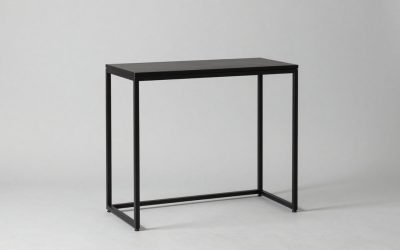
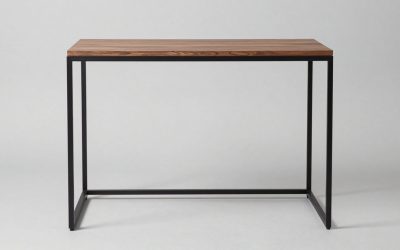
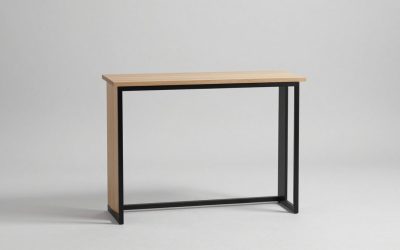
Our Top Picks
 VASAGLE 47.2" Narrow Console Table with 3 Drawers9.4"D x 47.2"W x 30"H9.4 x 47.2 x 30 inches41 poundsCheck on Amazon
 YATINEY Narrow Console Table29.5"D x 29.5"W x 7.9"H29.5 x 7.9 x 29.5 Inches9.7 poundsCheck on Amazon
 Mordchil HF Bamboo Narrow Console Table39.37" x 9.45" x 29.53"9.45 x 39.37 x 29.53 inchesCheck on Amazon
The safe depth for a narrow console table in a narrow hall is 8 to 12 inches, and you need at least 36 inches of clear walkway on the opposite side once the table is in place. Get those two numbers right and almost any style, finish or storage configuration will work. Get them wrong and you’ll be sidestepping furniture every time you walk to the front door.
The 36-inch rule, explained
Building codes use 36 inches as the minimum clear width for a hallway to be considered accessible and safe to pass through. That’s not a design suggestion, it’s the width most people need to walk normally without turning sideways, and it’s the number to test against before you buy anything. If your hall is 42 inches wide and you put in a table that’s 10 inches deep, you’re left with 32 inches of walkway, which is already below the comfortable minimum. Drop to an 8-inch-deep table in that same hall and you keep 34 inches, still tight but workable for a single person passing through.

HOOBRO Narrow Console Table, 29.5" Small Entryway Table, Thin Sofa Side Display Table, for Hallway, Bedroom, Living Room, Foyer, Rustic Brown and Black BF75XG01
Chosen because it specifies 29.5" Small Entryway Table and Thin Sofa Side Display Table.
View on AmazonVASAGLE 47.2" Narrow Console Table with 3 Drawers and Open Storage Shelf | Long Sofa Table, 47.2 x 9.4 x 29.9 inchs, Entryway Furniture for Living Room, Honey Brown, LIRY Collection ULNT142KB02S
Picked as a relevant option in this category.
View on AmazonYATINEY Narrow Console Table, 2-Tier Small Sofa Table, 29.5" Thin Entryway Behind Couch Table with Shelves, Industrial Hallway Table, for Living Room, Foyer, Black CT03BB
Chosen because it specifies 2-Tier Small Sofa Table and 29.5" Thin Entryway Behind Couch Table with Shelves.
View on AmazonMordchil HF Bamboo Narrow Console Table, 39.4"(L) Wood Small Entryway Table, Accent Slim Hallway Tables, Thin Sofa Side Tables for Hallway, Living Room, Bedroom, Foyer, Walnut
Chosen because it specifies 39.4"(L) Wood Small Entryway Table and Accent Slim Hallway Tables.
View on AmazonHere’s the math laid out so you can check your own hall before you shop:
| Hallway width | Table depth | Resulting walkway | Verdict |
|---|---|---|---|
| 36 in. | 8 in. | 28 in. | Tight, one person only, no bags or strollers |
| 42 in. | 10 in. | 32 in. | Workable, still below the 36 in. ideal |
| 48 in. | 12 in. | 36 in. | Meets the standard clearance rule |
| 54 in. | 12 in. | 42 in. | Comfortable, room for two people to pass |
| 36 in. | 16 in. (standard console) | 20 in. | Not walkable, avoid in this hall |
If your hallway measures under 42 inches wall to wall, stay at or under 10 inches of table depth. Anything over 48 inches gives you room to go up to 12 inches deep and still hit the 36-inch target with margin.
How to measure your hall before you buy
- Measure wall to wall, not floor to trim. Baseboards and door casings can eat up to an inch on each side, so measure at the height where the tabletop will sit, not at the floor.
- Check for obstructions in the walkway. Light switches, thermostats, and radiators don’t move, but a console table does. Measure the narrowest point of the hall, not the widest.
- Account for swinging doors. If a door along the hall swings open into the walkway, measure clearance with the door fully open, since that’s the pinch point.
- Leave 3 to 4 inches of buffer past your table’s footprint. A table that’s exactly 36 inches from the opposite wall still means grazing it with your hip. Aim for a little more than the bare minimum if the hall allows it.
- Measure the doorway the table has to pass through to get there. A tabletop wider than about 30 inches, or a table with a fixed apron, may not clear a standard 32-inch interior doorway on the diagonal. Check this before ordering anything long.
Picking depth, length and height for your situation
Depth is the number that protects your walkway, but length and height matter for how the table actually functions once it’s there.
| Your hallway situation | Recommended depth | Recommended length | Height |
|---|---|---|---|
| Under 40 in. wide, high-traffic | 8–9 in. | 24–36 in. | 30–32 in. |
| 40–48 in. wide, standard traffic | 10 in. | 36–48 in. | 30–34 in. |
| 48 in.+ wide, or a long straight run | 10–12 in. | 48–72 in. (long narrow console table) | 32–36 in. (tall and narrow console table) |
| Extra-long entry or gallery hall | 10–12 in. | 72–96 in. (extra long and narrow console table) | 32–34 in. |
A tall and narrow console table, one that runs 34 to 36 inches high instead of the usual 30 to 32, reads better in halls with high ceilings and gives you more visual presence without adding depth. It’s a good workaround when you want a table to feel substantial but can’t spare the floor space to make it wider.
Storage without stealing depth
Storage and shallow depth fight each other, so know the trade-offs before you pick a style:
- Open shelving adds storage with zero depth penalty since it sits within the same 8–12 inch footprint. Best for baskets, mail trays, or shoes by the door.
- Narrow console table with doors gives you closed storage, but cabinet doors need 12 to 15 inches of depth minimum to hold a functional interior and still swing open without hitting the opposite wall. Check the door swing clearance separately from the table depth.
- Drawers are the most space-efficient closed storage for a narrow hall. A long narrow console table with storage in drawer form can stay at 10 inches deep since drawers pull straight out rather than swinging.
- Mixed designs (drawer on top, shelf below) are common in a narrow console table with storage and work well for entryways that need both a landing spot for keys and space for shoes.
Material trade-offs
| Material | Typical price range | Weight capacity | Trade-off |
|---|---|---|---|
| Solid wood | $250–$700 | Highest, often 50+ lbs. distributed load | Heaviest to move, most durable, a solid wood narrow console table resists wobble over years of use |
| Engineered wood / veneer | $120–$350 | Moderate, 25–40 lbs. | Lighter, easier to move solo, veneer can chip at edges over time |
| Metal frame with wood or glass top | $150–$400 | Good for the frame, top material limits total load | A narrow black metal console table holds up well against scratches but can show fingerprints on matte black finishes |
| MDF with painted finish | $100–$300 | Lower, 15–25 lbs. | Most affordable, chips show more visibly on a white narrow console table with storage than on darker finishes |
For a narrow hall specifically, weight matters less for load capacity and more for stability. A lightweight metal-frame table can rock if the hall floor isn’t level, while solid wood’s extra mass tends to sit still. If you’re picking a narrow black console table with storage for a high-traffic entry, metal frames or solid wood with a black finish resist the daily bumps of bags and coats better than painted MDF.
Assembly and moving realities
Most narrow console tables ship in one box weighing 25 to 45 pounds, with solid wood pieces running heavier and flat-pack MDF pieces running lighter. Assembly typically takes 20 to 40 minutes and requires attaching legs, back stretchers, and any doors or drawer fronts. A few things to plan for:
- Narrow tables are prone to tipping if not anchored, especially if there’s a shelf or drawer that invites leaning weight. Anti-tip wall straps are worth using in homes with kids or pets, even though a console table isn’t as top-heavy as a bookshelf.
- Drawer glides are the first part to wear out with heavy daily use. Metal ball-bearing glides outlast plastic glides by years and are worth checking for if the table will hold keys, mail, or anything opened multiple times a day.
- If the table needs to travel through more than one doorway or up a stairwell, measure the diagonal clearance of the tightest doorway, not just its width, before assembly, since some tabletops can’t be walked around a corner once the legs are attached.
Quick decision guide
| If your priority is… | Choose… |
|---|---|
| Maximum walkway space in a tight hall | 8–9 in. deep, open-shelf design |
| Closed storage for shoes or clutter | Narrow console table with doors, 12–15 in. deep |
| A long, straight entry hall | Long or extra-long narrow console table, 10–12 in. deep |
| Durability over decades | Solid wood narrow console table |
| Renting or moving often | Lighter engineered wood or metal frame, easier to disassemble and carry |
| A bold visual anchor without added depth | Tall and narrow console table, 34–36 in. high |
The depth range and the 36-inch clearance rule are the two numbers that actually determine whether a console table works in your hall. Everything else, finish, storage style, height, is a matter of taste once those two constraints are satisfied.