Key takeaways
- 30 – 36 in: small apartment entries, beside a closet door.
- 40 – 48 in: the most common foyer size, fits under a 30 to 36 inch mirror.
- 55 – 72 in: long halls or behind full-size sofas, often with two or three drawers.
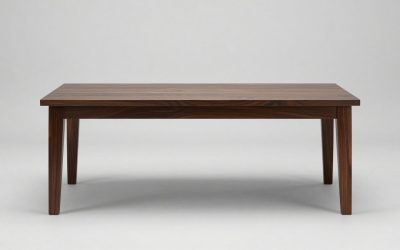
An entryway table 12 inches deep is the sweet spot for most halls and foyers: deep enough to hold a lamp, a key tray and a stack of mail side by side, yet shallow enough to leave a 36-inch walkway in a hall as narrow as 48 inches. It is also the most common depth for sofa tables, so one piece can move between the front door and the back of a couch if you relocate. Here is what actually fits on a 12-inch top, how it compares with shallower and deeper options, and what to check so a slim table stays steady.
What a 12-Inch Top Actually Holds
Listing photos make every console look generous. The practical test is footprint: the depth of the things you plan to put on it, plus about an inch of margin front and back so nothing overhangs.
| Item | Typical base depth | Fits on 12 in? |
|---|---|---|
| Key or catch-all tray | 5 – 8 in | Yes, with room behind it |
| Table lamp (small to medium) | 5 – 7 in base, 10 – 14 in shade | Yes; shade may overhang slightly |
| Mail sorter or letter rack | 4 – 6 in | Yes |
| Leaning mirror or framed art | 1 – 2 in plus lean angle | Yes, leaves 8 – 9 in in front |
| Decorative bowl | 8 – 12 in diameter | Up to about 10 in comfortably |
| Medium basket for gloves and hats | 10 – 12 in | Tight on top; better on a lower shelf |
| Laptop bag or tote set down briefly | 4 – 7 in | Yes |
The key point: at 12 inches you can place items in two rows, such as a mirror leaning against the wall with a tray in front. At 8 or 10 inches you are limited to one row, so a lamp and a tray have to sit side by side, eating up length.
12 Inches Versus Other Common Depths
Depth decisions in an entry are really about the walkway that remains. Most designers aim to keep at least 36 inches clear in a hall, and 42 inches or more where two people pass or a door swings across the path.
| Table depth | Minimum hall width for 36 in clear | Surface use | Stability without anchoring |
|---|---|---|---|
| 8 in | 44 in | Single row, decor only | Low, anchor recommended |
| 10 in | 46 in | Single row, tray plus small lamp | Fair |
| 12 in | 48 in | Two shallow rows | Good on 30 – 32 in heights |
| 14 in | 50 in | Two rows, larger lamps | Good |
| 16 – 18 in | 52 – 54 in | Full drop zone, baskets on top | Very good |
If your hall is under 48 inches wide, a 12-inch table will narrow the path below the comfortable mark; drop to 8 or 10 inches or use a wall-mounted shelf instead. If your entry opens into a wider foyer, 12 inches is a conservative choice and you could go to 14 to gain a usable lower shelf.
Height and Length to Pair With 12 Inches
Most 12-inch-deep tables are 29 to 32 inches high. That height lines up with the top of a standard sofa back when you reuse it behind a couch, and puts the surface near hand level when you walk in carrying bags. Tables taller than about 34 inches at this depth start to feel top-heavy.
For length, a common guideline is to cover roughly two-thirds of the wall section the table sits on, and to keep at least 6 inches between the table end and a door frame or light switch. Typical lengths at this depth:
- 30 – 36 in: small apartment entries, beside a closet door.
- 40 – 48 in: the most common foyer size, fits under a 30 to 36 inch mirror.
- 55 – 72 in: long halls or behind full-size sofas, often with two or three drawers.
Using It as a Sofa Table
A 12-inch depth is a natural fit behind a couch. Pull the sofa 13 to 14 inches from the wall and the table slides in with a little clearance for cords. Check two numbers:
- Sofa back height: the table top should sit level with the back or up to 2 inches below it. Most sofa backs are 30 to 34 inches, so a 30-inch table works for the majority.
- Sofa length: a sofa table usually looks right at 6 to 12 inches shorter than the couch, so an 84-inch sofa pairs with a 60 to 72 inch table.
Behind a sofa, the extra depth over a 10-inch table matters because you can set a drink and a lamp side by side without either being near the edge.
Materials and How They Behave at This Size
| Construction | Typical weight (48 in long) | Strengths | What wears first |
|---|---|---|---|
| Solid wood (pine, acacia, mango) | 30 – 50 lb | Repairable, heavy enough to resist tipping | Top dents and water rings on softwoods |
| Engineered wood with veneer or laminate | 25 – 45 lb | Flat, stable, budget-friendly | Edge banding at corners, swelling if wet |
| Metal frame with wood top | 18 – 35 lb | Slim legs, open look | Bolt joints loosen; light frames can rack |
| Metal frame with glass top | 20 – 35 lb | Visually light in small entries | Shows fingerprints and dust; edges chip |
Prices for this depth generally run $80 to $200 for engineered wood or metal designs, $200 to $500 for solid wood or mixed materials, and more for hardwoods like oak or walnut.
Stability: The Real Weakness of Slim Tables
A 12-inch-deep table that is 30 inches tall has a height-to-depth ratio of about 2.5 to 1. That is stable for normal use, but a bump from a backpack or a child pulling on the edge can tip a light frame. Ways to reduce the risk:
- Use the anti-tip strap or bracket supplied with the table, anchored into a stud or with appropriate drywall anchors.
- Store heavier items low; a bottom shelf with baskets lowers the center of gravity.
- Choose legs set close to the corners rather than inset trestle bases, which reduce the effective footprint.
- Check floor contact; adjustable leveling feet stop rocking on uneven tile or older wood floors.
Drawers at 12 Inches Deep
Drawers on this depth have an interior of roughly 9 to 10 inches front to back after the drawer box and back panel. That holds sunglasses, chargers, dog leashes and envelopes but not standard letter-size folders lying flat, which need about 12 inches. Metal side-mount slides are smoother and handle more weight than wood-on-wood runners, though wood runners last well on solid wood pieces if waxed occasionally.
Quick Decision Guide
- Hall 48 to 54 inches wide: 12 inches is the right depth; keep it at 30 to 32 inches high.
- Hall under 48 inches: go 8 to 10 inches deep, or mount a floating shelf.
- Kids, pets or heavy foot traffic: solid wood or a heavy metal frame, anchored to the wall.
- Renters who move often: a metal frame with flat-pack top is lighter to carry and reassemble.
- Want it to double as a sofa table later: pick 30 inches high and 48 to 60 inches long.