Key takeaways
- Run your furnace filter check at the same time. If your fan is dropping dust, your HVAC filter is probably due. Bundling these tasks keeps you on schedule for both.
- Flip the fan direction seasonally. While you’re up there cleaning, verify the blade pitch. Counterclockwise in summer pushes air down; clockwise in winter recirculates warm air without the wind-chill effect.
- Don’t spray cleaner directly on the blades. Liquid dripping into the motor housing is the fastest way to turn a cleaning session into a repair bill. Apply any solution to your cloth first.
- Store your duster flat, not compressed. Folding the microfiber head under pressure for months crushes the fibers and reduces its dust-gripping ability. Hang it or lay it on a shelf.
What's inside
Ceiling fans are magnets for dust, and once that gray layer builds up on the blades, every rotation sends fine particles drifting into the air you breathe. If you’ve ever noticed a thin film reappearing on furniture the day after dusting, your ceiling fan is probably the culprit. Beyond air quality, neglected blades throw off the fan’s balance, causing wobble that can loosen motor hardware over time.
This guide walks you through cleaning your ceiling fan efficiently—without scattering dust across the room, climbing dangerously on furniture, or spending more than you need to on tools. We cover what works, what to look for in a cleaning duster, and how to match the right tool to your ceiling height.
As an Amazon Associate we earn from qualifying purchases.



Why Ceiling Fans Collect So Much Dust—and Why It Matters
Ceiling fans generate a constant low-pressure zone above the blades as they spin. That airflow pulls airborne dust upward, where it settles on the top surfaces you never see. Every time the fan cycles on, some of that accumulated grit shakes loose and redistributes across the room. For allergy sufferers or households with pets, this can mean persistent respiratory irritation even after a full house cleaning. Clean blades also run more smoothly: even a quarter-inch buildup of grime on one side can introduce an uneven weight distribution that leads to motor strain and that annoying rhythmic wobble.
What You Actually Need for the Job
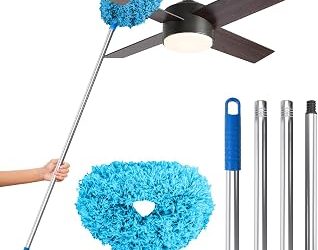
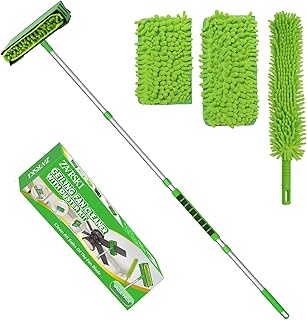
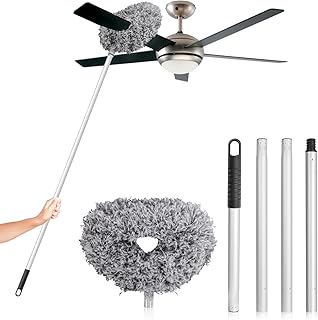
A microfiber duster with an adjustable extension pole is genuinely the only specialized tool most people require. Microfiber’s electrostatic properties attract and hold dust rather than pushing it into the air, which is exactly what you want when the debris is directly above your head. Products like the DRQ Ceiling Fan Cleaner Duster (13 to 48 inches) or the SetSail Ceiling Fan Cleaner Duster offer a solid range for standard 8- to 10-foot ceilings. Both are washable and reusable, which matters—you’ll be doing this regularly, so disposability adds up. Beyond the duster, keep a drop cloth or old bedsheet handy, plus a damp rag for finishing the blade edges. That’s it. Ladders, step stools, and repurposed bed-sheet “pillowcase hacks” all work in a pinch, but a purpose-built duster eliminates most of the risk and mess.
Step-by-Step: Cleaning Without the Dust Storm
1. Turn the fan off and wait. Residual spin and motor heat can make blades move unexpectedly. Give it a full stop before you start.
2. Lay down your drop cloth. Drape it across the furniture and floor directly beneath the fan. This catches everything that falls, and cleanup becomes a single shake-out instead of a second cleaning session.
3. Extend your duster to the right length. You want to reach the blade comfortably without stretching to your tiptoes. For standard 8-foot ceilings, a duster like the FONUNO Ceiling Fan Cleaner Duster (adjustable from 13 to 50 inches) hits the sweet spot—long enough to work from the floor, short enough to maintain control.
4. Wrap the duster head around each blade and pull slowly toward you. Start at the base of the blade near the motor and draw outward. The microfiber pads grip the dust instead of flicking it sideways. Work one blade at a time, rotating the fan by hand between each pass.
5. Wipe the blade edges with a damp cloth. The tops get the headlines, but the thin leading and trailing edges of each blade also collect a surprising amount of buildup. A quick damp-wipe finishes the job cleanly.
6. Fold up the drop cloth carefully and dispose of the collected dust. Don’t shake it out indoors—take it outside or straight to a trash bin.
Matching the Tool to Your Ceiling Height
This is where most people either underspend or overspend. A standard adjustable duster covers 13 to 48 inches and works perfectly for rooms with 8- to 9-foot ceilings. If you’re in that range, the SetSail or DRQ models handle the job without excess bulk. Vaulted or two-story ceilings change the equation entirely. The Ceiling Fan Cleaner Duster with a 72-inch extension pole reaches comfortably up to about 12 feet from standing height. For genuinely tall spaces—foyers, great rooms, or cathedral ceilings—the LAANPOLE 26FT Reach kit with its 5-to-20-foot telescoping pole eliminates the need for a tall ladder altogether. It ships with replaceable microfiber cloths, which is a practical touch given how much surface area you’re covering at those heights. The key metric is your ceiling height minus roughly five feet (your arm plus standing height) to determine the minimum extension you need. Always buy slightly longer than you think necessary—a cramped reach is how falls happen.
How Often to Clean—and When to Pay Attention
The standard recommendation is once every one to two months for a fan that runs regularly, and once per season for one used only intermittently. But watch for telltale signs: visible gray strips along the blade edges, a musty odor when the fan starts, or increased allergy symptoms during certain months. Kitchens and entryway fans accumulate grime faster because of cooking grease particles and outdoor dust tracked in on shoes. Those may need monthly attention even if other rooms can wait longer.
Tips
- Run your furnace filter check at the same time. If your fan is dropping dust, your HVAC filter is probably due. Bundling these tasks keeps you on schedule for both.
- Flip the fan direction seasonally. While you’re up there cleaning, verify the blade pitch. Counterclockwise in summer pushes air down; clockwise in winter recirculates warm air without the wind-chill effect.
- Don’t spray cleaner directly on the blades. Liquid dripping into the motor housing is the fastest way to turn a cleaning session into a repair bill. Apply any solution to your cloth first.
- Store your duster flat, not compressed. Folding the microfiber head under pressure for months crushes the fibers and reduces its dust-gripping ability. Hang it or lay it on a shelf.
Frequently Asked Questions
Can I use a regular feather duster on my ceiling fan?
You can, but feather dusters tend to scatter dust rather than capturing it. They’re also difficult to wrap around blade surfaces, so you’ll likely miss the tops entirely. A microfiber fan duster with a shaped or bendable head is significantly more effective for this specific task.
What if my fan wobbles after cleaning?
Wobble after cleaning usually means the fan is unbalanced because some blades are now lighter than others. Most ceiling fan kits include small adhesive balancing weights and a clip-on balancing tool. Attach the clip to different positions on each blade and turn the fan on briefly—the position that reduces wobble the most tells you where to stick the weight. If the wobble persists, check that the blade screws are snug but not overtightened.
Are washable microfiber duster pads actually worth it over disposable ones?
Financially, yes—almost immediately. A washable pad from a duster like the SetSail or FONUNO model survives dozens of wash cycles before the fibers lose their grip. Disposable pads create recurring cost and waste for a task you’ll perform dozens of times a year. The only advantage to disposables is convenience if you strongly prefer a fresh pad every session, but even then, washing between uses is the more practical approach.
Is it safe to clean the fan while standing on a chair or couch?
It’s common practice but genuinely risky—cushioned surfaces shift underfoot, and furniture legs aren’t designed to absorb lateral force from someone reaching overhead. If your ceiling requires any stretch at all, use a proper step stool with a platform wide enough for stable footing. A duster with a sufficiently long extension pole lets you clean most residential fans without leaving the floor entirely.
Conclusion
Cleaning a ceiling fan is one of those small maintenance tasks that quietly affects your air quality, energy efficiency, and comfort every single day the fan runs. A good microfiber duster with the right extension range, a drop cloth, and fifteen minutes is genuinely all it takes. Match the tool to your ceiling height, build it into your seasonal routine, and the difference in both cleanliness and how the fan performs will be obvious the first time you switch it on.