
Vibration plates occupy an awkward space between genuine training equipment and wellness theater. Stand on one for ten minutes and you will feel something real: warmth, a slight muscular buzz, occasionally some pleasant looseness in tight calves. What you will not get is the outcome the category name implies. A plate does not create a meaningful energy deficit on its own, and no oscillating platform substitutes for the combination of resistance training, walking and food intake that actually changes body composition.
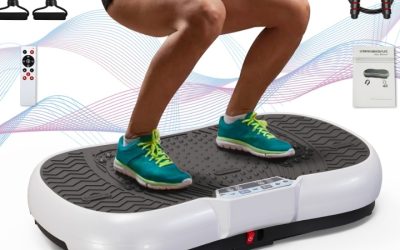
That does not make them useless. Used as a movement platform rather than a passive treatment, a plate makes squats, planks and calf raises harder, gives sedentary users a low-barrier reason to spend fifteen minutes standing and moving, and provides pleasant circulation work for legs that spend the day under a desk. This comparison sets the marketing aside and looks at what these six machines can honestly deliver, plus which specifications matter when you plan to actually exercise on one instead of just standing there.
Our top picks


As an Amazon Associate we earn from qualifying purchases at no extra cost to you.
Quick Comparison
| Product | Best For | Standout Feature | Watch Out For |
|---|---|---|---|
| 130-Level Vibration Plate | Fine intensity control for beginners | Very granular speed range | Most of the 130 levels feel similar |
| Lifepro Waver | Guided sessions with resistance bands | 10 presets plus included bands for upper body | Presets can be too intense at first |
| MERACH CV30 Pro Curved | Users who want quiet operation | Curved deck with a 400 lb capacity | Curved surface takes adjustment to stand on |
| SEDOZIK Vibration Plate | Heavier users and band-assisted work | 450 lb capacity with Bluetooth controls | App adds little beyond the remote |
| HVX Vibration Platform | Larger footprint stability | Wide deck rated to 450 lb | Heaviest unit here to reposition |
| Renoj 3D Vibration Platform | Post-workout recovery sessions | Three-directional movement pattern | 3D motion is subtler than the name suggests |
How to Choose
- Judge by movement type, not level count: Oscillating plates pivot around a central axis and produce the classic seesaw motion. Linear and three-dimensional plates move up and down or in multiple planes. The pattern affects how it feels far more than whether it offers 99 or 130 speeds.
- Weight capacity signals motor strength: A 450-pound rating usually means a more substantial motor and frame, which matters even for a 160-pound user because the plate will not bog down when you add dynamic movement like squats.
- Insist on a non-slip deck: A textured or rubberized surface is essential once you move beyond standing still. Smooth plastic plus bare feet plus vibration is a genuinely bad combination.
- Check the remote and control placement: If the only controls are at floor level, you will step off and back on repeatedly during a session. A handheld remote or a tethered controller is worth more than most extra features.
- Plan how you will use the bands: Included resistance bands are what turn a plate into a workout. Confirm they anchor solidly to the unit rather than clipping to a plastic tab that flexes under load.
Top Picks Reviewed
Best for Real Workouts: Lifepro Waver
Ninety-nine speeds and ten presets are useful mostly because they remove decision-making, but the real value is the bands. Anchoring them and doing rows and presses while the platform destabilizes you is the closest this category gets to actual training.
The presets ramp harder than most beginners expect. Starting at a mid preset on day one commonly produces a day of odd tingling and mild soreness that puts people off entirely.
Best Fine Control: 130-Level Vibration Plate
A wide, granular speed range genuinely helps at the beginning, when the difference between comfortable and unpleasant is small. You can creep up a few levels per week rather than making big jumps.
Be realistic about the number. Between adjacent levels the difference is imperceptible, and in practice most users settle on three or four favorite settings and ignore the other hundred and twenty-six.
Quietest Operation: MERACH CV30 Pro Curved
The curved deck and enclosed motor keep this one noticeably calmer than the average plate, which matters because motor drone is what stops people using them in shared living spaces.
Standing on a curved surface takes a few sessions to feel natural, and the shape makes some floor exercises awkward. Try standing exercises before planning your whole routine around it.
Best for Heavier Users: SEDOZIK Vibration Plate
A 450-pound rating and the included bands make this a sensible choice where frame rigidity matters. Bluetooth control means you can change speeds without bending down mid-session.
The app is thin. It duplicates the remote rather than adding programming, so do not let connectivity be the deciding factor.
Most Stable Deck: HVX Vibration Platform
A wide platform gives room for a proper squat stance and for kneeling or plank positions, which is where narrow plates become frustrating. The 450-pound rating backs that up with a solid frame.
It is heavy and awkward to move. If it has to be stored between uses rather than left out, this is not the one to choose.
Best for Recovery: Renoj 3D Vibration Platform
Used after a run or a leg session, ten minutes of multi-directional movement feels good on tight calves and hamstrings. As a recovery accessory rather than a training device, it earns its place.
The three-dimensional motion is subtler than the description implies. Do not expect a dramatically different sensation from a good oscillating plate.
Frequently Asked Questions
Will standing on a vibration plate cause weight loss?
On its own, no. The energy cost of passive standing is small. Plates contribute when you perform actual exercises on them and treat it as one part of a routine that includes resistance work and dietary change.
What does “lymphatic drainage” mean on these listings?
It is marketing shorthand for the circulation-related sensations users report. Movement of any kind supports circulation, and the claim should not be read as a clinical treatment.
How long should a session be?
Ten to fifteen minutes is the common range, ideally broken into positions rather than one long stand. Longer is not better, and excessive exposure can leave you feeling oddly fatigued.
Who should avoid vibration training?
Anyone pregnant, with implanted devices, recent fractures, retinal conditions, blood clots or acute joint injuries should check with a clinician first. This is one category where the caution list is not boilerplate.
Final Thoughts
Buy a vibration plate for what it reliably does: it gets sedentary people standing and moving for fifteen minutes, makes bodyweight exercises harder, and feels pleasant on tired legs. Choose one with a stable non-slip deck, a capacity well above your weight, and bands you will actually use. Judged that way it is a useful tool. Judged as a weight-loss device used passively, it will disappoint every time.
Write Your Review
No reviews yet. Be the first to share your experience!