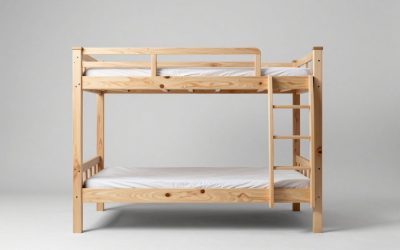
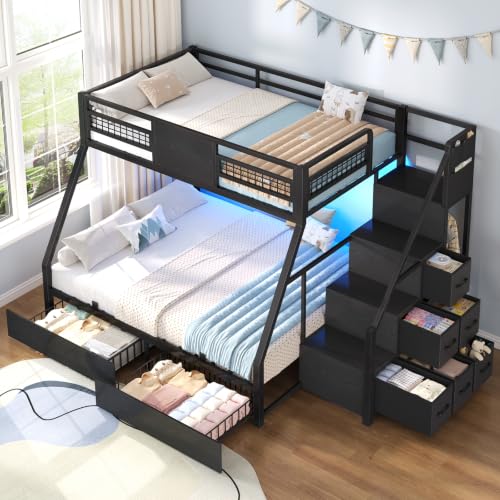
The BTHFST Bunk Bed Twin Over Full with Stairs, Storage Drawers and LED Lights is the best overall twin-over-full bunk bed for siblings sharing one bedroom, with the Shintenchi Twin Over Full with Trundle as the runner-up. The BTHFST wins on the two things that actually decide whether a shared room works day to day: safe, easy access to the top bunk via real stairs, and built-in drawers that absorb the clothing and toy overflow two kids generate.
Putting two children in one bedroom usually fails for practical reasons, not emotional ones. There is nowhere to put the second dresser, the older sibling wakes the younger one climbing a ladder at 6 a.m., and a wobbly frame turns every bedtime into a negotiation. Twin-over-full bunks solve the age-gap problem elegantly — the smaller child takes the twin, the growing one gets a full that still fits them at fifteen — but frame quality, guardrail height, and access design vary enormously. This guide breaks down six frames I would actually recommend, what each one is genuinely good at, and how to match a bunk to your ceiling height, floor space, and kids’ ages.
Our top picks




As an Amazon Associate we earn from qualifying purchases at no extra cost to you.
Quick Comparison
| Product | Best For | Standout Feature | Rating |
|---|---|---|---|
| BTHFST Twin Over Full with Stairs & Drawers | Small rooms needing storage | Staircase access plus integrated drawers and LED lighting | See live rating |
| Shintenchi Twin Over Full with Trundle | Three kids or frequent sleepovers | Pull-out trundle and two ladders | See live rating |
| nesture Twin Over Full Heavy Duty Metal | Budget-conscious families | Full-length guardrail, no box spring needed | See live rating |
| Twin Over Full Low Profile Heavy Duty Metal | Low ceilings and younger children | Reduced overall height for safer top-bunk clearance | See live rating |
| SHA CERLIN Twin Over Full with Ladder | Teens and adult-weight sleepers | Simple, sturdy steel build in matte black | See live rating |
How to Choose a Twin Over Full Bunk Bed for Siblings Sharing One Bedroom
- Ceiling clearance: Measure from floor to ceiling and subtract the bunk height plus mattress thickness. Leave at least 30 inches above the top mattress so the upper sleeper can sit up; if you have 8-foot ceilings or a fan, choose a low-profile frame.
- Guardrail coverage: Look for full-length guardrails rather than short partial rails. Partial rails leave a gap near the footboard that restless younger sleepers can roll through.
- Access style: Stairs are safer and easier for kids under seven and are worth the extra 12–18 inches of floor space. Ladders — especially dual-ladder designs — preserve floor area in narrow rooms.
- Weight capacity and steel gauge: Check the stated capacity for both bunks separately. If a teen or an adult will sleep on the bottom full, aim for a heavy-duty steel frame with center support slats and no box spring requirement.
- Storage or sleeping extras: Two kids in one room means one dresser too few. Built-in drawers or a trundle reclaim space you would otherwise lose to furniture, so decide upfront whether you need storage or a third bed.
The Best Twin Over Full Bunk Beds for Siblings Sharing One Bedroom Reviewed
Best Overall: BTHFST Twin Over Full Bunk Bed with Stairs, Storage Drawers and LED Lights
This is the pick for families whose shared bedroom is short on both floor space and dresser space, since the staircase drawers replace an entire chest of drawings. The stair access also makes it the most practical choice when the top bunk goes to a child who is still a little young for ladders, and the LED strip doubles as a gentle night light.
Best Budget: nesture Bunk Bed Twin Over Full, Heavy Duty Metal
A no-nonsense steel frame with full-length guardrails and no box spring requirement, making it the best value for parents who need safe, solid bunks without paying for storage or trundles. Ideal for a guest-adjacent kids’ room or a family furnishing a shared bedroom on a tight budget.
Best Premium: Shintenchi Bunk Bed Twin Over Full with Trundle
The white heavy-duty frame with two ladders and a pull-out trundle effectively sleeps three, which suits growing families and homes where cousins or friends stay over most weekends. Choose it if you want maximum sleeping capacity without adding a second bed to the room.
Best for Low Ceilings: Twin Over Full Low Profile Heavy Duty Metal Bunk Bed
The reduced overall height is the right call for standard 8-foot ceilings, basement bedrooms, or rooms with a ceiling fan, and it lowers the fall distance for younger top-bunk sleepers. Best for siblings aged roughly six to twelve who still want the top bunk experience with less altitude.
Best for Teens and Adults: SHA CERLIN Bunk Bed Twin Over Full with Ladder and Guardrail
The sturdy black steel construction and generous bottom-bunk capacity make this the frame to pick when an older teen — or a parent doing bedtime duty — will use the full mattress. It is also the most visually neutral option, which matters once kids outgrow themed furniture.
Frequently Asked Questions
What age is safe for the top bunk?
Pediatric safety guidance recommends children be at least six years old before sleeping on an upper bunk. Younger siblings should take the bottom full, which also gives you room to sit beside them at bedtime.
Do twin-over-full bunk beds need a box spring?
Most modern metal frames, including the nesture and low-profile options here, use slat systems and explicitly require no box spring. Adding one raises the mattress surface and reduces guardrail height, which is a safety issue on the top bunk.
What mattress thickness should I use on top?
Keep the top mattress at six to eight inches. Thicker mattresses push the sleeping surface too close to the top of the guardrail and undermine the frame’s fall protection.
How much floor space do stairs versus ladders cost?
A staircase design typically adds 12–18 inches to the bed’s footprint on one end, while an integrated or angled ladder adds only a few inches. In rooms under about 10 by 10 feet, a ladder model like the Metal Twin Over Full with Ladders and Full Guardrails usually fits better.
Final Thoughts
For most families sharing one bedroom between two kids, the BTHFST Twin Over Full with Stairs and Storage Drawers solves the storage and safe-access problems in a single purchase. Choose the Shintenchi Twin Over Full with Trundle if you need a third sleeping spot, or the nesture Heavy Duty Metal bunk if you want a strong, guardrailed frame at the lowest reasonable price.