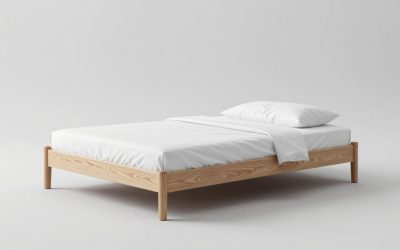
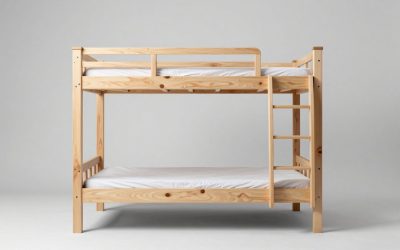
The JOYMOR Solid Wood Low Twin Over Twin Bunk Bed is the best overall low-height bunk bed for toddlers and preschoolers, with the Delta Children Twin Loft Bed as the runner-up for smaller budgets. Both keep sleeping surfaces close to the floor, use full-perimeter guardrails, and skip the box spring entirely.
The problem most parents run into is simple: standard bunk beds put the top mattress five feet up, and no safety rail makes that feel right for a three-year-old. Manufacturers generally recommend age six and up for upper bunks, so the practical workaround is a low-height or floor bunk — a frame short enough that a fall is a tumble rather than an emergency, and short enough for you to lean over and tuck a child in without climbing. After spending time with the current crop of junior-height frames, I’ve narrowed this guide to five that get the geometry right: low decks, tall rails, short ladders, and solid wood construction that doesn’t creak when a preschooler treats the bottom bunk like a trampoline. Below you’ll find a comparison table, the specs that actually matter, individual reviews, and answers to the questions parents ask most.
Our top picks
 JOYMOR Solid Wood Low Twin Over Twin
- 【Space Saving】 This low bunk bed is a…
- 【Sturdy Wooden Bunk Bed】 Made of solid pine…
- 【Solid Pine Wood Construction】Built with a solid pine…


 KOMFOTT Low Bunk Bed Twin Over Twin
- Premium Material & Sturdy Wood Frame: Made of…
- All For Safety: This bunk bed comes with…
- Comfortable Sleep: The bed slats are upgraded into…
 ZJIAH Low Bunk Bed Twin Over Twin
- 【Sturdy and Stable Wooden Frame】This twin bunk beds…
- 【High Safety Guardrails & Ladder】Our floor bunk bed…
- 【Space-saving Low Bunk Beds】The low bunk bed is…

As an Amazon Associate we earn from qualifying purchases at no extra cost to you.
Quick Comparison
| Product | Best For | Standout Feature | Rating |
|---|---|---|---|
| JOYMOR Solid Wood Low Twin Over Twin | Two young siblings sharing a room | Solid wood build with full guardrails, no box spring needed | See current rating |
| Delta Children Twin Loft Bed | Budget-conscious single-child rooms | Coordinates with sold-separately bed tents | See current rating |
| TOLEAD Low Bunk Bed Twin Over Twin (Grey) | Design-led nurseries and shared rooms | Floor-level lower bunk with full-length guardrails | See current rating |
| KOMFOTT Low Bunk Bed Twin Over Twin | Small footprints and growing kids | Built-in integrated ladder saves floor space | See current rating |
| JOYMOR Twin Low Loft Bed | Low-ceiling bedrooms and play space | Reduced loft height with usable area underneath | See current rating |
How to Choose a Low-Height Bunk Bed for Toddlers and Preschoolers
- Measure guardrail height, not bed height: Look for rails that sit at least five inches above the compressed mattress surface. A thick 8-inch mattress can quietly erase most of a rail’s protection.
- Keep total height under about 50 inches: Low bunks in this range let you reach the top bunk while standing flat-footed, which matters at 2 a.m. more than you’d expect.
- Choose slats over a box spring: Every pick here uses a built-in slat deck. Adding a box spring raises the mattress and defeats the low-profile design.
- Check the ladder angle and rung width: Wide, flat rungs and a slight incline are far easier for small feet than narrow round dowels set vertically.
- Plan for the age transition: Under six, most families use the lower bunk only. Buy a frame solid enough to still feel secure when both bunks are finally in service.
The Best Low-Height Bunk Beds for Toddlers and Preschoolers Reviewed
Best Overall: JOYMOR Solid Wood Low Twin Over Twin Bunk Bed
Solid wood rails, a genuinely low upper deck, and a short ladder make this the most balanced pick for families with two kids under six. It’s the one I’d recommend to a parent who wants a bunk that works now and still feels sturdy at age ten.
Best Budget: Delta Children Twin Loft Bed with Guardrail and Ladder
Delta’s low loft delivers a guardrail, ladder, and slat deck at an entry-level price, and it accepts the brand’s coordinating bed tents. Best for a single child in a small room where the space underneath will become a reading nook or toy zone.
Best Premium: TOLEAD Low Bunk Bed Twin Over Twin (Grey)
The floor-level lower bunk and full-length guardrails give this frame the lowest effective fall height in the group, and the grey finish looks intentional rather than kid-themed. Worth the upgrade if you want a bunk that fits a considered interior.
Best for Small Rooms: KOMFOTT Low Bunk Bed Twin Over Twin
The ladder is integrated into the end panel instead of protruding into the room, which reclaims meaningful floor space in a tight bedroom. A smart choice for apartment nurseries and rooms under about 10 by 10 feet.
Best for Low Ceilings: JOYMOR Twin Low Loft Bed
A reduced-height loft designed specifically for basement bedrooms, attic conversions, and rooms with sloped ceilings, with enough clearance below for storage bins or a small desk. Ideal for one child who needs play space more than a second bed.
What to Look For in a Low Bunk Bed for Young Children
Know the Age Guidance on the Top Bunk
The U.S. Consumer Product Safety Commission advises that children under six should not sleep on an upper bunk, and bunk bed labeling typically says the same. A “low” bunk bed does not automatically change that guidance, since a fall from even a modest height can injure a small child. Treat the top bunk as something for an older sibling, a guest, or later years, and follow the manufacturer’s stated minimum age. For a toddler, the lower bunk or a low loft with the sleeping deck near the floor is the more fitting choice, and a standard low toddler bed may suit children who are still very young.
Guardrails and Gaps
Industry bunk bed standards, including ASTM F1427, address guardrails and openings. Guardrails on an upper bunk are generally expected to rise at least five inches above the top of the mattress, and the space between the rail and the frame should be small enough to prevent a child’s head from slipping through; openings of about 3.5 inches or less are the commonly cited limit. Look for rails on every open side of the upper bunk and a gap-free end that does not leave a doorway-sized opening. If a listing does not mention compliance with the standard, ask the seller before buying.
Mattress Thickness and Size
A twin mattress is typically 38 by 75 inches. Mattress thickness matters for safety: a mattress that is too tall reduces the rail’s effective height above the surface. Many bunk beds specify a maximum thickness, often in the range of six to eight inches, so check the listing before choosing a plush or tall model. Most low bunk beds use a slat system, so a box spring is not required and would only reduce rail clearance.
Ladder, Ceiling Height, and Anchoring
A gently angled ladder or wide steps are easier for small feet than a vertical rung. In rooms with a low ceiling, leave enough clearance above the top mattress for an older child to sit up without hitting the ceiling, commonly at least 30 inches. Keep the bed away from ceiling fans, light fixtures, and window blind cords. Where the frame allows it, fasten it to the wall or follow the maker’s stability guidance.
Which One Should You Buy?
| If you… | Choose… |
|---|---|
| Want a solid wood twin-over-twin frame as an all-rounder | JOYMOR Solid Wood Low Twin Over Twin Bunk Bed |
| Want a single sleeping deck with a guardrail and ladder on a budget | Delta Children Twin Loft Bed with Guardrail and Ladder |
| Want the premium pick of the twin-over-twin group | TOLEAD Low Bunk Bed Twin Over Twin (Grey) |
| Have a small room and want a compact twin-over-twin footprint | KOMFOTT Low Bunk Bed Twin Over Twin |
| Have a low ceiling and need a low loft rather than a stacked pair | JOYMOR Twin Low Loft Bed |
Confirm height, weight limits, and recommended age on each listing, as these differ from bed to bed.
Safety Checklist Before the First Night
- Read the assembly manual fully and check that all hardware is present before starting.
- Tighten every bolt and then retighten after the first week, since wood frames settle.
- Confirm that the mattress sits at or below the rail line the manual allows.
- Keep the bed away from windows and radiators.
- Use a nightlight so a child can find the ladder safely.
- Set the rule that bunk beds are for sleeping, not jumping.
Planning the Room Around a Low Bunk
Leave a clear zone of at least two to three feet beside the ladder so an adult can reach a child quickly. Place the bed away from windows and furniture that invites climbing, and keep the lower bunk free of hard toys so a child waking up does not step on them. A soft rug at the base of the ladder helps cushion small mishaps, and a low shelf near the bed keeps books and stuffed animals within reach without anyone needing to climb for them.
Common Mistakes When Buying a Low Bunk Bed
- Assuming low means safe for any age. Follow the stated minimum age for the upper level.
- Buying a mattress that is too thick. It shrinks the guardrail’s effective height.
- Not measuring the room. Allow space beside the bed for a ladder and for adults to reach a child.
- Skipping bolt checks. Loose hardware is a common cause of wobble.
- Overlooking weight limits. Limits apply per bunk and sometimes differ between the top and bottom.
Frequently Asked Questions
Is a bunk bed safe for a toddler?
The lower bunk is generally fine once a child has moved out of a crib. Safety guidance from the CPSC recommends waiting until age six for the upper bunk, regardless of how low the frame sits.
What mattress thickness should I use?
Stick to 6 inches or less on the top bunk so the guardrail retains its full effective height. Thicker mattresses are fine on the bottom.
Do these beds need a box spring?
No. All five use built-in slat systems that support the mattress directly, which is what keeps the overall height low.
How hard is assembly?
Expect one to two hours with two people. The critical step is fully tightening every bolt on the guardrails and re-checking them a few weeks later once the wood has settled.
Final Thoughts
For most families, the JOYMOR Solid Wood Low Twin Over Twin is the right call — it’s the strongest mix of low height, solid construction, and long-term value. Choose the Delta Children Twin Loft Bed if you’re outfitting a single-child room on a budget, or the TOLEAD Low Bunk Bed if you want the lowest fall height and a finish that suits a more grown-up room.