Our Top Picks
 MAYOLIAH 6 Panel Folding Privacy Screen 9ft Wide6 Panel0.01 x 120 x 72 inches22.6 poundsCheck on Amazon
 SUNALLY Room Divider Curtain Set: Blackout Curtain W100100"W x 84"L (Pack of 1)0.01 x 100 x 120 inchesCheck on Amazon
Studio apartments, shared bedrooms, home offices, and open-plan living rooms all run into the same problem: one big space that has to behave like two. A divider is the cheapest way to carve it up, since it costs a fraction of a stud wall and leaves no marks. Finding the best room divider under 300 dollars comes down to three choices: folding screen or curtain, how much privacy you need, and whether you are allowed to drill.
This guide is for renters, remote workers, and parents splitting a room. It reviews six dividers using only the details in their titles, which cover everything from a nine-foot folding screen to a no-drill curtain system. Where a title is cut off, confirm the missing size or material on the listing, especially before a 2026 move or a room reshuffle.
Quick Picks
MAYOLIAH 6 Panel Folding Privacy Screen 9ft Wide 6ft Tall Room Divider | Great office division, indoor family wall partition room separator. Suitable for home office studio, garage, hospital etc
One of the home & furniture options compared in this guide.
View on Amazon
SUNALLY Room Divider Curtain Rod, No Drilling Room Separator for Space Partition Adjustable 4-10ft(H) 28-70inch(W) Heavy Duty Temporary Wall Divider Floor to Ceiling Tension Rod, Black
One of the home & furniture options compared in this guide.
View on Amazon
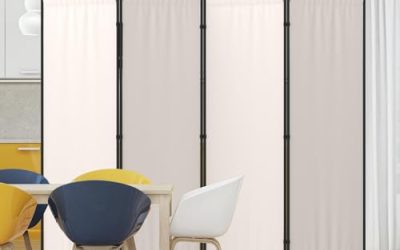
Room Divider 4 Panel-88''Wide,6FT Room Dividers and Folding Privacy Screens | Wider Metal Base & Non-wobbly, Fabric Divider Panel for Room Partition,Portable Wall Divider Screen for Bedroom,Office,Studio
One of the home & furniture options compared in this guide.
View on Amazon
AKTOP Room Divider, Freestanding Single Panel Privacy Screen, Black | 71"W x 76"H Large Coverage, Portable Fabric Wall Divider for Room Separation, 16"W Base for Stability, Home & Office Privacy
One of the home & furniture options compared in this guide.
View on AmazonSUNALLY Room Divider Curtain Set: Blackout Curtain W100 x L84 in 1 Panel & No Drilling Divider Tension Rods Adjustable 4-10ft(H) 32-100in(W) for Apartment/Dorm/Bedroom Privacy Separator
One of the home & furniture options compared in this guide.
View on Amazon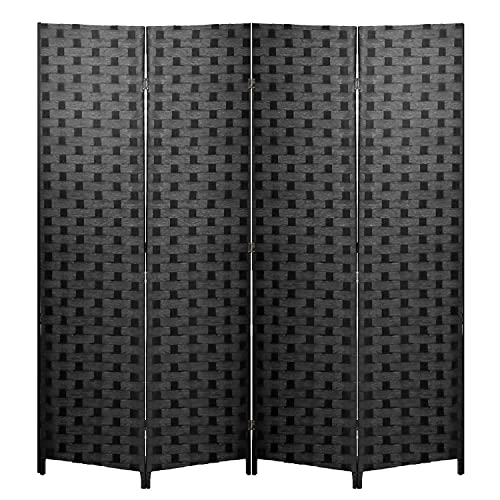
FDW 4-Panel Folding Room Divider | 6ft, Black | Light & Portable | Wooden Wall Divider with Hand Woven Mesh | Easy to Move Privacy Screen | For Space Separation, Bedroom, Office
One of the home & furniture options compared in this guide.
View on Amazon| Product | Best for | Key spec from the title |
|---|---|---|
| MAYOLIAH 6-panel folding screen | Long openings and offices | 9 ft wide, 6 ft tall, 6 panels |
| 4-panel 88-inch divider | Stable screen with a wide base | 88 inches wide, 6 ft, metal base, fabric |
| AKTOP single panel screen | Quick corner privacy | 71 inches wide, 76 inches tall, freestanding |
| SUNALLY curtain divider set | Renters who cannot drill | Blackout curtain, tension rods, 4-10 ft height |
| FDW 4-panel wooden screen | Light, airy separation | 6 ft, hand woven mesh, wooden frame |
| 6×6 ft rolling single panel | Rooms you rearrange often | Caster wheels with brakes, 72 x 72 inches |
How to Choose
Decide between a screen and a curtain
Folding screens stand on their own and can be moved or put away in a minute, but they take floor space and fold flat only to a degree. Curtains are the opposite: nearly invisible when open, but fixed in position. Curtain dividers hang from a tension rod between floor and ceiling or between walls, and they close off an opening neatly. If your ceiling height or wall material limits where a rod can brace, a freestanding screen avoids the question.
Measure width and height before browsing
Measure the opening you want to cover and compare it to the listed width and height. Write the numbers down, because it is easy to confuse inches and feet in listing titles that use both. Most screens stand about six feet tall, enough to block sight lines while seated but not always when standing. A curtain system’s range, such as 4 to 10 feet for height, tells you what ceilings it can fit. Allow a few inches of extra width for folding screens, because zigzag layouts shorten the covered span.
Privacy, light, and sound are different goals
Opaque fabric panels block sight. Mesh and woven panels let light through while softening the view. A blackout curtain does the most for sleep or video calls. Do not expect a thin divider to reduce noise meaningfully; at best it takes the edge off by adding soft material to the room. If calls or sleep are the goal, pair the divider with a rug and curtains to soak up echo.
Check stability and moving parts
A wide base or feet that spread out keep a screen from tipping, which matters around kids and pets. Casters with brakes are handy, but locking hardware varies. On carpet, small wheels can sink and make rolling harder, while on hardwood they may leave marks over time. Inspect hinges for smooth action, and note that the hinge style determines whether a screen can fold both ways. For curtains, the rod’s tension and the wall surface decide how much weight it can safely hold.
The 6 Best Options
MAYOLIAH 6-Panel Folding Privacy Screen
The MAYOLIAH is a six-panel folding screen that spans nine feet wide and stands six feet tall, advertised for office division, family rooms, and wall partitions. It is the widest freestanding option here, suited to wide openings that a smaller screen would leave gappy. Six panels also allow a zigzag shape for stability.
- Strength: a nine-foot span covers a wide opening or a long section of a room.
- Strength: six-foot height blocks most sight lines.
- Trade-off: a screen this wide needs ample storage space when folded away.
Skip it if you have a narrow room or limited closet space. Check the panel material on the full listing, since the title does not specify it. Buyers using it for an office should also picture the folded footprint, because nine feet of screen can lean awkwardly in a closet.
Four-Panel 88-Inch Folding Room Divider
This four-panel screen is 88 inches wide and six feet tall, with a wider metal base that the title calls non-wobbly and fabric panels. It is marketed as a folding privacy screen for room partitions, and the base design suggests a focus on stability. It suits apartments, studios, and offices needing a steady divider.
- Strength: a wider metal base is aimed at stopping wobble.
- Strength: fabric panels offer privacy with a softer look than bare wood.
- Trade-off: the unbranded listing makes seller details and return policy worth a look.
Skip it if you want a hand-crafted wood look or need to cover a very wide gap. Eighty-eight inches covers a typical doorway-sized area. People dividing a bedroom from a play space may like that the panels fold up when guests arrive, restoring the open floor plan.
AKTOP Single Panel Privacy Screen
AKTOP sells a freestanding single-panel fabric screen in black, listed at 71 inches wide and 76 inches tall, with a large coverage claim. A single wide panel stands without hinges or folds, which makes it simple to place behind a desk or beside a bed. It suits quick, tidy visual breaks rather than a full partition.
- Strength: 76 inches of height is taller than the typical six-foot screen.
- Strength: portable fabric construction can be moved and stored easily.
- Trade-off: a single panel has no zigzag, so check how the feet resist tipping.
Skip it if you want a multi-panel layout that bends around a corner. The truncated title also leaves details to verify, including the foot design and weight. Positioned behind a desk, it can hide clutter from video calls without making the room feel boxed in.
SUNALLY Room Divider Curtain Set
This SUNALLY set pairs a blackout curtain, one panel measuring 100 by 84 inches, with a no-drilling tension rod system adjustable from 4 to 10 feet in height. It targets apartments, dorms, and shared bedrooms where drilling is not allowed. A blackout fabric also helps with sleep schedules and screen glare.
- Strength: no drilling means no wall damage for renters.
- Strength: blackout fabric offers real privacy and light blocking.
- Trade-off: tension rods need solid anchoring surfaces, and a ceiling that cannot brace one rules it out.
Skip it if you want a freestanding divider you can move easily. A curtain stays put once installed. Households sharing a bedroom, a nursery, or a basement flat will find the 100 by 84 inch panel generous, but measure the opening so the fabric hangs without bunching.
FDW 4-Panel Folding Room Divider
The FDW is a four-panel six-foot divider with a wooden frame and hand woven mesh, listed in black as light, portable, and easy to move. The mesh lets light through, so it divides a space without darkening it. That suits a living room, a studio, or a shop corner where openness matters.
- Strength: woven mesh keeps the room bright while defining zones.
- Strength: lightweight construction makes it easy to move.
- Trade-off: mesh provides less privacy than solid fabric or blackout panels.
Skip it if you need to block sight lines for a bed or changing area. Look at the listing photos to judge how open the weave is. A mesh screen also works as a decorative backdrop for plants or a reading corner, softening an empty wall.
6×6 Ft Rolling Single-Panel Divider
This one measures 72 by 72 inches in black, with caster wheels and brakes, aimed at flexible rooms. Rolling it aside takes seconds, and brakes keep it from drifting once placed. The square 72 by 72 inch shape also gives a generous surface for hanging lightweight art or a fabric backdrop. A single large panel suits an office, a studio, or a gallery-style wall.
- Strength: casters make repositioning easy.
- Strength: brakes help hold it steady where you place it.
- Trade-off: a 72-inch width covers less distance than a multi-panel screen.
Skip it if you need to span a wide opening or want a lightweight screen to store flat in a closet. Casters can also catch on thick rugs, so try it on your actual floor surface before relying on it daily.
Which One Fits Your Situation
You are a renter who cannot drill
The SUNALLY curtain set is the clear answer, giving blackout coverage with tension rods and no holes.
You want to split a studio’s sleeping area
Use the MAYOLIAH for a wide span or the 88-inch four-panel screen for a doorway-sized gap. Place the screen at the foot of the bed rather than the side so the sleeping area keeps its window and its door.
You work from home and want light to pass through
The FDW woven mesh divider defines the desk area while keeping the room open. It works well when natural light from a window should reach both halves of the room.
You rearrange rooms often
The rolling 6×6 panel moves with a push and locks with its brakes. It suits a hobby room, a rented space, or an event corner where the layout changes weekly.
Common Mistakes
- Measuring the opening but forgetting that folded panels cover less width than the labeled size.
- Choosing a mesh screen when real privacy is needed, such as around a bed or a changing area where the weave lets silhouettes show through.
- Installing a tension rod on a surface that cannot hold it, such as a textured ceiling, a soft drywall patch, or a slick tile surface.
- Expecting a divider to block noise rather than just sight lines; a thin panel changes how a room looks far more than how it sounds.
- Skipping a stability check on a tall, single-panel screen, especially in homes with children, cats, or an open window that creates a draft.
Related guides
- Indoor Electric Heaters For Large Rooms
- Infrared Heaters For 1000 Square Feet
- Queen Mattress For Sleeper Sofas
Frequently Asked Questions
How wide should my divider be?
Match or slightly exceed the opening. For folding screens, remember that zigzagging shrinks coverage, so a six-panel model may cover noticeably less than its flat width suggests when set up in a stable zigzag.
Can a room divider help with sound?
Only slightly, by adding soft surfaces. For real noise reduction, you need dense materials and gaps sealed.
Are tension rod dividers safe for rentals?
They avoid drilling, so they are popular with renters. Follow the weight limits and check the grip before hanging the full curtain. Wipe the contact points clean and check the rod periodically, because tension can loosen with seasonal changes in humidity.
Do dividers need to be anchored?
Most freestanding screens rely on their feet. That is fine for calm rooms, though a gust or a bumped corner can still topple a lightweight panel. Place them away from doors and busy walkways. If you need extra security, ask about added feet or weights, or choose a model with a wide base like the four-panel metal-base screen.
More from Amazon
Programs that pair well with the guide above. Offers and eligibility are set by Amazon and may change.
Collect the home and kitchen items you want in one registry that guests can shop from.
Create a wedding registrySet up recurring deliveries of everyday items on eligible products. Terms and savings are set by Amazon.
Explore Subscribe & SaveFree shipping on eligible items, Prime Video and more. Eligible new members can start with a free trial.
Start a Prime free trialAudiobooks and podcasts to listen to on the go. Eligible new members can start with a free trial.
Try Audible freeAs an Amazon Associate we earn from qualifying purchases.