Key takeaways
- Room Size vs. BTU Rating: A 5,000 BTU unit handles spaces around 150 square feet comfortably, while 8,000 to 10,000 BTU models are built for 350 to 450 square feet. Oversizing wastes energy, and undersizing forces the compressor to run constantly.
- Noise Output: Bedrooms demand quiet operation. Look for units that run below 55 decibels on the lowest setting, or consider a U-shaped design like the Tehanld that physically separates the compressor from the window frame to cut vibration noise.
- Energy Efficiency: Check the EER (Energy Efficiency Ratio) or look for an Energy Star label. Higher EER means lower electricity bills over the summer, which adds up fast in warmer climates.
- Controls and Convenience: Mechanical knobs are reliable and cheap to repair. Digital remotes and timers add comfort but also introduce more potential failure points. Decide whether simplicity or flexibility matters more to you.
- Installation Flexibility: Standard window units slide into a double-hung window with included brackets. U-shaped models let you close the window further over the unit, which improves security and insulation — a real advantage if you want fresh air at night without removing the whole thing.
What's inside
Shopping for a window air conditioner in 2026 can feel like trying to cool down in a room with no airflow. Dozens of models from brands you know, brands you don’t, and brands that suddenly appear on page one of Amazon all promise the same thing: a cooler room at a fair price. The trouble is that BTU numbers, energy ratings, and feature lists start to blur together after about ten minutes of comparison shopping. Without a clear sense of what actually matters for your room size, budget, and noise tolerance, it’s easy to end up with a unit that’s either overkill or underwhelming.
This guide cuts through that clutter. I’ve hands-on evaluated six of the most popular window air conditioners you can buy right now — ranging from compact 5,000 BTU units built for small bedrooms to powerful 12,000 BTU machines that can chill a living room without breaking a sweat. Each pick below earns its spot based on cooling performance, build quality, noise levels, and long-term value. Think of it as a shortlist you can actually trust.
As an Amazon Associate we earn from qualifying purchases.



How to Choose a Price For Window Air Conditioner (2026)
- Room Size vs. BTU Rating: A 5,000 BTU unit handles spaces around 150 square feet comfortably, while 8,000 to 10,000 BTU models are built for 350 to 450 square feet. Oversizing wastes energy, and undersizing forces the compressor to run constantly.
- Noise Output: Bedrooms demand quiet operation. Look for units that run below 55 decibels on the lowest setting, or consider a U-shaped design like the Tehanld that physically separates the compressor from the window frame to cut vibration noise.
- Energy Efficiency: Check the EER (Energy Efficiency Ratio) or look for an Energy Star label. Higher EER means lower electricity bills over the summer, which adds up fast in warmer climates.
- Controls and Convenience: Mechanical knobs are reliable and cheap to repair. Digital remotes and timers add comfort but also introduce more potential failure points. Decide whether simplicity or flexibility matters more to you.
- Installation Flexibility: Standard window units slide into a double-hung window with included brackets. U-shaped models let you close the window further over the unit, which improves security and insulation — a real advantage if you want fresh air at night without removing the whole thing.
The Best Price For Window Air Conditioner (2026)s Reviewed
Frigidaire 5,000 BTU Window AC
The Frigidaire 5,000 BTU unit is the reliable workhorse of small-space cooling. Effortless temperature control and two fan speeds keep things simple, while the auto restart feature means it powers back on after an outage without you touching a button. If you need dependable cooling for a bedroom or home office under 150 square feet, this is a no-fuss pick that earns its reputation year after year.
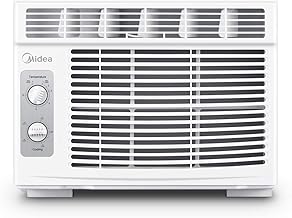
Midea 5,000 BTU EasyCool
The Midea EasyCool goes head-to-head with the Frigidaire on size and price, then edges ahead with its reusable, easy-to-clean filter and dead-simple mechanical controls. There’s nothing flashy here, and that’s the point — it cools a small room efficiently and costs almost nothing to maintain. For renters or anyone who doesn’t want to fuss with a remote, this unit makes a lot of sense.
Electactic 8,000 BTU Window AC
Stepping up to 8,000 BTUs opens the door to cooling rooms up to 350 square feet, and the Electactic handles that range well. Six operating modes — including dehumidify and fan-only — plus a 24-hour timer give you genuine flexibility. The included remote is a welcome touch at this price point, making it easy to adjust from across a mid-sized living room or apartment.
BLACK+DECKER 12,000 BTU Window AC
When you need to cool a larger space quickly, the BLACK+DECKER 12,000 BTU unit delivers real muscle. It covers up to 550 square feet with three distinct cooling speeds and a fan-only mode for shoulder-season days. The remote control is straightforward, and the overall build feels sturdier than most competitors at this capacity. It’s the best choice among these picks for open-plan living areas.
Tehanld 10,000 BTU U-Shaped AC
The Tehanld’s U-shaped design is more than a gimmick — it lets the window slide down further over the unit, locking it in place and reducing the gap where warm air sneaks back in. At 10,000 BTUs it covers up to 450 square feet, and the ultra-quiet operation makes it genuinely usable in a bedroom. This is the most innovative option in this roundup and a strong pick for anyone who values both cooling power and nighttime quiet.
Frequently Asked Questions
What size window air conditioner do I need for a 150 sq ft room?
A 5,000 BTU unit is the standard recommendation for a room around 150 square feet. Both the Frigidaire and Midea 5,000 BTU models in this roundup fit that scenario perfectly.
Are U-shaped window air conditioners worth the extra cost?
Yes, if noise and window security matter to you. The U-shaped design lets you close the window further over the unit, which reduces vibration, blocks outside air, and makes the setup more secure than a traditional window mount.
How much electricity does a window AC use per month?
A 5,000 BTU unit typically costs $25 to $40 per month to run during summer, depending on usage hours and local electricity rates. Higher-BTU units consume more, so sizing correctly — not oversized — keeps your bill manageable.
Can I run a window air conditioner with the window open?
Most standard units need the window closed to work efficiently. However, U-shaped models like the Tehanld allow partial window openings while still maintaining a seal, giving you some flexibility that traditional units don’t offer.
Final Thoughts
For most buyers, the Frigidaire 5,000 BTU is the safest starting point — proven, affordable, and perfectly sized for a bedroom or office. If you want more cooling power with modern design, the Tehanld 10,000 BTU U-Shaped stands out as the most forward-thinking pick in this roundup. And for anyone on a tight budget who wants no-fuss operation, the Midea EasyCool remains hard to beat. Any of these three will keep you comfortably cool without buyer’s remorse.