
A mat that grips brilliantly and lives leaning against the hallway wall is a mat that eventually becomes a coat rack. In a small apartment, storage is the deciding factor as often as grip is, and the two pull against each other. The surfaces that hold a sweaty palm best tend to be thick, dense, and heavy, which produces a roll the size of a bolster. The ones that tuck away neatly tend to be thin, light, and glassy underhand. Choosing well means knowing which compromise you can live with in the square footage you actually have.
There is a second storage problem nobody mentions at checkout: mats deform in storage. A tightly rolled mat left cinched for a month develops a curl that will not lie flat, so the front edge lifts every time you step back into a lunge, and a lifted edge is a trip hazard on a hardwood floor. Folded mats crease. Mats stored damp lose surface tack. The picks below are sorted by how they behave between practices, not just during them, with grip performance for dry and sweaty hands noted alongside.
Our top picks




As an Amazon Associate we earn from qualifying purchases at no extra cost to you.
Quick Comparison
| Product | Best For | Standout Feature | Watch Out For |
|---|---|---|---|
| LVME Foldable Mat | Closets, suitcases, and under-bed gaps | Folds flat instead of rolling into a bulky log | Crease lines take weeks to relax |
| Gruper Eco Mat | A light roll you can hang on a hook | Carry strap plus modest weight for daily moves | Less padding on bare floors |
| Gaiam Dry-Grip Mat | Sweaty sessions in a warm flat | Grip that survives damp hands | Must be unrolled to dry, so it needs wall space |
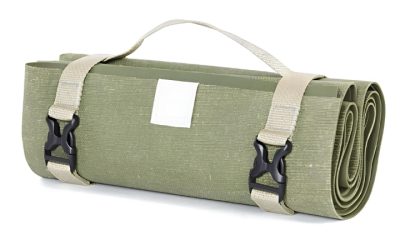
| Gaiam Thick NBR Mat | Padding when the floor is tile or laminate | Thick NBR foam with an easy-cinch strap | Bulky roll that dominates a small cupboard |
| Premium PU Sweat-Activated Mat | Grip that improves as you perspire | Rubber base with a moisture-reactive top | Rubber is dense and heavy for its size |
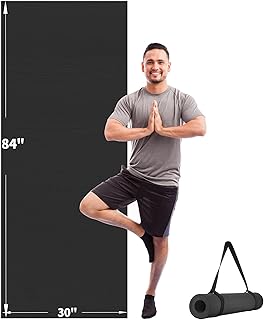
| CAMBIVO Extra Long Wide Mat | Tall practitioners with a dedicated corner | Extra length and width in cushioned PVC | Largest roll here by a wide margin |
How to Choose
- Measure the storage slot first: A rolled mat is roughly the diameter of a dinner plate at 8mm and half that at 4mm. Check the cupboard, the under-bed gap, or the gap behind the sofa before you check reviews.
- Decide between rolling and folding: Rolling keeps the surface uncreased but needs vertical clearance and a hook. Folding fits anywhere flat but leaves lines you will feel under your hands for a while.
- Weigh it against your commute: Under about four pounds a mat rides a shoulder happily. Past six, it becomes a car-only mat, which matters if you also practise at a studio.
- Give sweat somewhere to go: If you finish sessions damp, you need a drying spot, not just a storage spot. A mat rolled wet loses grip and picks up odour within weeks.
- Look at unrolled behaviour: Dense POE and PVC settle flat within minutes. Lightweight foam holds its curl, and a curling front edge is more dangerous on a small floor than a slippery one.
Top Picks Reviewed
Flat-Pack Pick: LVME Foldable Mat
Folding is the genuine space solution. At 71 by 24 inches and 8mm thick, this collapses into a tidy rectangle that slots behind a door or into carry-on luggage, and the POE construction carries SGS certification with a soft, quiet feel that suits a flat with neighbours below.
The trade is those fold lines. New out of the box they stand proud, and one landing under your palm during plank is distracting. Storing it unfolded under a rug for a week flattens most of it.
Hang-It-Up Pick: Gruper Eco Mat
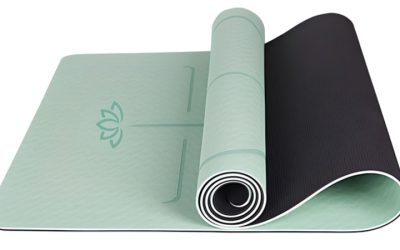
Light enough to hang from a single hook on the back of a door, this stays out of the way while still airing out, which is the combination small flats need. The textured surface handles dry-hand grip well and the included strap makes the wall-to-floor trip a two-second job.
Padding is thin by comparison. Kneeling sequences on tile need a folded towel, so factor in that extra piece if your floors are hard.
Damp-Hands Pick: Gaiam Dry-Grip Mat
If your practice room is warm and poorly ventilated, which describes most small apartments, this is the surface that keeps working when your hands stop being dry. Grip holds through sweaty flows rather than degrading halfway through.
It demands drying space. Rolled up damp, the finish dulls and the advantage disappears, so budget a length of wall or a rail it can hang over after use.
Hard-Floor Pick: Gaiam Thick NBR Mat
Laminate and tile punish knees and wrists, and this thick NBR foam layer is the straightforward fix. The cinch strap keeps the roll tight, and dry grip is solid enough for a full standing sequence.
Its bulk is the catch. This is the biggest roll of the lighter options here, and NBR foam holds sweat on the surface rather than shedding it, so heavy perspirers will want a towel.
Sweat-Activated Pick: Premium PU Mat
The polyurethane top over a natural rubber base gets tackier as moisture arrives, which is the opposite of how foam behaves. For anyone whose slipping starts twenty minutes in, this is the material answer rather than a workaround.
Rubber is dense, so even a modest thickness produces a surprisingly heavy roll, and the top layer needs wiping rather than any aggressive cleaning.
Long-Format Pick: CAMBIVO Extra Long Wide Mat
Extra length and width stop taller practitioners from putting a hand or heel onto bare floor, which is a slipping problem disguised as a sizing problem. The cushioned PVC lies flat immediately and cleans easily.
Storage is genuinely difficult. This is a mat for a corner of a room you can leave it in, not something to file into a cupboard between sessions.
Frequently Asked Questions
Can I store a yoga mat flat under a bed?
Only a foldable one comfortably. Rolled mats stored flat under weight develop a permanent oval section, and the flattened side then curls upward when you unroll it.
Do fold creases ever go away?
On dense POE and TPE they soften substantially within a few weeks of regular use. On soft foam they tend to persist, which is why foldable designs use denser materials.
Is a thinner mat always easier to store?
Usually, but a thin foam mat that holds its curl can be more annoying than a thicker dense one that lies flat. Density matters as much as millimetres.
How do I stop my stored mat from smelling?
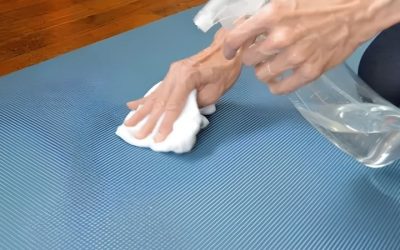
Never roll it damp. Wipe with mild soap and water, leave it unrolled or hanging until fully dry, and skip alcohol-heavy sprays that degrade the surface over time.
Final Thoughts
In a small home, the mat you keep is the one that has somewhere to live. The LVME folds into spaces nothing else fits, the Gruper hangs on a hook and airs itself, and the Gaiam Dry-Grip earns its wall space if your sessions get sweaty. Save the CAMBIVO and the thick NBR option for homes with a corner you can dedicate, because their grip is not the problem, their footprint is.
Write Your Review
No reviews yet. Be the first to share your experience!