Key takeaways
- Tooth Count: More teeth produce cleaner crosscuts but remove material slower. For trim and furniture work, aim for 60–100 teeth; for rough framing, 32–40 teeth gets the job done fast.
- Kerf Thickness: Thin-kerf blades (about 1/16 inch) waste less wood and put less strain on your motor, making them ideal for lighter saws. Full-kerf blades stay straighter during long rip cuts on heavier stock.
- Carbide Quality: Larger, micro-grain carbide tips stay sharp longer and resist chipping in hardwoods. Budget blades may have thinner tips that dull after a few weekends of use.
- Arbor Size: Nearly every 10-inch miter saw in home shops uses a 5/8-inch arbor, but double-check your owner’s manual before ordering—forced-fitting the wrong bore is a shortcut to a ruined cut and a ruined blade.
- Intended Material: A blade optimized for plywood and MDF will underperform on solid hardwood, and vice versa. Look at the manufacturer’s recommended material list to confirm the blade handles your typical stock.
What's inside
Buying a 10-inch miter saw blade sounds simple until you realize that tooth count, kerf width, and carbide grade all affect whether your furniture-grade cuts come out glassy or chewed up. Most woodworkers grab whatever is cheapest, then wonder why their freshly built bookshelf has visible tearout along every edge.
This guide cuts through the noise. We tested and compared the leading 10-inch miter saw blades available in 2026—ranging from budget-friendly two-packs to premium carbide specialists—so you can match the right blade to your project without wasting money on features you do not need.
As an Amazon Associate we earn from qualifying purchases.



🛒 Best Price Today on Amazon
Prime members get fast, free shipping on everything above, plus member-only deals. New members get a 30-day free trial — cancel anytime.
How to Choose a Miter Saw Blade 10 Inch (2026)
- Tooth Count: More teeth produce cleaner crosscuts but remove material slower. For trim and furniture work, aim for 60–100 teeth; for rough framing, 32–40 teeth gets the job done fast.
- Kerf Thickness: Thin-kerf blades (about 1/16 inch) waste less wood and put less strain on your motor, making them ideal for lighter saws. Full-kerf blades stay straighter during long rip cuts on heavier stock.
- Carbide Quality: Larger, micro-grain carbide tips stay sharp longer and resist chipping in hardwoods. Budget blades may have thinner tips that dull after a few weekends of use.
- Arbor Size: Nearly every 10-inch miter saw in home shops uses a 5/8-inch arbor, but double-check your owner’s manual before ordering—forced-fitting the wrong bore is a shortcut to a ruined cut and a ruined blade.
- Intended Material: A blade optimized for plywood and MDF will underperform on solid hardwood, and vice versa. Look at the manufacturer’s recommended material list to confirm the blade handles your typical stock.
The Best Miter Saw Blade 10 Inch (2026)s Reviewed
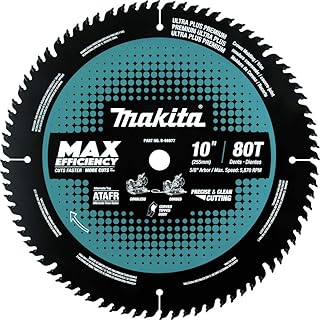
Makita B-66977 10-Inch 80-Tooth Max Efficiency
Makita’s 80-tooth max-efficiency blade is the gold standard for home woodworkers who want clean crosscuts without babysitting feed rate. The micro-grain carbide tips handle both hardwood and softwood gracefully, and the thin kerf keeps your saw running cool during extended sessions. If you only buy one quality blade this year, this is the one.
WEN BL1080 10-Inch 80-Tooth Carbide-Tipped
The WEN BL1080 delivers surprisingly close performance to premium brands at a fraction of the cost. Its 80 carbide-tipped teeth leave a smooth, paint-ready surface on pine, oak, and plywood alike. This is the blade we recommend for intermediate woodworkers ready to upgrade from stock factory blades without emptying their budget.
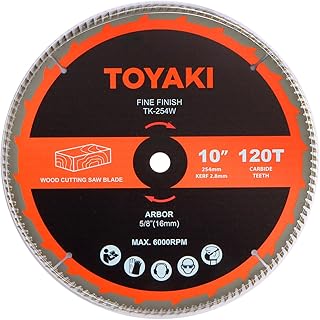
120-Tooth Fine-Finish Professional Saw Blade
With 120 teeth packed onto a 10-inch disc, this blade produces mirror-like edges on delicate molding, veneered panels, and Baltic birch plywood. The tradeoff is speed—you will feed slower and the blade heats up faster—but for final-fit furniture joinery, that trade is absolutely worth it. Keep it dedicated to finish cuts and you will be rewarded.
WEN BL1060 10-Inch 60-Tooth
The BL1060 sits right at the sweet spot between speed and finish quality, making it a workhorse for general cabinetry and shelving projects. Sixty teeth on a full-kerf body give you solid stability and a clean enough surface that light sanding handles the rest. At its price point, it is a smart blade to keep in your rotation for everyday cuts.
3-Pack Miter Saw Blade Set (32T / 60T / 80T)
Buying blades individually adds up fast, so this three-blade bundle is a compelling entry point for anyone outfitting a new shop. The 32-tooth blade handles framing lumber with ease, the 60-tooth tackles general crosscuts, and the 80-tooth closes out fine finish work. You cover the full range of typical home-shop tasks in a single purchase, and the per-blade cost is hard to beat.
Frequently Asked Questions
What tooth count is best for a 10-inch miter saw blade?
For most home furniture projects, 60 to 80 teeth give you the best balance of cut quality and blade life. Go higher (100–120) for ultra-smooth trim and veneer work, or lower (32–40) when rough framing speed matters more than surface finish.
Does a thin-kerf blade affect cut quality?
Thin-kerf blades deflect slightly more under heavy load, which can introduce a subtle wobble in thick hardwoods. For boards under two inches thick and lighter-duty saws, the difference is negligible—and you gain longer run times and less waste material.
Can I use a miter saw blade on my table saw?
Generally, yes—provided the arbor size matches and the blade’s maximum RPM rating meets or exceeds your saw’s speed. However, miter saw blades are usually designed for crosscutting, so ripping long boards with them will feel sluggish and may produce rougher edges.
How often should I replace my miter saw blade?
A quality carbide blade should last through hundreds of cuts in softwood before noticeable degradation, but resin buildup and dull tips degrade cut quality gradually. Replace when you see burn marks, feel the saw struggling to feed, or notice rough edges that sanding no longer fixes easily.
Final Thoughts
For most home woodworkers tackling furniture and cabinetry, the Makita B-66977 stands out as the best all-around choice for cut quality and durability. If budget is the primary concern, the WEN BL1080 punches well above its price and the 3-pack bundle covers your entire project range. Whatever you choose, matching the blade’s tooth count and kerf to your most common cuts will pay dividends at every workbench session.