Key takeaways
- Base Type: Most chandeliers use an E12 candelabra base, but always check your fixture’s socket before ordering. Buying the wrong base means a return trip you didn’t plan.
- Color Temperature: 2700K hits the warm, inviting sweet spot most living and dining spaces need. Go cooler (3000K+) only if your room skews heavily neutral or modern.
- Dimmability: A chandelier bulb that flickers or buzzes on a dimmer defeats the entire purpose. Confirm the bulb is explicitly labeled dimmable and pair it with a compatible dimmer switch.
- CRI (Color Rendering Index): Anything above 90 CRI means your walls, furniture, and food look true to life. Below 80, everything gets a flat, lifeless cast that cheapens the room.
- Incandescent vs. LED: Incandescent candelabra bulbs offer unmatched warmth and instant full brightness, but they run hot and burn out faster. LEDs cost less to operate and last years, making them the default for most households in 2026.
What's inside
Picking the right chandelier bulb sounds simple until you’re staring at a wall of E12 options with conflicting specs, mixed bases, and no clear winner. The wrong choice leaves your dining room either washed out in clinical blue light or barely glowing like a dying ember. Meanwhile, dimmer compatibility and color rendering quietly sabotage the mood you were going for.
This guide cuts through the noise. We tested and compared six popular candelabra bulbs across brightness, color accuracy, dimming performance, and long-term value to surface the five that actually deserve a spot in your fixture. Whether you’re outfitting a vintage chandelier or a modern pendant cluster, there’s a pick here that fits.
As an Amazon Associate we earn from qualifying purchases.



🛒 Best Price Today on Amazon
Prime members get fast, free shipping on everything above, plus member-only deals. New members get a 30-day free trial — cancel anytime.
How to Choose a Light Bulb For Chandelier (2026)
- Base Type: Most chandeliers use an E12 candelabra base, but always check your fixture’s socket before ordering. Buying the wrong base means a return trip you didn’t plan.
- Color Temperature: 2700K hits the warm, inviting sweet spot most living and dining spaces need. Go cooler (3000K+) only if your room skews heavily neutral or modern.
- Dimmability: A chandelier bulb that flickers or buzzes on a dimmer defeats the entire purpose. Confirm the bulb is explicitly labeled dimmable and pair it with a compatible dimmer switch.
- CRI (Color Rendering Index): Anything above 90 CRI means your walls, furniture, and food look true to life. Below 80, everything gets a flat, lifeless cast that cheapens the room.
- Incandescent vs. LED: Incandescent candelabra bulbs offer unmatched warmth and instant full brightness, but they run hot and burn out faster. LEDs cost less to operate and last years, making them the default for most households in 2026.
The Best Light Bulb For Chandelier (2026)s Reviewed
Hizashi 90+ CRI LED Candelabra Bulbs
The standout pick for anyone who cares about how a room actually looks under light. The 90+ CRI rating delivers noticeably richer, truer colors compared to standard LEDs, and the 2700K warmth flatters wood tones, fabrics, and skin alike. UL-listed for safety, dimmable without fuss, and packaged in a generous 12-count — these are the bulbs we’d put in our own chandeliers first.
E12 Candelabra LED Flame Tip Bulbs (12-Pack)
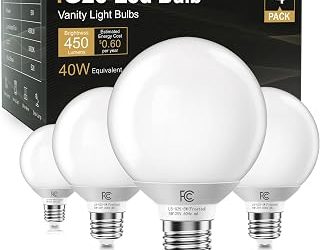
A strong value play. At just 4 watts per bulb producing 460 lumens, these flame-tip LEDs sip energy while filling a room with soft 2700K light. The candle-shaped profile looks authentic in traditional chandeliers, and the 12-pack means you can outfit a large fixture without hunting for matching extras later.
MEQIQTEK 60W Incandescent Candelabra Bulbs
If you want the real thing — actual incandescent filament glowing at a deep 2500K — these are worth considering. The slightly warmer hue leans amber, which works beautifully in crystal chandeliers and formal dining settings where LED alternatives can feel too clinical. Expect higher energy use and shorter lifespan, but the ambiance is genuinely hard to replicate with LEDs.
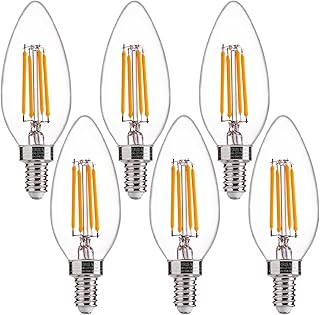
60W Equivalent LED Chandelier Light Bulbs (6-Pack)
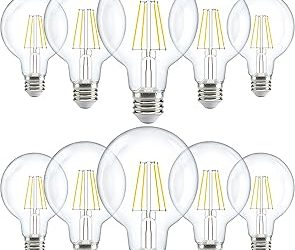
A solid mid-range LED option that balances brightness with efficiency. The clear B11 filament design shows off the bulb aesthetically in open-frame fixtures, and the 2700K output keeps things warm without veering orange. The six-pack works well for smaller chandeliers or pendant clusters where you don’t need a dozen replacements on hand.
60W Candelabra Incandescent Bulbs (12-Pack)
The no-frills workhorse for anyone replacing burnt-out incandescent bulbs in existing fixtures and wanting an exact match. The B10 clear glass and 600-lumen output deliver familiar, even warmth. It’s not the most efficient choice in 2026, but if your dimmer switch or fixture simply works better with traditional incandescent, this 12-pack covers you for a long stretch.
Frequently Asked Questions
What wattage is best for a chandelier?
Most residential chandeliers work best with 40W to 60W equivalent bulbs. Higher wattage can overpower a small dining area, while lower options may leave a large fixture looking underlit. Match the wattage to your room size and fixture count.
Can I use LED bulbs in any chandelier?
Yes, as long as the base type matches — most chandeliers use E12 candelabra bases, which all of the bulbs in this guide share. If your chandelier has a built-in dimmer, make sure the LED bulbs are explicitly dimmable to avoid flickering.
What color temperature is ideal for dining rooms?
2700K is the standard recommendation. It produces a warm, flattering glow that makes both the space and the people in it look their best. Avoid going above 3000K in dining spaces unless the room has a distinctly cool design palette.
How many lumens should a chandelier bulb produce?
For ambient chandelier lighting, aim for 400 to 600 lumens per bulb. A six-bulb chandelier at 450 lumens each gives you roughly 2,700 total lumens — plenty for a medium dining room without harsh overlighting.
Final Thoughts
For most buyers, the Hizashi 90+ CRI LEDs are the smartest all-around pick — the color quality alone justifies the switch. Shoppers on a budget should grab the E12 Flame Tip 12-pack for its efficiency and value. And if you’ve got a crystal chandelier that demands that unmistakable incandescent warmth, the MEQIQTEK 60W bulbs deliver an amber glow no LED quite matches.