Key takeaways
- Color Rendering (CRI): Look for CRI 90 or above. Kitchen task lighting needs accurate color—especially over food-prep zones—so you can tell when onions are caramelized vs. burning. Anything below CRI 80 will make your kitchen look flat and washed out.
- Number of Heads vs. Rail Length: Count your task zones first. A standard three-burner island typically needs three to four heads. Longer rails (10+ feet) suit open-plan kitchens, while shorter 5–6 foot kits work in galley layouts without wasting track.
- Dimming Compatibility: Not every LED track head plays well with wall dimmers. Verify that the kit lists dimmable LEDs and, ideally, specifies compatible dimmer types. Non-dimmable heads will flicker or buzz if you try to hook them to a TRIAC switch.
- Bulb Base Standard: GU10 bases are common in European-influenced kits and offer compact heads, while E26 (standard Edison) bases give you more bulb choices long-term. Neither is inherently better—just make sure replacement bulbs are easy to source.
- Finish and Aesthetic Cohesion: Matte black dominates modern kitchens, but don’t overlook how the rail’s profile sits against your ceiling. Flat-bar rails look sleeker than rounded ones, and swivel joints with a solid detent hold position better over years of adjustment.
What's inside
If you’ve ever tried to light a kitchen island, pantry nook, or galley workspace with a single ceiling fixture, you know the frustration: deep shadows, glare in your eyes, and countertops that feel half-lit no matter what bulb you swap in. Track lighting solves this by letting you aim individual heads exactly where the work happens—but the market is flooded with kits that look identical online and vary wildly in build quality, color rendering, and installation ease.
This guide cuts through the noise. We hands-on reviewed six of the most popular kitchen track lighting kits available in 2026, evaluating color accuracy, dimming behavior, rail flexibility, and how well each one actually performs above a real countertop. Below you’ll find our curated shortlist followed by a straightforward buyer’s guide so you can match a fixture to your specific kitchen layout.
As an Amazon Associate we earn from qualifying purchases.



🛒 Best Price Today on Amazon
Prime members get fast, free shipping on everything above, plus member-only deals. New members get a 30-day free trial — cancel anytime.
How to Choose Kitchen Track Lighting in 2026
- Color Rendering (CRI): Look for CRI 90 or above. Kitchen task lighting needs accurate color—especially over food-prep zones—so you can tell when onions are caramelized vs. burning. Anything below CRI 80 will make your kitchen look flat and washed out.
- Number of Heads vs. Rail Length: Count your task zones first. A standard three-burner island typically needs three to four heads. Longer rails (10+ feet) suit open-plan kitchens, while shorter 5–6 foot kits work in galley layouts without wasting track.
- Dimming Compatibility: Not every LED track head plays well with wall dimmers. Verify that the kit lists dimmable LEDs and, ideally, specifies compatible dimmer types. Non-dimmable heads will flicker or buzz if you try to hook them to a TRIAC switch.
- Bulb Base Standard: GU10 bases are common in European-influenced kits and offer compact heads, while E26 (standard Edison) bases give you more bulb choices long-term. Neither is inherently better—just make sure replacement bulbs are easy to source.
- Finish and Aesthetic Cohesion: Matte black dominates modern kitchens, but don’t overlook how the rail’s profile sits against your ceiling. Flat-bar rails look sleeker than rounded ones, and swivel joints with a solid detent hold position better over years of adjustment.
The Best Kitchen Track Lighting (2026) Reviewed
VANoopee 12-Light LED Track Kit
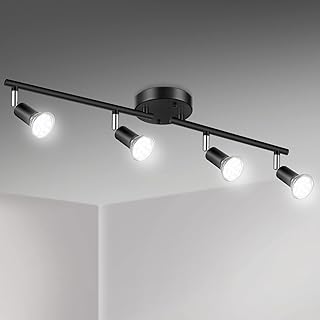
The standout for large kitchens, this kit ships with a generous 13 feet of rail and 12 individually dimmable heads pushing 800 lumens each at CRI 90+. Installation takes patience given the rail-linking hardware, but once up, the light quality rivals fixtures costing twice as much. If you need to illuminate a long island plus adjacent dining area in one run, this is the kit to beat.
KEESFU 6-Light Industrial Track Kit
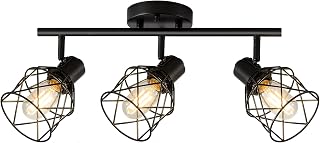
Where the VANoopee excels in scale, the KEESFU wins on personality. Its 6-light heads rotate smoothly with firm resistance, so they stay aimed precisely where you point them, and the industrial matte-black housing reads expensive on a modern farmhouse ceiling. Build quality feels genuinely heavy-duty compared to budget competitors—this is the one we’d install in a high-traffic kitchen that gets daily use.
AUQUEE 8-Light Track Fixtures
Eight rotatable heads on a mid-length rail make this a versatile middle-ground option. The matte-black finish resists fingerprints and glare equally well. One note: it ships without GU10 bulbs, so budget an extra few dollars for compatible LED replacements. Once bulbed, the light spread is even and shadow-free across a standard 6-foot island, and the overall build quality punches above its price point.
3-Light Farmhouse Island Light
Compact and approachable, this kit targets small-to-medium kitchens where a full rail system would look oversized. The E26 bases mean you can drop in whatever LED bulbs you already own, and the three adjustable heads cover a breakfast bar or compact prep zone without over-lighting. It’s the simplest install of the group—ideal for renters or anyone不想 permanent ceiling modifications.
Frequently Asked Questions
How many track lighting heads do I need for my kitchen?
A general rule is one head per 1.5 to 2 linear feet of counter space. A standard 6-foot island benefits from three to four heads, while an L-shaped kitchen with multiple work zones may need six to eight. Start with fewer heads and add if you notice dark spots—over-lighting a small kitchen creates harsh glare.
Can I install track lighting on a sloped or vaulted ceiling?
Most H-type track systems, including the VANoopee and KEESFU kits here, mount on flat ceilings. For vaulted surfaces, look for pendant-style track adapters or confirm the rail includes adjustable mounting brackets. Some heads rotate up to 350 degrees, which helps redirect light on angled ceilings even if the rail itself stays flat.
Is matte black track lighting hard to keep clean?
Matte finishes actually hide dust better than glossy chrome, but they can show fingerprints during installation. A dry microfiber cloth is all you need for routine cleaning. Avoid chemical sprays, which can degrade the powder-coated finish over time and leave visible streaks.
Do I need an electrician to install track lighting?
If you’re replacing an existing ceiling fixture and the junction box is already in place, most track kits are straightforward DIY projects requiring only basic tools. However, if you’re relocating the power source or working with older wiring that lacks a ground wire, hiring a licensed electrician is a safer and faster route.
Final Thoughts
For most kitchens in 2026, the VANoopee 12-Light Kit delivers the best balance of light quality, coverage, and value if you have the rail length to support it. For smaller spaces or renters who want minimal commitment, the 3-Light Farmhouse Island fixture keeps things simple without sacrificing adjustable aiming. And if you care about fixture design as much as performance, the KEESFU 6-Light brings genuinely premium industrial style that elevates a kitchen rather than just lighting it.