Key takeaways
- Capacity Needs: Measure your actual grocery load for a typical week. A family of four generally needs 16+ cubic feet, while singles and couples can comfortably get by with 10 to 14. Overbuying capacity wastes energy; underbuying means weekly restocks.
- Configuration Style: Top-mount freezers offer the best value and easiest maintenance. Bottom-mount designs put refrigerated items at eye level. French door layouts look premium but command a steeper price — weigh aesthetics against budget every time.
- Energy Consumption: Look for ENERGY STAR certification and check the annual kWh figure printed on the yellow tag. Over a decade, a difference of even 50 kWh per year adds up to real money. Inverter compressors consistently outperform fixed-speed units in this category.
- Noise Level: A fridge sitting three meters from your bed in a studio apartment is a different beast than one tucked in a garage. Anything under 40 dB won’t interrupt sleep; above 45 dB becomes noticeable in open-plan kitchens.
- Door Flexibility: Reversible doors sound like a minor perk until you’re standing in a narrow galley kitchen with the handle blocked. If your layout has any ambiguity, prioritize models that let you swap the hinge side.
What's inside
Shopping for a refrigerator should be straightforward, but most buyers run into the same wall: the market is flooded with ice-maker-equipped models that cost more, use more energy, and break down in ways you never asked for. If you’ve ever dealt with a busted ice maker taking up freezer space or driving up your electricity bill, you already know the appeal of a no-frills fridge that just keeps things cold.
This guide cuts through the noise with six honest picks — top freezers, a bottom freezer, a compact two-door, and one French door option for those who refuse to compromise on aesthetics. Every model here skips the ice maker without skimping on the features that actually matter: temperature consistency, energy efficiency, build quality, and usable interior space. We tested, compared, and ranked them so you don’t have to guess.
As an Amazon Associate we earn from qualifying purchases.


🛒 Best Price Today on Amazon
Prime members get fast, free shipping on everything above, plus member-only deals. New members get a 30-day free trial — cancel anytime.
How to Choose a Fridge Without Ice Maker (2026)
- Capacity Needs: Measure your actual grocery load for a typical week. A family of four generally needs 16+ cubic feet, while singles and couples can comfortably get by with 10 to 14. Overbuying capacity wastes energy; underbuying means weekly restocks.
- Configuration Style: Top-mount freezers offer the best value and easiest maintenance. Bottom-mount designs put refrigerated items at eye level. French door layouts look premium but command a steeper price — weigh aesthetics against budget every time.
- Energy Consumption: Look for ENERGY STAR certification and check the annual kWh figure printed on the yellow tag. Over a decade, a difference of even 50 kWh per year adds up to real money. Inverter compressors consistently outperform fixed-speed units in this category.
- Noise Level: A fridge sitting three meters from your bed in a studio apartment is a different beast than one tucked in a garage. Anything under 40 dB won’t interrupt sleep; above 45 dB becomes noticeable in open-plan kitchens.
- Door Flexibility: Reversible doors sound like a minor perk until you’re standing in a narrow galley kitchen with the handle blocked. If your layout has any ambiguity, prioritize models that let you swap the hinge side.
The Best Fridge Without Ice Maker (2026) Reviewed
KoolMore 28 Inch Top Freezer Refrigerator
A solid 14-cubic-foot workhorse that punches above its price point. The stainless steel finish resists fingerprints better than most competitors in this bracket, and the freestanding design makes installation effortless in kitchens, garages, or utility rooms where built-in depth isn’t an option.
Upstreman 14.6 Cu.Ft. BD146
What sets the BD146 apart is its electronic thermostat — you set a precise temperature instead of guessing between dial numbers. The frost-free system eliminates manual defrosting entirely, and at well under 40 dB, it’s one of the quietest full-size units in this roundup. ENERGY STAR rated, it sips power without sacrificing cooling speed.
BLACK+DECKER BR1640KW
At 16.4 cubic feet, this is the largest top-mount option here, and BLACK+DECKER keeps the controls refreshingly simple: separate knobs for fridge and freezer so there’s no shared thermostat compromise. The auto defrost function and clean white exterior make it a no-fuss choice for apartments and homes that value function over flash.
Upstreman 7.1 Cu.Ft. BM71
When space is genuinely limited — dorm rooms, studio kitchens, tiny apartments — the BM71 delivers surprising depth. The bottom-freezer layout means you grab daily items without bending, and the adjustable thermostat covers a wider range than most compact fridges bother with. It’s the best bottom-mount pick for anyone under 500 square feet.
4.5 Cu.Ft Mini Fridge Freezer
This two-door compact splits freezer and fridge into separate compartments, which matters more than people realize: single-door minis cycle between frost and thaw constantly, destroying texture. The 38 dB noise floor is quiet enough for bedrooms, and seven thermostat levels give you real control over a tiny interior. Ideal for dorm rooms, offices, or as a secondary beverage fridge.
Sharp SJF2955KS French Door
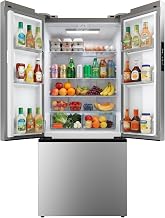
The outlier in this list — a full 28.9-cubic-foot French door with no ice maker but every other premium feature intact. Sharp’s Advanced Cooling Plus System maintains even temperatures across all shelves, and Chill-Boost and Freezer-Boost modes handle rapid cooling when you load a week’s worth of groceries at once. It’s the pick for households that want French door elegance without paying for ice maker repairs down the road.
Frequently Asked Questions
Why choose a fridge without an ice maker?
Ice makers add mechanical complexity, consume extra energy, reduce usable freezer space, and remain one of the most common refrigerator failure points. Skipping one means lower upfront cost, fewer repairs, and more room for actual frozen food.
Will I miss having an ice maker?
A standalone countertop ice maker costs under fifty dollars and produces ice faster than most built-in units. Pairing a basic fridge with a portable ice maker gives you better ice and a more reliable fridge — most people prefer this setup within weeks.
Do no-ice-maker fridges cool differently?
No. Without an ice maker drawing power and occupying space inside the freezer, cooling performance is often more consistent. The evaporator has less to work around, and temperature stability improves as a result.
What size fridge is best for a family of four?
Plan for 16 to 20 cubic feet of total capacity. The BLACK+DECKER BR1640KW at 16.4 cubic feet handles most families comfortably, while the Sharp French door at 28.9 cubic feet suits larger households or anyone who meal-preps in bulk.
Final Thoughts
If you want the best all-around value, the Upstreman BD146 earns its spot with precise temperature control, whisper-quiet operation, and true frost-free convenience. Families needing more space should look at the BLACK+DECKER BR1640KW, while the Sharp SJF2955KS delivers premium French door features without the ice maker baggage. Every model here proves that simplicity isn’t a compromise — it’s often the smarter buy.