
Key takeaways
- Warranty Description: 1 year
- Tension Supported: 150LBS
- Item Dimensions D x W x H: 74.8"D x 38.5"W x 79.9"H
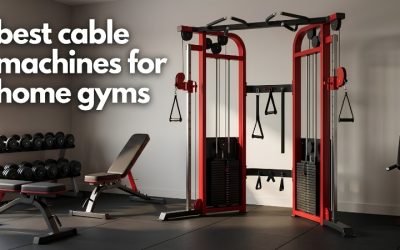
Apartment training has a specific enemy, and it is not floor space — it is sound. A dropped dumbbell rings through a building. A weight stack released from the top of a pulldown lands with a metallic crack that your downstairs neighbor will describe, accurately, as a hammer blow. This is why selectorized stack machines and cable systems are quietly the best strength option for anyone living above someone else: the load never leaves the frame, and with a rubber pad under the stack, a full session stays close to conversational volume.
The six options here range from compact pin-loaded stations with 150 lb stacks to a pulley-driven multi-trainer and one folding bench for people who already own weights. The differences that matter for shared-wall living are stack enclosure, frame resonance, and whether the machine can sit on a mat without wobbling. Price and station count follow after that. Below is how each one behaves once you factor in quiet operation alongside the usual concerns of footprint and load ceiling.
Our top picks
 JELENS Home Gym
- Warranty Description: 1 year
- Tension Supported: 150LBS
- Item Dimensions D x W x H: 74.8"D x 38.5"W x 79.9"H
 Mikolo Home Gym
- Tension Supported: Weight Stack 154lbs (12 Levels)
- Item Dimensions D x W x H: 75"D x 36.3"W x 80"H
- Maximum Weight Recommendation: 300 Pounds
 SincMill Home Gym Multifunctional Full Body Workout
- Warranty Description: 10 Years
- Tension Supported: 148 pounds
- Handle Type: Pulldown, Strap
| Product | Key specs | |
|---|---|---|
| JELENS Home Gym | Warranty Description: 1 year Tension Supported: 150LBS Item Dimensions D x W x H: 74.8"D x 38.5"W x 79.9"H | Check price |
| Mikolo Home Gym | Tension Supported: Weight Stack 154lbs (12 Levels) Item Dimensions D x W x H: 75"D x 36.3"W x 80"H Maximum Weight Recommendation: 300 Pounds | Check price |
| SincMill Home Gym Multifunctional Full Body Workout | Warranty Description: 10 Years Tension Supported: 148 pounds Handle Type: Pulldown, Strap | Check price |
 Marcy Multifunctional Workout Station 100lbs to 200lbs Marcy Multifunctional Workout Station 100lbs to 200lbs | This home gym system is made with heavy-duty… This gear comes with a 150-pound selectorized weight… Designed with dual action press arms, this versatile… | Check price |
 XGSW Multi-Function Home Gym Workout Station XGSW Multi-Function Home Gym Workout Station | Material: steels Tension Level: Heavy Duty (> 300 lbs) | Check price |
 YOLEO Adjustable Weight Bench for Home Gym YOLEO Adjustable Weight Bench for Home Gym | Item Dimensions D x W x H: 41"D x 12.6"W x 42.5"H Material: Alloy Steel | Check price |
 SunHome Multifunction Home Gym Equipment Workout Station SunHome Multifunction Home Gym Equipment Workout Station | Warranty Description: 2 Year Tension Supported: 138 pounds Handle Type: Fixed Handle | Check price |
 MQRW Push Up Board MQRW Push Up Board | Maximum Weight Recommendation: 600 Pounds Warranty Type: Push up board Assembly Instructions Description: No assembly required | Check price |
As an Amazon Associate we earn from qualifying purchases at no extra cost to you.
Quick Comparison
| Product | Best For | Standout Feature | Watch Out For |
|---|---|---|---|
| JELENS H11 Home Gym | Apartment corners | Compact 150 lb stack frame | Cable threading during build |
| Mikolo Home Gym Station | All-in-one training | 152 lb stack, multiple stations | Wider clearance requirement |
| SincMill Home Gym | Minimal fuss sessions | Uncluttered station layout | Limited accessory anchors |
| Marcy Workout Station | Long-term progression | Configurable up to 200 lb | Large, heavy frame |
| XGSW Multi-Function Gym | Targeted arm and leg work | Separate arm and leg trainers | Attachment swaps take time |
| YOLEO Adjustable Bench | Renters with dumbbells | Folds flat, 827 lb rated | Requires weights separately |
How to Choose
- Noise path: The stack is the loudest component. Look for an enclosed shroud and plan to place a dense rubber pad under the bottom plate — that single addition removes most of the impact sound that travels through a concrete floor slab.
- Delivery logistics: These ship as long, heavy cartons. Check your elevator depth and stairwell turns; the frame rails on the larger stations are around 6 feet and will not corner in a tight landing.
- Seated versus standing stations: If your ceiling is a standard 8 feet, prioritise machines where the pulldown is performed seated. Standing overhead work with a low ceiling forces a shortened pull that undermines the exercise.
- Resale and mobility: Renters move. Machines that disassemble into modular sections without cutting cables are far easier to relocate; ask yourself whether you would repeat the build in two years.
- Realistic strength ceiling: Match the stack to where you will be in 18 months, not today. Upgrading a stack later is possible on some frames and impossible on others, and that detail decides whether the machine ages well.
Top Picks Reviewed
Best Overall for Apartments: JELENS H11 Home Gym
The H11 is the machine I would put in a one-bedroom. The 150 lb stack sits in a narrow enclosed housing, the frame footprint stays close to a large armchair, and because every rep is guided you never risk dropping anything on the floor. Presses, curls, pulldowns and rows all run quietly with a pad underneath.
Assembly is where it asks something back. Threading the cables correctly is the fiddly part, and the instructions are diagram-heavy with little text. Set aside an afternoon and check cable tension again after two weeks of use.
Most Complete Station: Mikolo Home Gym Station
With a 152 lb stack and stations covering pulldown, row, chest press and leg extension, this is the closest thing here to a one-purchase gym. The pulley action is smooth enough that reps feel controlled rather than jerky, which also keeps the noise down.
It needs more room than the spec sheet implies. Between stack clearance at the back and seat access at the front, you effectively surrender a corner of the room permanently — fine in a den, awkward in a studio.
Best for Getting Stronger: Marcy Workout Station
Marcy’s configurable stack, reaching 200 lb, is the reason to choose it. Pulling movements outgrow a 150 lb stack faster than pressing movements, and having that headroom means the machine remains challenging after your first serious year of training.
It is heavy and physically imposing. Moving it between apartments is a genuine project, so treat it as a purchase for a place you plan to stay in.
Best for Joint-Friendly Isolation: XGSW Multi-Function Gym
The pulley system plus dedicated arm and leg trainers give clean, controlled angles for curls and extensions. If you are working around a cranky elbow or knee, being able to isolate at a fixed path with light incremental loads is more useful than raw stack weight.
Changing between the pulley and the attachment arms interrupts flow. It is a two-minute job, not thirty seconds, so plan your session order to minimise swaps.
Best Straightforward Option: SincMill Home Gym
SincMill trims the station list to the essentials and keeps the frame uncomplicated. For someone who trains four movements consistently and has no interest in fiddling with attachments, that simplicity is a feature, not a compromise.
The flip side is a shorter runway. There are fewer anchor points for accessories, so adding rope handles or ankle cuffs later is more limited than on the Marcy or Mikolo frames.
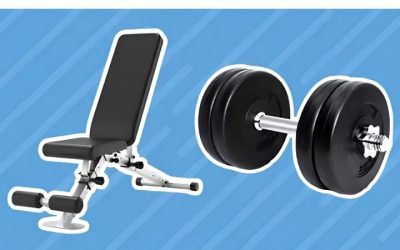
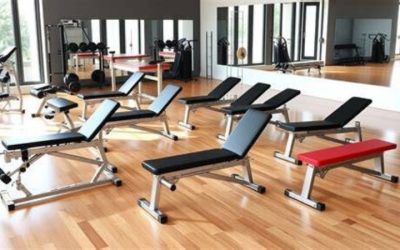
Best Low-Commitment Buy: YOLEO Adjustable Bench
Arriving 98% pre-assembled and rated to 827 lb under ASTM testing, this bench turns a pair of dumbbells into a full upper-body programme and folds against a wall between sessions. For renters it is the least disruptive purchase on the page.
Be clear-eyed about what it is not: without weights it does nothing, and dumbbell work is inherently louder than a cable stack if you set them down carelessly.
Frequently Asked Questions
Will my neighbors hear a weight stack machine?
Far less than free weights. The plates never leave the guide rods, so the only real noise is the bottom plate landing at the end of a set. Lower the weight under control and put a rubber pad beneath the stack and it becomes a soft thud rather than a clang.
How long does assembly actually take?
Budget four to seven hours for a multi-station machine with two people, and closer to 30 minutes for the folding bench. The time sink is cable routing, not bolting the frame together.
Can these machines be moved without dismantling everything?
Short distances on a smooth floor, yes, with furniture sliders and a second person. For a move between homes you will need to break it down to the main sections, which is why keeping the hardware bags and manual matters.
Do I need a mat underneath?
Yes, for two reasons: it protects the floor from frame feet digging into laminate or carpet, and it dampens vibration transfer into the structure. A 3/8-inch rubber mat is the usual choice.
Final Thoughts
For a shared-wall home, the JELENS H11 Home Gym is the easiest machine to live with — narrow, quiet, and capable enough for years of pressing and pulling. Choose the Mikolo Home Gym Station if you have a dedicated room and want the widest station coverage, and the YOLEO Adjustable Bench if you already own dumbbells and want the smallest possible commitment.
Write Your Review
No reviews yet. Be the first to share your experience!