Our Top Picks
 Yamaha Arius Series 88-Key Weighted Digital Piano KeyboardFull Size56 x 21.75 x 18 inchesCheck on Amazon
Best Digital Pianos for Intermediate Players: Choose by Feel, Space, and Setup
The best digital pianos for intermediate players are weighted 88-key models with a responsive hammer action, three-pedal support, and enough polyphony for layered playing; choose a portable console such as the Yamaha P-225 for limited space, or a furniture-style cabinet such as the Roland RP701 if you want a permanent home setup.
At this stage, the main question is not simply whether a piano has weighted keys. It is whether its action supports controlled repetition and expressive dynamics, whether its pedals behave naturally, and whether the whole instrument fits your room and playing habits. The comparison below focuses on those trade-offs rather than on sound counts alone.
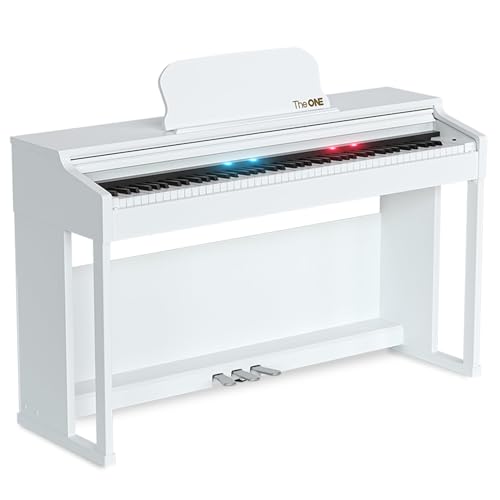
The ONE Digital Piano Keyboard with 88-Key Weighted Action for Beginner and Intermediate Players, Grand Piano Sound, Full Size Hammer Keyboard with Lighted-up Keys/Online Lessons/3-Pedal Unit
Chosen because it specifies Grand Piano Sound.
View on Amazon
Roland FP-10 Compact 88-Note Digital Piano
Picked as a relevant option in this category.
View on AmazonYamaha Arius Series 88-Key Weighted Digital Piano Keyboard, Full Size, GrandTouch-E Action, CFX Concert Grand Piano Sound, 3-Pedal Unit, Bench Included, Classic Upright Design in Rosewood YDP-166R
Chosen because it specifies Full Size and GrandTouch-E Action.
View on Amazon
MSTNE Digital Piano 88 Key Weighted Keyboard Hammer Action, Full Size Electric Piano Keyboard with Adjustable Stand,Powerful Functional Panel,Professional 3 Pedal Unit for Beginner Intermediate Player
Chosen because it specifies Full Size Electric Piano Keyboard with Adjustable Stand and Powerful Functional Panel.
View on AmazonQuick comparison
| Model | Key action and pedals | Polyphony | Sounds and connectivity | Best fit |
|---|---|---|---|---|
| Yamaha P-225 | GHC graded hammer action; optional three-pedal unit | 192 notes | 24 voices; USB audio/MIDI, Bluetooth audio | Portable setup or small room |
| Roland FP-30X | PHA-4 Standard with escapement and ivory-feel texture; optional three-pedal unit | 256 notes | 56 tones; USB audio/MIDI, Bluetooth audio and MIDI | Expressive practice with room to expand |
| Kawai ES120 | Responsive Hammer Compact action; optional three-pedal unit | 192 notes | 25 sounds; USB MIDI, Bluetooth audio and MIDI | Natural-feeling practice in a portable format |
| Roland RP701 | PHA-4 Standard; integrated three-pedal assembly | 256 notes | 324 tones; USB audio/MIDI, Bluetooth audio and MIDI | Permanent cabinet setup with lesson and app features |
Specifications can vary by market or revision, so check the current manufacturer listing before purchase. The models above are examples of distinct setup choices, not a ranking in which one action will suit every hand.
Which one fits your situation?
- Small apartment or shared room: Start with the Yamaha P-225. Its compact portable format is easier to place and move than a full cabinet. Add a stable stand and a separate three-pedal unit if you need a more piano-like practice setup.
- You want more expressive control: Compare the Roland FP-30X and Kawai ES120 in person if possible. Both offer hammer actions and support optional three-pedal setups; the feel of key weight and return speed is personal, so try repeated notes and soft playing, not just loud chords.
- You want the piano to stay in one place: The Roland RP701 bundles the instrument into a furniture-style cabinet with pedals. It avoids the visual and practical compromises of a portable keyboard on a folding stand.
- You record or use music software: Check the exact USB audio/MIDI and Bluetooth MIDI support you need. Bluetooth audio lets you play backing tracks through the piano; Bluetooth MIDI sends performance data to a compatible app. They are different functions.
- You play long pieces with layers: Favor 192-note or higher polyphony. This gives more room for sustained notes, damper pedal, and layered tones before notes are cut off. For ordinary solo piano practice, a lower figure may still be adequate, but large layers make the difference more useful.
What matters most as your playing develops
Key action: control matters more than the label
All four models use graded hammer actions, which generally feel heavier in the bass and lighter in the treble, like an acoustic piano. Differences emerge in repetition, key texture, and how much effort it takes to play quietly. The P-225’s GHC action keeps the instrument relatively compact. Roland’s PHA-4 Standard adds an escapement feature and textured key surfaces. Kawai’s Responsive Hammer Compact is another full-weighted option. None is a universal winner: a player working on repeated notes or delicate dynamics should try the actual action before deciding.
Also consider the stand. A weighted action on a wobbly X-stand can feel less secure during vigorous playing. For regular practice, use a firm stand or matching furniture stand and set the keyboard at a comfortable height.
Pedals: half-pedaling is a meaningful upgrade
A basic sustain switch can work for early practice, but it does not provide the same control as a proper damper pedal. Intermediate players benefit from a three-pedal unit, especially if they are learning repertoire that uses soft and sostenuto pedals or graded sustain. Confirm whether the pedals are included: portable models commonly sell the stand and three-pedal assembly separately, while a cabinet piano generally includes its pedal unit.
Polyphony and onboard sounds
Polyphony is the maximum number of notes a piano can sound at once, including notes still ringing after you release the keys. Sustain pedal, stereo samples, and layered sounds all use that capacity. For a developing player, 192 notes is a sensible target; 256 offers extra headroom, particularly for layers and sustained passages.
Sound-count totals are less revealing than piano tone and dynamics. A large library can be fun, but listen for a convincing main piano sound at soft, medium, and strong volumes. If you mostly practice classical or jazz, a handful of useful piano and electric-piano voices may matter more than hundreds of presets.
Connectivity: buy for the way you practice
USB MIDI connects the piano to notation, lesson, and recording software as performance data. USB audio can send the instrument’s sound to a computer without a separate audio interface, where supported. Bluetooth is convenient for playing lesson videos or backing tracks, but it can introduce latency; use a wired connection when tight timing matters. Check the model’s specific ports and wireless functions rather than assuming every Bluetooth-equipped piano supports MIDI.
Measure the room before choosing a cabinet
Portable digital pianos are commonly about 52–53 inches wide and 10–12 inches deep before adding a stand. A furniture-style cabinet may take roughly 54–58 inches of width and 15–18 inches of depth. These are planning ranges, not guaranteed dimensions: check the manufacturer’s measurements for the exact model and stand.
| Room or setup | Practical planning measurement | Why it matters |
|---|---|---|
| Keyboard footprint | Allow about 54–60 in wide and 24–30 in deep, including the player’s knees | The piano itself is shallower than the space needed to sit and play comfortably. |
| Clearance behind the bench | Keep about 30–36 in where possible | Allows the player to sit down and get up without shifting the instrument. |
| Bench height | Often about 18–20 in; adjust to the player | With relaxed shoulders, forearms should sit near keyboard height and elbows should not be forced upward. |
| Small-room example | A 10 × 12 ft room can accommodate a piano zone around 5 × 3 ft | Place it along a wall, then protect a clear route through the room rather than centering it. |
Measure doorways, stair turns, and the route from delivery point to room—not just the final spot. A portable piano is easier to separate from its stand for a move, but a cabinet model is bulkier and may require two people. Check the packaged weight and lifting guidance; moving a heavy cabinet alone can damage the instrument, floor, or a person’s back.
Final recommendation
For most intermediate players who need flexibility, compare the Yamaha P-225, Roland FP-30X, and Kawai ES120 based on key feel, pedal package, and the connections you will actually use. Choose the Roland RP701 if you want a stable, integrated furniture piece and expect the piano to remain in one room. In every case, verify dimensions, stand and pedal inclusions, and the action in person when possible. The right instrument is the one that supports your repertoire and fits your home without making daily practice harder.