Key takeaways
- For most CPAP users, careful hand-washing remains the simplest way to remove dirt and oils. A UV-C device may suit someone who wants a short, ozone-free cycle and has compatible parts that fit without crowding. An ozone cleaner is a more conditional choice: buy one…
Best CPAP Cleaners and Sanitizers: Choose by Cleaning Method
The best CPAP cleaner for most people is a sink-and-air-dry routine using mild, unscented soap; buy a machine only if its cleaning method is compatible with your equipment and you’re prepared for its ventilation and maintenance requirements. No cleaner replaces the regular washing and replacement schedule in your CPAP manufacturer’s instructions, and a device that advertises sanitizing should not be assumed to sterilize equipment or prevent illness.
First, know what “cleaning” means
CPAP care involves two different jobs. Washing with soap and water removes oils, dust, and other visible soil. Sanitizing devices use a method such as activated oxygen (ozone) or ultraviolet light and may reduce certain microorganisms under specified conditions, but they generally do not remove grime. If a mask or hose is dirty, wash it first according to its instructions.
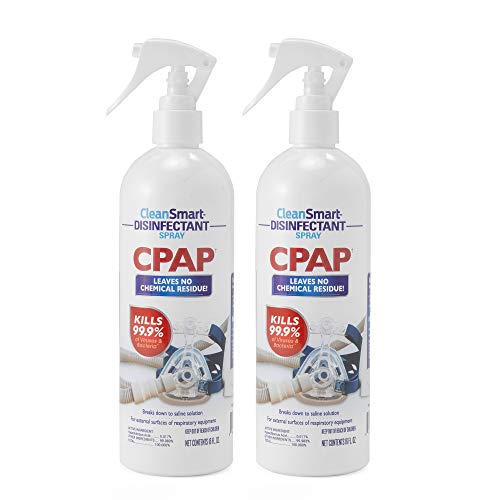
CleanSmart CPAP Disinfectant Spray for Face Mask and Hose, 16 oz (2 pack)
Included for 'Best CPAP Cleaners and Sanitizers' because the listing specifies 16 oz (2 pack), details this guide uses to compare options.
View on Amazon
Mars Wellness CPAP Cleaning Tablets – 96 Count – CPAP Cleaner for Masks, Tubing & Humidifier Chambers – CPAP Cleaning Supplies – 3 Month Supply – CPAP Mask Cleaner
Included for 'Best CPAP Cleaners and Sanitizers' because the listing specifies 96 Count and CPAP Cleaner for Masks, details this guide uses to compare options.
View on Amazon
CleanSmart CPAP Disinfectant Spray, TSA Travel Size, 2 oz (3 pack)
Included for 'Best CPAP Cleaners and Sanitizers' because the listing specifies TSA Travel Size and 2 oz (3 pack), details this guide uses to compare options.
View on Amazon
CPAP Mask & Hose Soap (Pack of 3 Bottles x 250mL) Green Tea Mint Scent
Included for 'Best CPAP Cleaners and Sanitizers' as a relevant option in this category; details come from the product listing.
View on AmazonThat distinction matters when comparing products: a fast device cycle is not necessarily a complete cleaning routine. The mask, tubing, water chamber, headgear, and filters may each have different care requirements. Some parts are not suitable for ozone or UV exposure; others may need hand-washing regardless.
Cleaning methods compared
| Method | Typical time and setup | Compatibility and cautions | Best fit |
|---|---|---|---|
| Hand-washing | About 5–10 minutes to wash; allow several hours for air-drying | Use the soap and water guidance for each part. Keep water out of machine electronics; do not use a dishwasher unless the manufacturer explicitly permits it. | Most users, especially when avoiding extra equipment or uncertain sanitizer claims |
| Activated-oxygen (ozone) cabinet or bag | Often roughly 20–60 minutes per cycle, plus any required aeration time | Confirm that the specific CPAP machine and every component are approved. Ozone can irritate the lungs and may degrade materials over time; some systems require ventilation or a waiting period before use. | People who want a contained cycle and can follow all safety and compatibility directions |
| UV-C chamber | Often roughly 5–30 minutes, depending on the model and load | UV light only reaches surfaces it can directly illuminate; shadows, folds, and tightly packed items can limit exposure. Check which parts are approved and whether the chamber fits them. | Users seeking a short, ozone-free device cycle for compatible parts |
| Heated or drying unit | Varies by device; drying can take longer than the cleaning cycle | Heat may be unsuitable for some plastics, cushions, or electronics. Drying alone does not remove soil or establish that equipment has been sanitized. | People who need help drying washed components, where the manufacturer allows the temperature |
Cycle times are broad planning estimates, not guarantees. Use the device’s instructions for the exact cycle, load size, and any wait time before handling or wearing equipment.
Which option fits your situation?
| Your situation | Practical choice | Check before buying |
|---|---|---|
| You want the simplest low-cost routine | Hand-wash approved parts with mild soap and let them air-dry | Whether your mask, hose, and water chamber have different wash schedules |
| You have limited counter space | A compact UV chamber or a washable routine that uses no appliance | Chamber dimensions; whether your mask fits without folding or stacking parts |
| You travel often | Hand-washing, or a portable device only if its power and size suit your trip | Voltage, charging or outlet needs, packed dimensions, and how the unit vents |
| You are considering ozone | Choose an ozone device only if the CPAP maker permits it for your exact equipment | Ventilation, post-cycle wait time, seal condition, and any warranty restrictions |
| You mainly need equipment to dry | A drying unit or a clean, well-ventilated air-drying area | Approved temperature and whether the device actually dries all parts evenly |
What to check before choosing a device
Compatibility means checking every part
“Works with CPAP” is not enough detail. Check the product’s current compatibility list against your machine model, mask, hose, humidifier chamber, and any heated tubing. A device may accommodate a mask but not the machine itself, or may require an adapter. Do not put a CPAP machine into a chamber unless both manufacturers specifically say that combination is safe.
Also check the mask maker’s care instructions. Silicone cushions, foam components, headgear, and filters can have different limits. Filters are generally replaced rather than washed unless their instructions explicitly say otherwise.
Measure the space and the load
Before buying a chamber, measure the longest part you plan to place inside it and compare that with the usable interior—not just the exterior dimensions. Allow about 2 inches (5 cm) of clearance on each side of a countertop unit for opening its lid and connecting any hose or power cord. A typical 10 × 12 ft bedroom can accommodate a small countertop device, but the practical question is whether it can sit near a suitable outlet without blocking a bedside path or air vent.
For a UV unit, avoid cramming parts together: arrange them as the manufacturer directs so surfaces are exposed to the light. For a bag-style ozone system, confirm that its seal closes fully around the load. A cycle that cannot accommodate your normal mask and tubing arrangement is unlikely to be convenient.
Account for ventilation and residue
Ozone has no safe “clean smell” that tells you a room is clear. Follow the device’s location, ventilation, and post-cycle waiting instructions; do not run it beside a sleeping person or use equipment early simply because a timer has stopped. If you notice an ozone odor or irritation, stop using the device, move to fresh air, and contact the manufacturer for guidance. People with respiratory sensitivities should ask their clinician before choosing an ozone method.
UV-C does not leave ozone residue when the device uses UV alone, but that does not make every UV product suitable for every CPAP part. Confirm the stated wavelength and approved use, and never look directly at an exposed UV source. Soap residue is a separate issue: rinse washable parts thoroughly and let them dry fully before reassembly.
Ongoing care and costs
Manual washing has the lowest equipment cost, though it takes regular attention. CPAP sanitizer devices commonly range from around $50–$300 or more, depending on chamber size and features. Budget for replacement filters, seals, bags, or other consumables if the model requires them. Check whether parts that contact the equipment are washable, how often seals need replacement, and whether the manufacturer supplies replacement components.
Whatever method you choose, inspect tubing and mask cushions for clouding, cracks, tackiness, or a persistent odor. Replace worn components on the schedule recommended by their manufacturers. A sanitizer does not restore damaged silicone, unclog a filter, or make a poorly maintained humidifier chamber safe.
Bottom line
For most CPAP users, careful hand-washing remains the simplest way to remove dirt and oils. A UV-C device may suit someone who wants a short, ozone-free cycle and has compatible parts that fit without crowding. An ozone cleaner is a more conditional choice: buy one only after confirming compatibility, ventilation, waiting-time, and warranty guidance for your exact equipment. In every case, let the CPAP and mask manufacturers’ care instructions take priority over a cleaner’s general claims.