Key takeaways
- Ankle circumference at the narrowest point above the ankle bone
- Calf circumference at the widest point
- Calf length from floor to just below the knee crease (for knee-high fit)
The best compression socks for men for most daily use are 15-20 mmHg graduated knee-highs with accurate calf-based sizing, while 20-30 mmHg is better for recovery, swelling, or long flights, and 8-15 mmHg works best for lightweight comfort during exercise.
Choosing the right pair comes down to matching compression level to your use case, then checking sizing method, fabric, and cushioning. A sock that is too tight at the top or too loose at the ankle will not provide true graduated support, no matter what the label says.
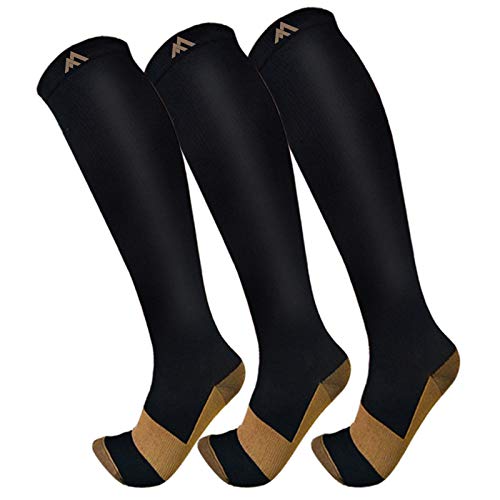
FuelMeFoot 3 Pack Compression Socks For Women Men Knee High Socks 15-20mmHg soccer socks fun copper ankle thick stockings women 10-13 gifts christmas accessories
Included for 'Best Compression Socks for Men' as a relevant option in this category; details come from the product listing.
View on Amazon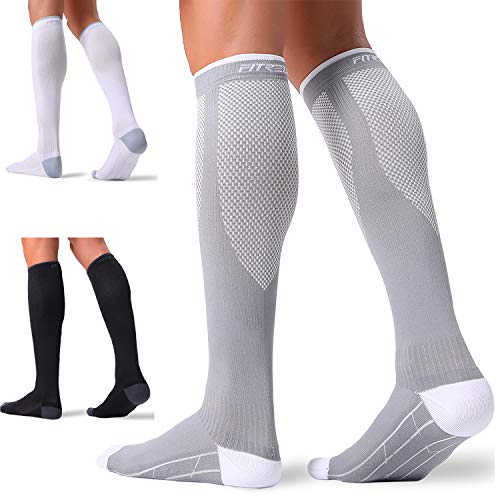
FITRELL 3 Pairs Compression Socks for Women and Men 20-30mmHg Circulation and Muscle Support Socks for Travel, Running, Nurse, Knee High, Medical Black+White+Grey L/XL
Included for 'Best Compression Socks for Men' because the listing specifies Running and Nurse, details this guide uses to compare options.
View on Amazon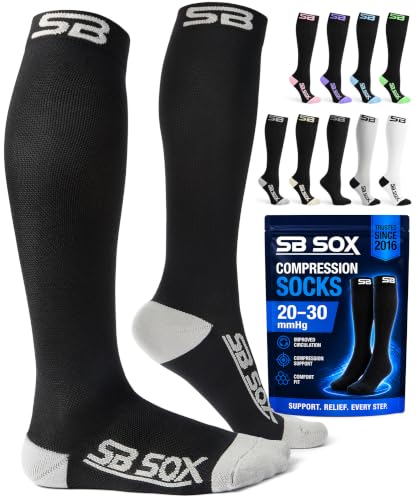
SB SOX Compression Socks for Men & Women, 20-30mmHg (Black/Gray, Large)
Included for 'Best Compression Socks for Men' because the listing specifies 20-30mmHg (Black/Gray and Large), details this guide uses to compare options.
View on Amazon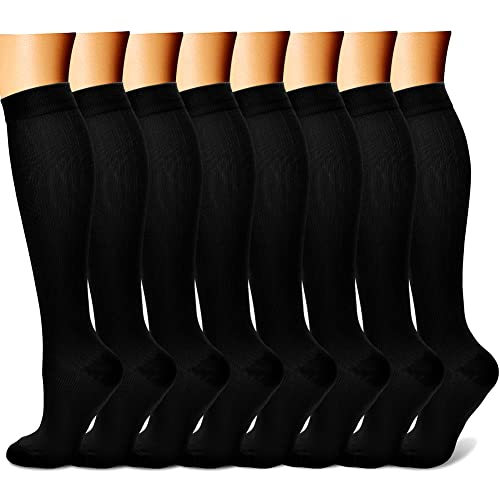
CHARMKING Compression Socks for Women & Men (8 Pairs) 15-20 mmHg Graduated Copper Support Calf Socks are Best for Pregnant, Nurses - Boost Performance, Circulation, Knee High Wide Calf(L/XL, Black)
Included for 'Best Compression Socks for Men' because the listing specifies Nurses and Boost Performance, details this guide uses to compare options.
View on AmazonCompression Levels Explained: What mmHg Actually Does
Graduated compression means pressure is highest at the ankle and decreases up the leg. This helps push blood back toward the heart and reduces pooling in the lower leg. For men, calf size and activity level matter more than shoe size alone.
| Compression Level | Pressure at Ankle | Best For | Feel and Fit Notes |
|---|---|---|---|
| Light (8-15 mmHg) | 8-15 mmHg | Daily comfort, light exercise, prevention during long standing | Feels like a snug dress sock; easy to put on, breathable for all-day wear |
| Moderate (15-20 mmHg) | 15-20 mmHg | Travel, office work, standing jobs, mild swelling | Noticeable support without restriction; most men can wear 8-10 hours comfortably |
| Firm (20-30 mmHg) | 20-30 mmHg | Recovery, running, frequent swelling, varicose veins | Tight to pull on; best with precise calf measurement; often recommended by clinicians |
| Extra Firm (30-40 mmHg) | 30-40 mmHg | Medical needs only | Requires sizing by calf and ankle circumference; not for general daily wear without guidance |
If you are new to compression, start with 15-20 mmHg. You get meaningful support for travel and work without the difficult on-off and heat buildup of 20-30 mmHg. Athletes who want faster post-run recovery or men with consistent ankle swelling at night typically benefit from stepping up to 20-30 mmHg for recovery periods of 2-4 hours, not all day.
How to Get the Right Size: Calf Circumference Matters Most
Many compression socks sold by shoe size alone slip at the ankle or cut into the calf. True graduated support depends on ankle and calf circumference, not just foot length. For men, this is a common failure point because calf size varies widely even within the same shoe size.
Measure in the morning before swelling builds:
- Ankle circumference at the narrowest point above the ankle bone
- Calf circumference at the widest point
- Calf length from floor to just below the knee crease (for knee-high fit)
Use this reference to check sizing accuracy when a brand lists real measurements:
| Size Label | Men’s Shoe Size | Ankle Circumference | Calf Circumference | Knee-High Length |
|---|---|---|---|---|
| S | 7 – 8.5 | 8 – 9 in (20-23 cm) | 12 – 14 in (30-36 cm) | 15 – 16.5 in (38-42 cm) |
| M | 8.5 – 10 | 9 – 10.5 in (23-27 cm) | 13.5 – 15.5 in (34-39 cm) | 16 – 17.5 in (41-44 cm) |
| L | 10.5 – 12 | 10 – 11.5 in (25-29 cm) | 15 – 17 in (38-43 cm) | 16.5 – 18 in (42-46 cm) |
| XL | 12 – 14 | 11 – 13 in (28-33 cm) | 16.5 – 19 in (42-48 cm) | 17 – 19 in (43-48 cm) |
Brands like CEP, Sockwell, Swiftwick, and Comrad typically publish both calf and ankle ranges, which makes for a more reliable fit. If your calf measures 17.5 inches but a brand’s L only goes to 16 inches, size up or choose a brand with wide-calf options rather than forcing a tight fit. A sock that leaves deep indentations after 30 minutes or rolls down at the top is the wrong size, not just “firm compression.”
Fabric and Construction Trade-Offs
Breathability, durability, and warmth depend on fiber blend and knit construction. Nylon and spandex create the compression; natural fibers add comfort but change performance.
| Material Blend | Breathability and Heat | Durability | Best Use Case |
|---|---|---|---|
| Nylon (60-75%) + Spandex (25-40%) | Low to medium; holds shape well, can feel warm | High; resists sagging, keeps compression after 50+ washes | Travel and office, where consistent pressure matters |
| Merino Wool Blend (30-50% merino + nylon/spandex) | High; regulates temperature, wicks moisture | Medium; requires gentle wash, pilling possible at heel | All-day wear, cooler offices, winter travel – Sockwell and similar wool blends |
| CoolMax / Polyester Blend + Nylon/Spandex | Very high; dries fast, stays cool | High; lightweight but thinner cushion | Running and gym training – CEP and Swiftwick use this for breathable performance knits |
| Cotton Blend (40-60% cotton + nylon/spandex) | Medium; soft but retains moisture | Low to medium; loses compression faster | Casual daily wear if you prioritize softness over long-term support |
For breathability, look for ventilated knit zones over the instep and behind the knee, not just fiber content. A tightly knit 75% nylon sock without mesh panels will trap heat even if it is marketed as “lightweight.” For hot work environments or summer travel, a synthetic performance blend with mesh ventilation outperforms a thick cotton compression sock.
Cushioning and Graduated Support: What Changes Comfort
Cushioning affects fit inside shoes more than compression itself. Graduated support determines whether you actually get circulation benefits.
- Zero-cushion / Ultralight: Thin profile fits inside dress shoes and low-volume running shoes. Best for office and travel where you do not want bulk. Usually $18-$35.
- Light cushion (footbed only): Adds padding under the heel and ball without changing compression zones. Good all-around choice for men who walk 6,000-10,000 steps at work.
- Full cushion: Padded throughout foot and shin. Warmer and tighter in snug shoes; better for hiking, long shifts on concrete, or recovery after standing all day. Usually needs 0.5 size larger shoe.
Check that compression is graduated, not uniform. True graduated socks list ankle-to-calf pressure drop, for example 20 mmHg at ankle tapering to 14-16 mmHg at calf. Uniform “tight socks” without a taper may feel supportive but do not improve return flow in the same way. Reinforced linked toe seams and a wide, non-constricting welt at the top also prevent numbness and chafing over 8+ hours.
Decision Matrix: Pick by Your Situation
Use your main activity to narrow level, fabric, and cushioning in one step:
| Your Situation | Recommended Level | Fabric and Cushioning | Fit Priority |
|---|---|---|---|
| Long flights or desk work with swelling by afternoon | 15-20 mmHg knee-high | Nylon/spandex or merino blend, light cushion | Calf-based sizing, graduated taper, easy on-off |
| Standing or walking all day (retail, healthcare, trades) | 15-20 mmHg, or 20-30 mmHg for last 3-4 hours | Merino or CoolMax blend, light to medium footbed cushion | Accurate calf fit, breathable instep, wide top band |
| Running, gym, or team sports recovery | 20-30 mmHg for recovery; 15-20 mmHg during activity | Polyester/CoolMax + spandex, zero or light cushion | Stay-up knit, compression holds when sweaty |
| Sensitive skin, overheating, or odor concerns | 15-20 mmHg | Merino wool blend, seamless toe | Moisture wicking, non-itch wool at 30-40% content |
| Large or athletic calves (17+ in) | 15-20 mmHg to start | Nylon/spandex with 4-way stretch, light cushion | Brand with XL wide-calf chart; avoid shoe-size-only sizing |
Options Worth Considering in 2026
Instead of one overall winner, these types consistently meet the criteria above for men:
- For travel and office: Look to Bombas and Comrad in 15-20 mmHg graduated knee-highs. They offer calf-specific sizing, light cushion, and nylon-based blends that keep shape during long sits. Usually $28-$50 per pair.
- For performance and breathability: CEP Progressive+ and Swiftwick Aspire lines use thin synthetic performance knits with ventilated panels and true graduated pressure. Best for workouts and warm conditions. Usually $40-$65.
- For warmth and all-day comfort: Sockwell Elevation and similar merino-blend graduated socks regulate temperature and reduce odor on long wear days. Usually $25-$45.
- For firm recovery support: Physix Gear Sport and SB SOX in 20-30 mmHg provide firmer compression with budget-friendly multipacks, but check calf measurements carefully as sizing can run narrow. Usually $15-$30 per pair in multipacks.
- For joint and calf support: Bauerfeind and 2XU offer sports-oriented graduated options with stronger calf containment and more structured knit, useful if you have a history of shin or Achilles irritation. Usually $45-$70.
For any brand, confirm the listing shows mmHg level, graduated design, and a size chart with ankle and calf numbers. If those three are missing, fit and pressure are guesses.
Care, Durability, and When to Replace
Compression socks lose pressure over time. Wash cold, gentle cycle, air dry, and avoid fabric softener, which degrades spandex. Even with care, most pairs hold rated compression for about 3-6 months of regular use (3-4 wears per week). Replace when the sock slides down without elastic resistance or the heel pocket stretches past your heel, because the graduated pressure is no longer accurate. Having 3 pairs in rotation extends life and lets fibers recover between wears.
Avoid folding the top band down to shorten a knee-high; this creates a tourniquet effect at mid-calf and breaks the graduated profile. If knee-highs are consistently too long, choose a shorter calf length option rather than bunching fabric at the ankle.
Quick Fit Check Before You Keep Them
Put them on in the morning, walk 10 minutes, then sit 30 minutes. The ankle should feel snug but not tingling, the top band should not dig, and the foot should not be compressed over the toes. If you see pitting marks that last more than 15 minutes after removal or feel numbness, go down one compression level or re-measure for a larger calf size.