Key takeaways
- Capacity: Match the unit to the room’s size and moisture level. Flood recovery, unfinished basements, and highly humid spaces generally need substantially more capacity than a finished bedroom.
- Drainage: A built-in pump and hose can send water to a sink or floor drain, reducing hands-on maintenance. Gravity-drain models work well when the drain sits lower than the appliance.
- Controls: Humidistats, automatic humidity control, constant mode, timers, and app connectivity make it easier to maintain a target moisture level instead of guessing when to run the machine.
- Noise and placement: Commercial equipment is often louder and bulkier. For living areas, look for quiet operation, sensible fan settings, and casters or handles that make repositioning manageable.
- Protection features: Auto-defrost helps in cool basements, while auto-shutoff prevents overflow when the tank fills. Continuous drainage is especially useful during long unattended runs.
What's inside
Best Commercial Dehumidifier (2026)
Excess moisture is more than an annoyance: it can leave basements smelling stale, encourage mold, warp wood furniture, damage stored belongings, and make a room feel clammy even when the temperature is comfortable. The challenge is choosing a unit with enough real-world capacity without ending up with excessive noise, constant bucket emptying, or a machine designed for restoration work rather than everyday home use.
This guide compares heavy-duty commercial models with larger-room home dehumidifiers, focusing on moisture-removal capacity, drainage, sound, controls, portability, and practical fit. The best choice depends on whether you are drying a flooded area, managing a damp basement, or simply making a bedroom, bathroom, or storage room more comfortable.
As an Amazon Associate we earn from qualifying purchases.


How to Choose a Commercial Dehumidifier (2026)
- Capacity: Match the unit to the room’s size and moisture level. Flood recovery, unfinished basements, and highly humid spaces generally need substantially more capacity than a finished bedroom.
- Drainage: A built-in pump and hose can send water to a sink or floor drain, reducing hands-on maintenance. Gravity-drain models work well when the drain sits lower than the appliance.
- Controls: Humidistats, automatic humidity control, constant mode, timers, and app connectivity make it easier to maintain a target moisture level instead of guessing when to run the machine.
- Noise and placement: Commercial equipment is often louder and bulkier. For living areas, look for quiet operation, sensible fan settings, and casters or handles that make repositioning manageable.
- Protection features: Auto-defrost helps in cool basements, while auto-shutoff prevents overflow when the tank fills. Continuous drainage is especially useful during long unattended runs.
The Best Commercial Dehumidifiers (2026) Reviewed
200-Pint Commercial Dehumidifier with Pump
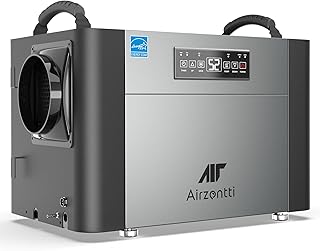
This heavy-duty 200-pint unit is aimed at serious moisture problems in basements, warehouses, and areas recovering from water damage. Its included pump and drain hose make continuous operation more practical, while auto-defrost is useful in cooler utility spaces. It is a strong choice when drying performance matters more than compact size or living-room quiet.
260-Pint Commercial Dehumidifier with Pump
The 260-pint commercial model is the most aggressive option in this group for large, persistently wet spaces and restoration work. The pump supports hands-off drainage, and its commercial-grade construction is better suited to demanding jobs than to occasional bedroom use. Buyers should plan a dedicated location with adequate airflow and accept that this level of capacity usually comes with a larger footprint.
DREO 110-Pint Smart Dehumidifier 711S
DREO’s 110-pint 711S offers a useful middle ground between restoration equipment and a conventional home appliance. It is designed for areas up to 4,500 square feet and includes auto, comfort, and constant modes, making it flexible for basements, bathrooms, and large open rooms. Smart controls and a drain hose add convenience, although the unit still needs a suitable outlet and enough clearance around its air inlets.
DREO Energy Star 2025 Smart Dehumidifier
This 73-pint DREO is a more home-friendly pick for a large basement or open-plan area up to 2,000 square feet. Its 41dB quiet rating, 1.85-gallon tank, automatic humidity control, and included hose make it easier to live with than many industrial machines. Choose it for ongoing comfort management rather than rapid drying after a major leak.
Midea Cube 20-Pint Dehumidifier
The Midea Cube is compact but thoughtfully designed for ordinary basement and home use, with coverage up to 1,500 square feet. Its expandable water tank, hose option, Wi-Fi control, and Alexa compatibility are particularly convenient when the appliance sits in a tucked-away corner. It is not a substitute for a 200-pint restoration unit, but it is a sensible choice for moderate dampness and routine humidity control.
Frequently Asked Questions
What size commercial dehumidifier do I need?
Start with the room’s square footage, then account for humidity, temperature, ventilation, and whether there has been flooding. A damp finished basement may need a large home model, while standing water or wet building materials calls for restoration-grade equipment and professional assessment.
Is a pump better than a drain hose?
A pump is better when the water must travel upward to reach a sink, laundry drain, or other elevated outlet. A simple hose is sufficient when gravity can carry water continuously to a nearby floor drain.
Can I leave a dehumidifier running overnight?
Many units are designed for extended operation, especially when connected to continuous drainage. Before leaving one unattended, confirm that the hose is secure, the appliance has clearance, the filter is clean, and the electrical connection is appropriate for the location.
What humidity level is best for a basement?
A setting around 45% to 55% relative humidity is a practical starting range for most homes. Lower settings may be useful during drying, but excessively dry air can be uncomfortable and may waste energy.
Final Thoughts
For major moisture problems, the 200-pint and 260-pint commercial units offer the most drying power and drainage support. For a more comfortable long-term home setup, the DREO 110-Pint 711S is the strongest large-space compromise, while the quieter DREO 73-pint model is a better fit for everyday basement comfort.