Key takeaways
- CFM Rating: This is the single most important number. Fans pushing 7,000+ CFM will transform a large room, while anything below 3,000 CFM is better suited for small bedrooms. Higher isn’t always better if the fan is oversized for your space—it can create uncomfortable downdrafts.
- Blade Span and Count: Larger blade spans (60–72 inches) cover more area efficiently, which means you can run the fan at a lower speed and still get strong circulation. More blades add visual weight but don’t necessarily push more air; blade pitch angle matters more than blade count.
- Motor Type: DC motors are the current gold standard. They consume up to 70% less energy than traditional AC motors, run whisper-quiet, and typically offer more speed settings (six is common now). If silence matters—say, for a bedroom—DC is non-negotiable.
- Lighting and Color Temperature: Many modern fans include integrated LED kits with selectable color temperatures (often 2700K–6500K). Dimmable options add real flexibility. However, a no-light fan can actually move more air since there’s no fixture interrupting the airflow path above the blades.
- Reversible Motor Direction: A reversible motor lets you push air down in summer and pull warm air back down from the ceiling in winter. It’s a feature that extends the fan’s usefulness year-round and costs nothing extra to operate.
What's inside
Walking into a stuffy room on a hot afternoon and realizing your ceiling fan is barely stirring the air is a uniquely frustrating experience. Many shoppers grab the first fan that looks right, only to find it moves about as much air as a polite suggestion. The real issue isn’t aesthetics—it’s airflow performance, measured in cubic feet per minute (CFM), and understanding which specs actually translate to a noticeable breeze downstairs and across the room.
This guide cuts through the noise. We evaluated six popular ceiling fans currently available on Amazon, focusing on raw air-moving ability, motor quality, noise levels, and practical features like dimmable lighting and remote control convenience. Whether you’re cooling a sprawling living room, a covered patio, or a garage workshop, the picks below are ranked for people who want to feel the difference, not just see it on a spec sheet.
As an Amazon Associate we earn from qualifying purchases.


How to Choose a Ceiling Fan To Move Air in 2026
- CFM Rating: This is the single most important number. Fans pushing 7,000+ CFM will transform a large room, while anything below 3,000 CFM is better suited for small bedrooms. Higher isn’t always better if the fan is oversized for your space—it can create uncomfortable downdrafts.
- Blade Span and Count: Larger blade spans (60–72 inches) cover more area efficiently, which means you can run the fan at a lower speed and still get strong circulation. More blades add visual weight but don’t necessarily push more air; blade pitch angle matters more than blade count.
- Motor Type: DC motors are the current gold standard. They consume up to 70% less energy than traditional AC motors, run whisper-quiet, and typically offer more speed settings (six is common now). If silence matters—say, for a bedroom—DC is non-negotiable.
- Lighting and Color Temperature: Many modern fans include integrated LED kits with selectable color temperatures (often 2700K–6500K). Dimmable options add real flexibility. However, a no-light fan can actually move more air since there’s no fixture interrupting the airflow path above the blades.
- Reversible Motor Direction: A reversible motor lets you push air down in summer and pull warm air back down from the ceiling in winter. It’s a feature that extends the fan’s usefulness year-round and costs nothing extra to operate.
The Best Ceiling Fans To Move Air in 2026 Reviewed
60-Inch High-Airflow DC Fan with Light
With over 7,400 CFM of claimed airflow, this 60-inch fan punches well above its size class. The three-blade design keeps the look streamlined while the DC motor handles six speeds without any noticeable hum. It’s an excellent all-rounder for living rooms or patios where you want both serious air movement and functional lighting with tunable CCT options.
Minislak 72-Inch No-Light Industrial Fan
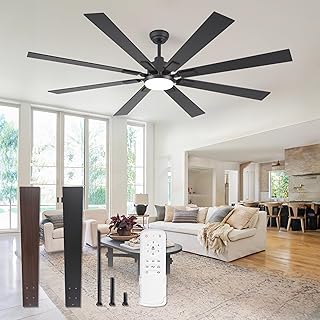
When raw airflow is the entire point, stripping away the light fixture is a smart move. The eight aluminum blades on this 72-inch beast are built for garages, workshops, and large patios where you need industrial-level circulation. It’s not the prettiest fan on this list, but it’s arguably the most effective at moving air across wide-open spaces without wasted extras.
52-Inch Matte Black and Gold Ceiling Fan
This three-blade design nails the visual appeal factor, pairing matte black with gold accents for a look that reads far more expensive than its price point. At 52 inches, it’s ideally sized for bedrooms and standard living rooms. The included light kit and remote add genuine daily convenience, though the airflow won’t match the larger 60-plus-inch options in this roundup.
OPONL 52-Inch Modern Fan with Dimmable Light
Where this fan stands out is lighting control—six selectable CCT settings paired with dimming give you genuine ambiance options, from warm bedroom glow to bright task lighting. The noiseless DC motor and reversible function make it a solid bedroom pick. Airflow is respectable for the 52-inch size, though larger rooms will benefit from stepping up to the 60 or 72-inch options above.
ZMISHIBO 72-Inch Fan with Lights for Patio
This is the fan to beat for covered outdoor spaces. At 72 inches with a powerful DC motor, it moves serious air while the damp-rated construction handles humidity and occasional moisture. The 24W LED with three CCT levels provides enough light for evening gatherings, and the dual-finish blades let you match different décor styles without buying a separate fan. CFM output rivals the best in this roundup.
Frequently Asked Questions
How many CFM do I actually need for my room?
A general rule: aim for at least 1 CFM per square foot of room area for a comfortable baseline. Living rooms and patios benefit from 2–3 CFM per square foot for genuinely strong airflow. Bedrooms can get by with the lower end. For a 200-square-foot living room, look for a fan delivering at least 400 CFM, though 600+ CFM is where you really start to feel it.
Are DC motor fans worth the extra cost over AC?
For most people, absolutely. DC motors run 30–50% quieter, use significantly less electricity, and often include more speed settings. The energy savings alone offset the price premium within a few years, and the near-silent operation is a luxury you won’t want to give up once you’ve experienced it—especially in a bedroom.
Does fan size matter more than motor power?
Both matter, but blade span is harder to compensate for. A powerful motor on undersized blades still can’t move as much air as a well-designed 72-inch fan. That said, a cheap motor on large blades will wobble, rattle, and die early. Prioritize getting the right span for your room, then ensure the motor is DC and rated for quiet operation at higher speeds.
Can I use a ceiling fan outdoors?
Only if it’s specifically rated for it. Look for “damp-rated” for covered patios and porches, or “wet-rated” for fully exposed locations. Standard indoor fans aren’t sealed against moisture and can develop corrosion or electrical issues. Fans like the Minislak 72-inch or the ZMISHIBO 72-inch are designed with outdoor use in mind, making them safer bets for patio installations.
Final Thoughts
If you want the best balance of airflow, lighting, and everyday usability, the 60-Inch High-Airflow DC Fan is the standout pick for most rooms. For anyone with a large patio or open floor plan, the ZMISHIBO 72-Inch delivers the kind of powerful, quiet circulation that turns a sweltering outdoor space into a genuinely comfortable gathering spot. And if you simply want to move air with zero frills, the Minislak 72-Inch No-Light does exactly one job—and does it exceptionally well.