Key takeaways
- Pole length: Match the extension range to your tallest room. Standard 8-foot ceilings need at least 36 inches of reach, while 10-to-12-foot ceilings call for poles that extend past 60 inches.
- Head design: A bendable or U-shaped microfiber head grips blade surfaces on both sides simultaneously, cutting cleaning time roughly in half compared to flat brush heads.
- Total weight: Anything under two pounds with the pole fully extended is manageable for most people. Heavier setups cause arm fatigue fast, especially during whole-house cleanings.
- Washability: Look for microfiber that survives 200 or more machine-wash cycles without losing its dust-gripping texture. Removable heads make laundering far more convenient.
- Versatility: A good duster handles more than fans. Detachable heads that clean blinds, crown molding, and bookshelf tops stretch your investment across multiple household tasks.
What's inside
Most ceiling fan dusters on the market look nearly identical online, which makes picking the right one surprisingly frustrating. Buyers end up with poles that are too short for vaulted ceilings, heads that can’t grip thick fan blades, or microfiber that sheds after two uses. The wrong choice means climbing a ladder anyway, which defeats the whole point.
This guide cuts through the noise by focusing on six well-reviewed options that differ in reach, weight, and cleaning versatility. Whether you’re maintaining a single-story ranch or tackling a two-story foyer, the picks below reflect real-world durability, ergonomic design, and how well each tool handles awkward angles without a ladder.
As an Amazon Associate we earn from qualifying purchases.




How to Choose a Ceiling Fan Duster (2026)
- Pole length: Match the extension range to your tallest room. Standard 8-foot ceilings need at least 36 inches of reach, while 10-to-12-foot ceilings call for poles that extend past 60 inches.
- Head design: A bendable or U-shaped microfiber head grips blade surfaces on both sides simultaneously, cutting cleaning time roughly in half compared to flat brush heads.
- Total weight: Anything under two pounds with the pole fully extended is manageable for most people. Heavier setups cause arm fatigue fast, especially during whole-house cleanings.
- Washability: Look for microfiber that survives 200 or more machine-wash cycles without losing its dust-gripping texture. Removable heads make laundering far more convenient.
- Versatility: A good duster handles more than fans. Detachable heads that clean blinds, crown molding, and bookshelf tops stretch your investment across multiple household tasks.
The Best Ceiling Fan Dusters (2026) Reviewed
DRQ Ceiling Fan Cleaner Duster
With an extension range of 13 to 48 inches and a removable microfiber head, this budget-friendly option punches above its price point. The blade-hugging shape grips surfaces cleanly, though the shorter maximum reach means it suits standard-height rooms best rather than cathedral ceilings.
Eyliden 68-Inch Adjustable Fan Duster
At just 0.75 pounds, this is the duster to reach for when your arms need a break. The 360-degree dual-sided microfiber head locks onto blade tops without slipping, and the 68-inch pole comfortably clears 10-foot ceilings. Its lightweight build also makes it a strong choice for cleaning blinds and tall shelving.
Storystore Ceiling Fan Cleaner Duster
The Storystore hits a sweet spot between reach and price, extending up to 50 inches with a 4.2-foot pole. The microfiber brush head handles cobwebs along with flat fan blades, giving it more flexibility in rooms with textured ceilings or decorative light fixtures that collect dust in hard-to-reach nooks.
SetSail Extra-Long Bendable Duster
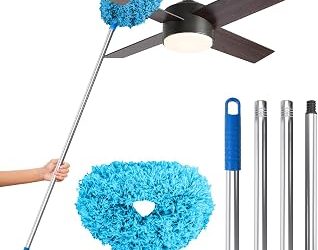
Stretching to a full 100 inches, this SetSail model was built for great rooms and vaulted spaces where shorter dusters fall short. The bendable microfiber head wraps around blades at whatever angle you need, and the washable material holds up well after repeated machine cycles.
20-Foot High Ceiling Duster Kit
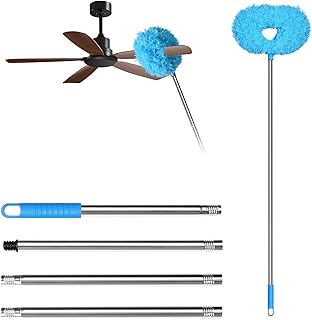
This isn’t a single duster — it’s a complete cleaning system with a heavy-duty extension pole reaching up to 12 feet, plus multiple interchangeable heads for fans, cobwebs, and windows. If you own a home with dramatic ceiling heights or a mix of surfaces, this kit eliminates the need for multiple separate tools.
Frequently Asked Questions
How often should you dust ceiling fans?
Aim for once every two weeks during peak usage months and monthly during lighter seasons. Fans that run daily during summer pull in dust faster, which means greasy buildup on blades becomes visible much sooner than you’d expect.
Can microfiber duster heads go in the washing machine?
Most removable microfiber heads are machine-washable on a gentle cycle with mild detergent. Skip the fabric softener because it coats the fibers and reduces their natural ability to trap dust electrostatically.
Do I need a ladder with an extension-pole duster?
For ceilings up to 12 feet, a quality extension duster eliminates ladders entirely. Beyond that height, even the longest poles on this list may not provide enough leverage, so a sturdy step stool becomes the safer option.
What is the difference between a feather duster and a microfiber duster?
Feather dusters mostly redistribute dust into the air, while microfiber dusters use positively charged fibers that attract and lock particles in place. Microfiber consistently provides a deeper clean with less airborne residue.
Final Thoughts
For most households, the Eyliden 68-inch duster delivers the best balance of lightweight handling, reach, and value. Homeowners with truly vaulted ceilings should lean toward the SetSail 100-inch model for its superior extension, while budget shoppers won’t regret starting with the reliable DRQ. Any of these three will keep your fan blades — and the air you breathe — noticeably cleaner.