Our Top Picks
 Yamaha RX300A 5.2-Channel Home Theater AV Receiver with12.5 x 17.1 x 6.1 inches16.8 poundsDolbyCheck on Amazon
 Onkyo TX–NR5100 7.2-Channel 8K Smart AV Receiver12.9 x 17.13 x 6.3 inches18.5 poundsWAVCheck on Amazon
The receiver is the quiet middleman of a home theater: every HDMI cable from your console, streamer, and disc player funnels through it, and every speaker wire fans out from it. Choose wrong and you end up with a soundbar-sized hole where surround sound should be, or a box that cannot pass a 4K signal at the refresh rate your gaming console expects. A budget of under 500 dollars covers a surprisingly wide range, from name-brand 5.2-channel units with modern HDMI to power-heavy amplifiers sold mostly on wattage claims.
This list is written for someone building or upgrading a living-room system in 2026: a TV that supports 4K at 120 frames per second, a console or two, and a speaker set that may or may not already be in a closet. The priority is HDMI capability, channel count, and honest labeling. Some listings below are true home theater receivers, and a couple lean toward karaoke or party amplification, so the notes spell out where each fits and where it does not.
Quick Picks
Yamaha RX300A 5.2-Channel Home Theater AV Receiver with Dolby Atmos, 4K120/8K HDMI and Bluetooth Multipoint (Black)
One of the consumer electronics options compared in this guide.
View on Amazon
Denon AVR-S570BT 5.2 Channel AV Receiver - 8K Ultra HD Audio & Video | Enhanced Gaming Experience, Wireless Streaming via Built-In Bluetooth, (4) 8K HDMI Inputs, Supports eARC, HD Setup Assistant
One of the consumer electronics options compared in this guide.
View on AmazonOnkyo TX–NR5100 7.2-Channel 8K Smart AV Receiver - Black
One of the consumer electronics options compared in this guide.
View on Amazon
Pyle 5.2 Channel Hi-Fi Home Theater Receiver - 2000W MAX Wireless BT Surround Sound Stereo Amplifier System with 4k Ultra HD Support, MP3/USB/DAC, Ideal for Immersive Home Audio Experience
One of the consumer electronics options compared in this guide.
View on Amazon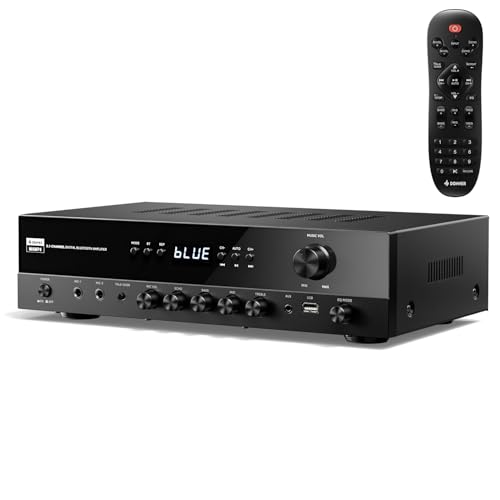
Donner Stereo Receivers, 5.1 Channel Audio Amplifier with Bluetooth 5.3, Optical/Coaxial, USB, FM, 2 Mic-in, Echo, RCA, AC-3 Input for Home, Karaoke, Theater Speakers, 60W/4R & 25W×3 RMS, MAMP4
One of the consumer electronics options compared in this guide.
View on Amazon
Pyle 9.1 Channel AV Receiver | 3000 Watts Peak Power, Audio Amplifier with Subwoofer Output, HD 2.1, Bluetooth Streaming | Surround Sound System for TV with Center 2, Extra Surrounds
One of the consumer electronics options compared in this guide.
View on Amazon
Sony STRDH590 5.2 Channel Surround Sound Home Theater Receiver: 4K HDR AV Receiver with Bluetooth,Black
One of the consumer electronics options compared in this guide.
View on Amazon| Product | Best for | Key spec from the title |
|---|---|---|
| Yamaha RX300A | Console gamers wanting Atmos | 5.2-channel, Dolby Atmos, 4K120/8K HDMI |
| Denon AVR-S570BT | Gaming-focused 8K setups | 5.2-channel, 8K Ultra HD, four 8K HDMI inputs |
| Onkyo TX-NR5100 | Larger rooms needing more channels | 7.2-channel, 8K, smart features |
| Pyle 5.2 Hi-Fi Receiver | Casual music and TV on a tight budget | 5.2-channel, Bluetooth, 4K support, USB and DAC |
| Donner 5.1 Receiver | Party and karaoke rooms | 5.1 channel, Bluetooth 5.3, 2 mic inputs, AC-3 |
| Pyle 9.1 Channel Receiver | Maximum channel count on paper | 9.1 channel, subwoofer output, Bluetooth |
| Sony STR-DH590 | Straightforward 4K HDR home theater | 5.2-channel, 4K HDR, Bluetooth |
How to Choose
Start with HDMI, not wattage
If you own a current console or a high-refresh gaming TV, look for HDMI 2.1 wording such as 4K120 or 8K pass-through. A receiver without it will cap your video quality, even if the amplifier sounds excellent. Count your sources, too: a console, a streaming box, a disc player, and a cable box already need four inputs. Also check that one HDMI output supports ARC or eARC, which sends TV app audio back to the receiver so you need only one remote for volume.
Channel count and speaker layout
A 5.2-channel receiver drives five speakers and two subwoofer outputs, which suits most living rooms. A 7.2-channel model adds rear or height speakers for a larger or more immersive room. Dolby Atmos support in the title means the receiver can decode height audio, though you still need speakers to take advantage of it. If you only own a pair of bookshelf speakers, a true stereo receiver would be simpler, but for a surround setup, make sure the channel count matches the speakers you plan to buy within a year.
Treat peak-wattage claims with caution
Figures like 2000W or 3000W peak power are usually theoretical maximums, not continuous output per channel. Name-brand receivers typically list lower numbers measured under stricter conditions. When comparing, look for continuous output into 8 ohms and the frequency range it was measured over. If the listing never states those details and only shouts total wattage, assume the number is for marketing and weigh the HDMI and decoding features instead.
Know where budget models cut corners
Low-cost receivers often skip room-correction microphones, drop the number of HDMI inputs, or rely on analog-only paths with no HDMI at all. Streaming services, multiroom features, and phono inputs are separate checkboxes. Bluetooth is common, but check whether it is a modern version or multipoint, which allows two phones to pair at once. Finally, confirm your speaker impedance: most receivers handle 6 to 8 ohm speakers, but very low-impedance speakers can strain budget amplifiers.
The 7 Best Options
Yamaha RX300A
This 5.2-channel home theater receiver lists Dolby Atmos, 4K120 and 8K HDMI, and Bluetooth Multipoint. It is the most gaming-ready combination in the group when judged on its title alone. In practice that means a living room with a modern TV and a console can run lossless-looking video paths without a dedicated gaming workaround. A buyer with a five-speaker kit and a subwoofer gets a tidy, current-generation hub, and the multipoint Bluetooth wording hints at easy switching between two phones during a party.
- Strength: 4K120 and 8K HDMI wording matches modern console and TV features.
- Strength: Dolby Atmos support leaves room to add height speakers later.
- Trade-off: a 5.2-channel layout limits how many speakers you can drive.
Pass on it if you already own a seven-speaker layout and want to use all of it.
Denon AVR-S570BT
Denon markets this 5.2-channel unit around 8K Ultra HD audio and video, an enhanced gaming experience, built-in Bluetooth, and four 8K HDMI inputs listed in the title. Because the title stresses gaming and 8K inputs, it reads like a receiver designed for people with several HDMI sources plugged in at once. Anyone upgrading from an older Denon or from a soundbar will appreciate having a spare input for a future streaming box, which avoids swapping cables behind a media cabinet.
- Strength: four 8K HDMI inputs cover a console, streamer, disc player, and extra source.
- Strength: gaming-oriented features and wireless streaming are stated up front.
- Trade-off: the title does not mention Dolby Atmos, so verify decoding if height speakers matter.
Look elsewhere if immersive height audio is a requirement.
Onkyo TX-NR5100
The Onkyo steps up to 7.2 channels with 8K support and smart receiver features, making it the larger-room option among the true AV receivers. The 7.2-channel layout is the main reason to consider it: two extra amplifier channels give you the option of back surround speakers in a deeper room, or a second zone of music if the manual supports it. Because the listing says little else, plan to read the full specifications and the number of HDMI ports first.
- Strength: 7.2 channels allow rear surrounds for bigger spaces.
- Strength: 8K labeling signals forward-looking video handling.
- Trade-off: the short title lists little else, so check inputs and decoding formats before purchase.
Skip it if your room only needs a five-speaker layout and you prefer simpler setup.
Pyle 5.2 Channel Hi-Fi Home Theater Receiver
Pyle lists a 2000W max rating, wireless Bluetooth, 4K Ultra HD support, and MP3, USB, and DAC inputs on a 5.2-channel amplifier. It leans toward general music and TV use. It fits a spare room, garage, or workshop where the goal is wired speakers plus Bluetooth music from a phone, not a polished calibration routine. A secondhand pair of floor-standing speakers and this receiver could become a very functional background-music rig for a modest space.
- Strength: it gathers many input types, including USB and DAC, in one chassis.
- Strength: Bluetooth makes it easy to stream from a phone.
- Trade-off: the 2000W MAX figure is a peak claim, not a continuous rating.
Pass on it if you need confirmed HDMI 2.1 features for gaming.
Donner 5.1 Channel Audio Amplifier Receiver
Donner’s listing mixes a 5.1-channel amplifier with Bluetooth 5.3, optical and coaxial inputs, USB, FM, two microphone inputs, echo, RCA, and AC-3 input. The mic inputs signal karaoke and party use. Its identity is closer to a party amplifier that happens to offer 5.1 channels, and the optical and coaxial digital inputs mean a TV or disc player can still feed it sound. Treat it as an audio-only hub: the picture needs to reach the TV by a separate path, which complicates cable routing.
- Strength: Bluetooth 5.3 and a wide mix of inputs are stated clearly.
- Strength: two mic inputs with echo suit karaoke nights.
- Trade-off: the title mentions no HDMI, so it is not a hub for modern video sources.
Skip it if you want to connect a console and TV through HDMI.
Pyle 9.1 Channel AV Receiver
This Pyle model advertises 9.1 channels, 3000 watts peak power, a subwoofer output, HD 2.1, and Bluetooth streaming for a surround setup. The channel count appeals to anyone who wants to experiment with a large speaker array in a garage theater or basement. Yet nine channels with a single advertised peak figure means each speaker may get far less than the headline implies, so keep speaker sensitivity in mind and expect modest output when every channel is working.
- Strength: the highest channel count in the group on paper.
- Strength: subwoofer output and Bluetooth cover the basics of a theater.
- Trade-off: a peak-watt claim of this size is not a continuous power rating, so manage expectations.
Pass on it if you want an established brand’s decoding and calibration features.
Sony STR-DH590
Sony’s 5.2-channel surround receiver lists 4K HDR and Bluetooth, a straightforward package for a first home theater. A buyer replacing an aging receiver with a standard 4K HDR TV and a streaming stick gets a fuss-free upgrade, and the Sony name suggests the remote and menus follow familiar conventions. It is a sensible fit for a bedroom or apartment where the system gets used for movies, sports, and casual music.
- Strength: 4K HDR video support is stated clearly.
- Strength: a familiar brand with simple, no-nonsense positioning.
- Trade-off: the title does not claim 4K120 or 8K, so it suits standard 4K sources more than top-end gaming.
Look elsewhere if you own a console that targets 120 frames per second.
Which One Fits Your Situation
A first surround system with a new console
The Yamaha RX300A matches the 4K120 requirement and adds Atmos for a future upgrade, so it is the safest pick for that buyer.
A big open room with rear speakers
The Onkyo TX-NR5100 offers 7.2 channels, which gives enough outputs for rear surrounds without moving into a different price tier.
A basement bar with karaoke night
The Donner 5.1 receiver has two microphone inputs and echo, and the many inputs let you connect a laptop, a phone, and a TV audio output.
A simple living room with a standard 4K TV
The Sony STR-DH590 keeps things plain: 5.2 channels, 4K HDR, and Bluetooth, with nothing else to configure.
Common Mistakes
- Choosing a receiver by peak wattage instead of by HDMI version and decoding formats.
- Buying more channels than the room can fit speakers for.
- Forgetting to check whether the HDMI output supports ARC for TV audio.
- Mixing up a stereo or karaoke amplifier with a true AV receiver that switches video.
- Skipping speaker-impedance checks, then running low-impedance speakers on a budget amplifier.
Related guides
- Indoor Electric Heaters For Large Rooms
- Infrared Heaters For 1000 Square Feet
- Home Theater Projector Under $500
Frequently Asked Questions
Do I need 8K support if my TV is 4K?
Not for the picture, but 8K-rated HDMI inputs usually come with newer chips that handle 4K at 120 frames per second. Treat 8K as a sign of a modern HDMI board, not a reason by itself.
What does 5.2 mean?
It means five main speaker channels plus two subwoofer outputs. A 7.2 system adds two more speaker channels, usually for rear surrounds.
Is Dolby Atmos worth it at this level?
It is worthwhile if you plan to add height or upward-firing speakers. Without them, a receiver with Atmos decoding still works fine as a conventional surround unit.
Can I use a stereo receiver instead?
You can for music with two speakers, but a stereo receiver does not switch HDMI video or decode surround formats. Pick an AV receiver if the TV is the center of the system.
More from Amazon
Programs that pair well with the guide above. Offers and eligibility are set by Amazon and may change.
Collect the home and kitchen items you want in one registry that guests can shop from.
Create a wedding registrySet up recurring deliveries of everyday items on eligible products. Terms and savings are set by Amazon.
Explore Subscribe & SaveFree shipping on eligible items, Prime Video and more. Eligible new members can start with a free trial.
Start a Prime free trialAudiobooks and podcasts to listen to on the go. Eligible new members can start with a free trial.
Try Audible freeAs an Amazon Associate we earn from qualifying purchases.