Key takeaways
- CFM Output vs. Nailer Demand: Most framing nailers consume 2.5 to 3.5 CFM at 90 PSI. A compressor rated at 4 CFM like the EC914S gives you headroom to run a nailer continuously without waiting for the tank to recover — critical when you’re decking a roof and every pause costs momentum.
- Tank Size and Recovery Rate: A 1-gallon tank works for occasional brad nailing but empties fast under framing loads. For sustained pneumatic work, target 6 gallons or above so the motor isn’t cycling every few shots.
- Portability vs. Runtime: A sub-30-pound unit like the EC28M is easy to carry upstairs, but smaller tanks mean more frequent motor starts. Wheelbarrow designs like the EC2610EA trade weight for marathon runtime when outlet access isn’t an option.
- Nail Gauge and Collation: Framing nailers typically use 21° or 15° plastic-collated nails. Confirm the nailer’s magazine angle and fastener range match the work you do most — sheathing calls for longer 3¼-inch nails while subflooring often runs shorter stock.
- Noise Level: Standard compressors push 75 to 85 dB, which demands ear protection indoors. Units operating at 59 dB like the EC28M let you work inside finished homes or shared spaces without disrupting the entire household.
What's inside
Buying a framing nailer and an air compressor as separate units sounds straightforward until you realize half the combos on the market are mismatched, overpriced, or simply louder than your neighbors will tolerate. The pressure ratings don’t align, the CFM falls short, or the nailer’s magazine angle doesn’t accept the collation style you actually need. That mismatch leads to returned tools, wasted weekends, and budgets that creep past what a contractor-grade setup should cost.
This guide cuts through that noise. We paired compressor specifications with compatible framing nailers from brands that show up on real jobsites — not just in sponsored listings — and ranked them on noise output, portability, fastener range, and sustained performance under load. Whether you’re sheathing a shed or framing out a garage addition, the picks below will help you match the right compressor to the right nailer without second-guessing the decision.
As an Amazon Associate we earn from qualifying purchases.



🛒 Best Price Today on Amazon
Prime members get fast, free shipping on everything above, plus member-only deals. New members get a 30-day free trial — cancel anytime.
How to Choose an Air Compressor Framing Nailer (2026)
- CFM Output vs. Nailer Demand: Most framing nailers consume 2.5 to 3.5 CFM at 90 PSI. A compressor rated at 4 CFM like the EC914S gives you headroom to run a nailer continuously without waiting for the tank to recover — critical when you’re decking a roof and every pause costs momentum.
- Tank Size and Recovery Rate: A 1-gallon tank works for occasional brad nailing but empties fast under framing loads. For sustained pneumatic work, target 6 gallons or above so the motor isn’t cycling every few shots.
- Portability vs. Runtime: A sub-30-pound unit like the EC28M is easy to carry upstairs, but smaller tanks mean more frequent motor starts. Wheelbarrow designs like the EC2610EA trade weight for marathon runtime when outlet access isn’t an option.
- Nail Gauge and Collation: Framing nailers typically use 21° or 15° plastic-collated nails. Confirm the nailer’s magazine angle and fastener range match the work you do most — sheathing calls for longer 3¼-inch nails while subflooring often runs shorter stock.
- Noise Level: Standard compressors push 75 to 85 dB, which demands ear protection indoors. Units operating at 59 dB like the EC28M let you work inside finished homes or shared spaces without disrupting the entire household.
The Best Air Compressor Framing Nailer (2026)s Reviewed
Metabo HPT EC914S Pancake Compressor
The sweet spot for most homeowners framing a deck or finishing an attic. At 200 PSI and 4 CFM, it keeps up with two nailers running back-to-back, and the pancake tank sits stable on uneven subfloors without tipping over mid-shot.
Metabo HPT NV83A5 Coil Framing Nailer
A 15-degree coil nailer that accepts fasteners from 2 to 3¼ inches — wide enough for wall sheathing and roof decking without swapping magazines. Metabo HPT’s coil design holds more nails than strip-fed competitors, cutting reload interruptions during long runs.
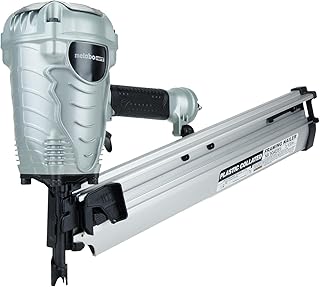
Metabo HPT NR90AES1 Framing Nailer
At just 7.5 pounds, this 21-degree plastic-collated nailer is noticeably less fatiguing over a full day of subfloor and roof decking work. Despite the light frame, it drives up to 3½-inch nails cleanly into engineered lumber, which is more than some heavier units can claim.
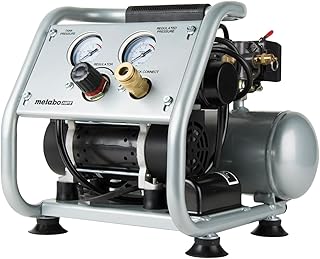
Metabo HPT EC28M Quiet Compressor
Running at 59 dB — roughly the volume of a normal conversation — this 1-gallon unit solves the number-one complaint indoor remodelers have about compressors: noise. The universal quick coupler makes tool swaps painless, and the compact body fits in tight utility closets.
Paslode F325R Pneumatic Framing Nailer
Paslode has built framing nailers since the category existed, and the F325R carries that legacy in a reliable, no-frills package. It pairs naturally with any mid-range compressor and the trigger feel is consistently praised by framing crews who’ve run thousands of nails through it.
Frequently Asked Questions
Can I use a pancake compressor for framing?
A 6-gallon pancake at 200 PSI handles framing nailers comfortably for most residential projects. For continuous all-day commercial runs, a larger tank or wheelbarrow compressor recovers faster and reduces motor wear.
What PSI does a framing nailer need?
Most framing nailers operate between 80 and 120 PSI at the tool, though 90 PSI is the standard setting. Always check the nailer’s spec sheet and set your regulator accordingly — over-pressurizing drives nails too deep and damages the wood fibers.
Should I buy a combo kit or separate units?
Separate purchases give you more flexibility to match compressor output with your specific nailer’s CFM requirements. Combo kits are convenient but sometimes pair an underpowered compressor with a nailer that deserves better.
Is a gas-powered compressor worth the premium?
Gas units like the EC2610EA make sense when you’re working on sites without electrical access — new-construction lots, detached structures, or remote builds. For homes with available outlets, electric compressors cost less to maintain and run quieter.
Final Thoughts
For the best balance of power, noise, and value, the Metabo HPT EC914S compressor paired with the NV83A5 coil nailer covers the widest range of residential framing tasks. If weight and all-day comfort are your top priorities, the NR90AES1 nailer at 7.5 pounds is hard to beat. And for indoor work where noise matters most, the EC28M quiet compressor earns its spot in every remodeler’s truck.