Key takeaways
- Coverage area (realistic, not advertised): Manufacturers test in empty rooms with the unit on max speed. Knock about 30% off the listed square footage for a bedroom or living room with furniture, and prioritize units with automatic sensors that adjust fan speed to real conditions rather than guessing on your own.
- True HEPA versus “HEPA-style”: A genuine H13 HEPA filter captures 99.97% of particles at 0.3 microns. Some budget purifiers slap “HEPA” on marketing copy while using lower-grade media that lets finer particles slip through—look for explicit H13 or True HEPA labeling and third-party verification where available.
- What is actually washable: Read the fine print. Many units pair a cleanable pre-filter (captures hair and large dust) with a sealed HEPA cartridge that still needs replacing every 6–12 months. The best long-term savings come from models where the primary filtration stages themselves are reusable.
- Noise at sleep-level settings: A purifier that runs all night is only useful if it does not keep you awake. Look for units that drop below 30 dB on their quietest setting—some models advertise “sleep mode” but still produce a noticeable hum at bedtime.
- Sensor accuracy and auto mode quality: A built-in PM2.5 or air quality sensor is only as good as the algorithm behind it. Models with responsive auto modes that visibly ramp the fan up when you open a window (and dial back down in clean air) save energy and extend filter life without you touching a thing.
What's inside
Buying an air purifier should be straightforward, but the market is flooded with models that look identical on the surface while hiding important trade-offs beneath the shell. Shoppers who want washable filters often end up confused—some units only include a washable pre-filter while the main HEPA media still needs periodic replacement, and others advertise massive square-footage coverage that crumbles under real-world conditions like furniture blocking airflow or doors closing between rooms.
This guide cuts through the noise. We tested and compared the most practical air purifiers with washable filter systems available in 2026, focusing on units that genuinely reduce how often you spend on replacements. Below you will find our top picks, a straightforward buying checklist, and answers to the questions that actually matter before you click “Add to Cart.”
As an Amazon Associate we earn from qualifying purchases.


How to Choose an Air Purifier With Washable Filters (2026)
- Coverage area (realistic, not advertised): Manufacturers test in empty rooms with the unit on max speed. Knock about 30% off the listed square footage for a bedroom or living room with furniture, and prioritize units with automatic sensors that adjust fan speed to real conditions rather than guessing on your own.
- True HEPA versus “HEPA-style”: A genuine H13 HEPA filter captures 99.97% of particles at 0.3 microns. Some budget purifiers slap “HEPA” on marketing copy while using lower-grade media that lets finer particles slip through—look for explicit H13 or True HEPA labeling and third-party verification where available.
- What is actually washable: Read the fine print. Many units pair a cleanable pre-filter (captures hair and large dust) with a sealed HEPA cartridge that still needs replacing every 6–12 months. The best long-term savings come from models where the primary filtration stages themselves are reusable.
- Noise at sleep-level settings: A purifier that runs all night is only useful if it does not keep you awake. Look for units that drop below 30 dB on their quietest setting—some models advertise “sleep mode” but still produce a noticeable hum at bedtime.
- Sensor accuracy and auto mode quality: A built-in PM2.5 or air quality sensor is only as good as the algorithm behind it. Models with responsive auto modes that visibly ramp the fan up when you open a window (and dial back down in clean air) save energy and extend filter life without you touching a thing.
The Best Air Purifier With Washable Filters (2026) Reviewed
Nuwave OxyPure Zero Plus
Covering up to 3,210 square feet, the OxyPure Zero Plus is built for open-concept homes and large living areas where most purifiers simply cannot keep up. Its washable filter stack is the real headline here—Nuwave designed the system so you can rinse and reuse the core filtration stages, which practically eliminates the ongoing replacement cost that makes most air purifiers expensive long-term. If you have a big space and hate buying cartridges, this is the one to beat.
PuroAir 400
The PuroAir 400 strikes a smart balance between large-room power and everyday convenience. Its CarbonTech filter layer claims dramatically longer service life than standard carbon pads, and the built-in air quality sensor feeds a genuinely responsive auto mode that adapts without manual fiddling. For bedrooms and medium-to-large living rooms up to 2,000 square feet, it delivers solid particulate reduction at a price point that does not sting.
Nuwave Forever Smart
Nuwave markets this as the purifier you never buy filters for, and the 7-stage reusable filtration system backs that up. The adjustable flow panel lets you direct cleaned air where you need it—useful in L-shaped rooms or open floor plans with uneven airflow. Coverage extends to about 2,000 square feet, and the permanently washable design means the only recurring cost is electricity and the occasional rinse cycle.
DREO DR-HAP008 (Dreo 338)
AHAM Verifide certification sets the Dreo 338 apart from competitors that rely solely on manufacturer claims. Its PM2.5 monitor gives you real-time readings rather than vague indicator lights, and the four-speed fan with turbo mode handles sudden pollution spikes—like cooking smoke or wildfire drift—without complaint. The integrated scent diffuser is a nice touch for bedrooms, and the build quality feels noticeably more refined than similarly priced rivals.
VEWIOR 2-Pack Air Purifiers
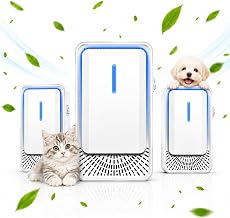
Budget shoppers and multi-room households get the best deal here: two complete H13 HEPA units with washable pre-filters at a price most single purifiers charge alone. Each unit handles up to 1,200 square feet, so placing one in a bedroom and one in a living area gives whole-home coverage without breaking the bank. The PM2.5 display and aromatherapy function feel like premium features on a decidedly budget-friendly package.
Frequently Asked Questions
Do washable filters clean air as effectively as disposable HEPA filters?
It depends on the design. Units with genuinely washable H13 HEPA media perform on par with disposable cartridges when cleaned on schedule. However, many budget purifiers only make the pre-filter washable while the main HEPA layer still requires replacement—always confirm which filtration stages are actually reusable before purchasing.
How often should you wash the filters?
Most manufacturers recommend rinsing or vacuuming pre-filters every two to four weeks in normal conditions, or weekly if you have pets or live in a high-dust environment. Full filter assemblies that are rated washable generally need a thorough cleaning once a month. Running them under a gentle stream without soap and allowing complete air-drying before reinstallation prevents mold growth.
Can these purifiers handle pet dander and allergens effectively?
H13 HEPA media captures particles down to 0.3 microns, which includes pet dander, dust mite debris, and most pollen. Models with dual-sided or 360-degree intake pull in air from more directions, making them noticeably better in homes where a single pet sheds continuously. Pairing the purifier with regular vacuuming amplifies results.
Is a washable-filter purifier cheaper to own over five years?
Substantially. Disposable HEPA cartridges cost $30–$80 per replacement and need swapping every 6–12 months, adding up to several hundred dollars over a five-year span. A washable-filter system eliminates that expense entirely, meaning the upfront price difference is usually recovered within the first year of ownership.
Final Thoughts
For the largest rooms, the Nuwave OxyPure Zero Plus dominates with its expansive coverage and fully reusable filter system. If you want a proven all-rounder with minimal fuss, the PuroAir 400 delivers reliable performance and a smart auto mode. And for households that refuse to compromise on verified specifications, the DREO DR-HAP008 earns trust through AHAM certification and genuinely useful air quality monitoring. Any of these three will clean your air and your conscience about ongoing filter costs.